
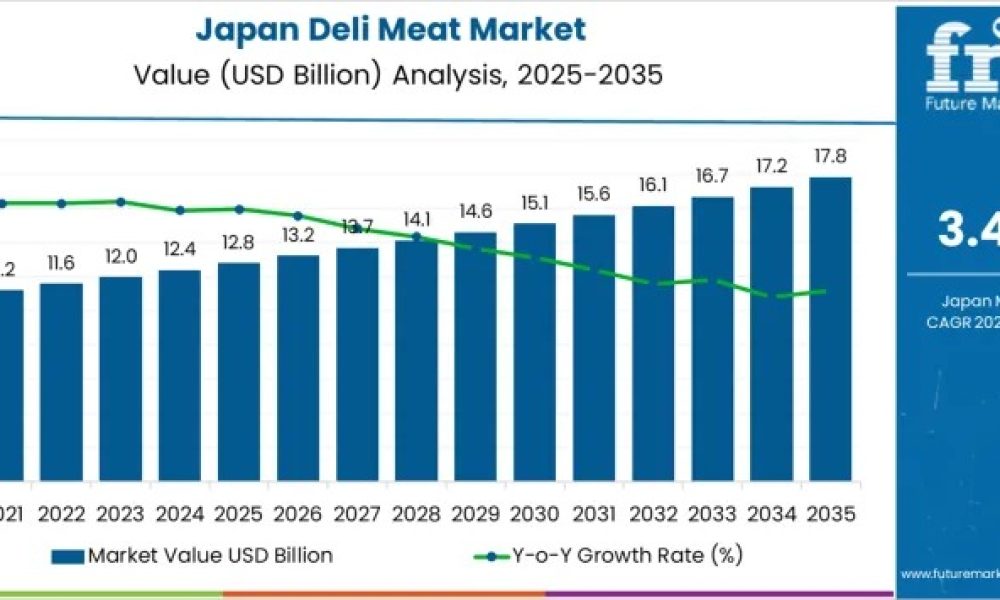
Japan’s demand for deli meat is entering a phase of steady, structurally driven growth, supported by changing lifestyles, urbanization, and evolving food preferences. Valued at USD 12.8 billion in 2025, the industry is projected to expand to USD 17.8 billion by 2035, advancing at a compound annual growth rate (CAGR) of 3.4%. This growth reflects a clear shift toward convenience-led consumption, where ready-to-eat and easy-to-prepare protein options are becoming essential for modern Japanese households and foodservice operators.
Explore trends before investing – request a sample report today!
Deli meats such as ham, turkey, salami, and roast beef are increasingly integrated into everyday meals, particularly in urban centers where time constraints influence purchasing decisions. Once considered niche or Western-centric, deli meat has now established itself as a mainstream category across supermarkets, convenience stores, and online retail channels. Its versatility—used in sandwiches, bento boxes, salads, and snacks—has significantly widened its consumer base.
Convenience and Protein Drive Market Momentum
At the core of market expansion is Japan’s growing preference for ready-to-eat and protein-rich foods. Smaller household sizes, longer working hours, and an aging but active population have accelerated demand for foods that reduce preparation time without compromising taste. Deli meats meet this requirement effectively by offering consistent quality, long shelf life, and portion flexibility.
The increasing penetration of Western-style meals in Japan has further boosted consumption. Sandwiches, wraps, and café-style meals are now common across retail and foodservice formats, reinforcing demand for sliced and cured meat products. Continuous innovation in flavors, portion sizes, and packaging has also enhanced consumer acceptance across different age groups.
Pork Dominates by Source, Cured Meats Lead by Product Type
Pork-based deli meats account for 47% of total demand, making pork the leading source in Japan’s deli meat industry. Its dominance is driven by affordability, flavor adaptability, and deep-rooted acceptance in Japanese cuisine. Pork deli products are widely used in ham, sausages, and processed meats, particularly for bento meals and quick-service food formats.
By product type, cured deli meats represent 67% of total industry demand. Their long shelf life, ease of storage, and consistent flavor profile make them ideal for both household and commercial use. Cured meats such as ham and salami are especially popular in retail and foodservice environments, where reliability and reduced food waste are critical factors.
Retail Accessibility Expands Consumption
Distribution accessibility plays a crucial role in sustaining market growth. Deli meats are readily available across:
- Supermarkets and hypermarkets
- Convenience stores with chilled food sections
- Online retail platforms offering home delivery
This wide availability aligns well with Japan’s fast-paced consumer habits, enabling impulse purchases and repeat consumption. Advances in cold-chain logistics and packaging technologies—such as vacuum sealing and modified-atmosphere packaging—have further improved freshness and shelf life, strengthening consumer confidence.
Regional Growth Reflects Urbanization Patterns
Demand growth varies across regions, reflecting differences in urban density and lifestyle trends. Kyushu & Okinawa lead the market with a 4.2% CAGR, driven by rising interest in Western-style meals and a growing tourism sector that favors familiar, quick food options. Kanto follows at 3.9% CAGR, supported by its dense urban population and strong foodservice demand.
Kansai records steady growth at 3.4%, influenced by its dynamic culinary culture and expanding convenience food consumption. Chubu, Tohoku, and the rest of Japan show moderate but consistent growth as convenience-oriented eating habits gradually expand beyond major metropolitan areas.
Innovation and Health-Focused Reformulation
Technological advancements continue to support market development. Manufacturers are investing in:
- Reduced-sodium and lower-fat formulations
- Clean-label and preservative-conscious products
- Resealable and portion-controlled packaging
These innovations address growing health awareness while preserving the convenience that defines the category. However, challenges remain, including cultural preferences for fresh foods and concerns about processed meat consumption, which may temper growth in certain consumer segments.
Subscribe for Year-Round Insights → Stay ahead with quarterly and annual data updates.
Competitive Landscape and Strategic Focus
The competitive landscape is led by established global suppliers, including Hormel Foods Corporation, Cargill Incorporated, Tyson Foods, Inc., JBS S.A., and Maple Leaf Foods, Inc. These companies compete on product quality, variety, packaging innovation, and supply reliability. Hormel Foods Corporation stands out with a significant share of demand, supported by its broad portfolio and strong distribution capabilities.
As Japan’s food consumption patterns continue to evolve, the deli meat industry is positioned for stable, long-term growth. Suppliers that balance convenience, health-conscious reformulation, and localization of flavors will be best placed to capture value in this USD 17.8 billion opportunity by 2035.
About Future Market Insights (FMI)
Future Market Insights, Inc. (FMI) is an ESOMAR-certified, ISO 9001:2015 market research and consulting organization, trusted by Fortune 500 clients and global enterprises. With operations in the U.S., UK, India, and Dubai, FMI provides data-backed insights and strategic intelligence across 30+ industries and 1200 markets worldwide.



