
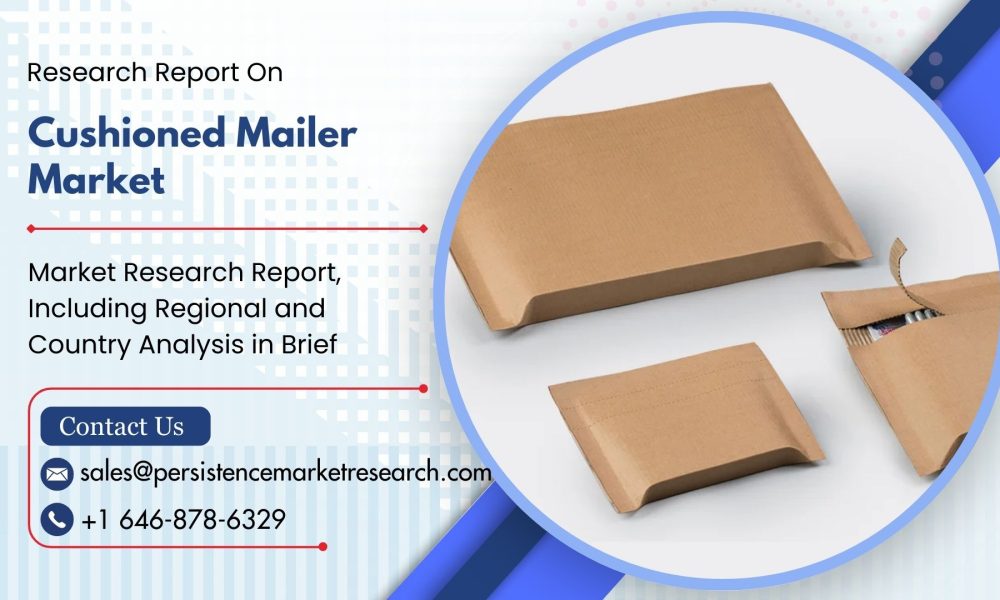
Cushioned Mailer Market — Protecting the Future of E-Commerce Packaging
In today’s rapidly evolving global marketplace, the surge of e-commerce has transformed not just how consumers shop, but also how products are packaged and delivered. As online order volumes spike, so does the demand for secure, efficient, and sustainable packaging solutions. Among these, cushioned mailers have emerged as a cornerstone of modern logistics — providing lightweight, protective, and increasingly eco-friendly alternatives to traditional packaging like rigid boxes.
What Are Cushioned Mailers?
Cushioned mailers are protective envelopes designed to safeguard products during shipping. They pair the lightweight convenience of envelopes with enhanced internal padding that absorbs shocks, reduces impact damage, and protects fragile contents — from electronics and cosmetics to small durable goods. Innovations in materials and design allow mailers to compete directly with heavier alternatives, making them ideal for direct-to-consumer deliveries, small-parcel logistics, and automated fulfillment systems.
Unlike basic poly mailers or rigid boxes, cushioned mailers incorporate padding materials such as macerated paper, honeycomb paper cores, kraft bubble laminates, and even molded fiber inserts — blending protection with sustainability. This performance balance has made them indispensable in streamlined, cost-sensitive logistics.
Get Your FREE Sample Report Instantly – Click Now: https://www.persistencemarketresearch.com/samples/36040
Market Size and Growth Outlook
The global cushioned mailer market is on a strong growth trajectory. According to Persistence Market Research, the market was valued at approximately US$ 8.2 billion in 2026 and is expected to expand to about US$ 21.2 billion by 2033, with a robust CAGR of 14.5% over the forecast period. This rapid growth reflects the expanding role of cushioned mailers in packaging ecosystems worldwide.
This market outlook is supported by broader packaging analyses, which similarly highlight the rise of lightweight, protective mailer formats driven by e-commerce logistics and sustainability trends.
Key Market Drivers
- E-Commerce Boom and Logistics Expansion
The most compelling engine behind cushioned mailer demand is the explosive growth of global e-commerce. With more consumers shopping online than ever before, parcel volumes have soared — especially for small to medium-sized goods such as electronics, cosmetics, personal care products, books, and accessories. E-commerce platforms and brands increasingly prefer cushioned mailers over heavier alternatives to reduce dimensional weight charges and improve shipping efficiency.
Cushioned mailers can significantly reduce transportation costs and warehouse space requirements due to their compact form and lightweight design. They also protect products effectively through multiple handling stages — from fulfillment to last-mile delivery.
- Sustainability and Regulatory Pressures
Sustainability has become central to packaging strategies. Stricter environmental regulations and brand commitments to reduce plastic waste are accelerating substitution toward recyclable, paper-based cushioning materials, such as recycled kraft paper and honeycomb cores. Paper-based solutions are increasingly attractive because they align with circular packaging mandates and are easier to recycle than traditional polymer cushioning.
In Europe, frameworks like the Packaging and Packaging Waste Regulation (PPWR) demand higher recycled content and recyclability standards, pushing companies to adopt materials that not only protect goods, but also reduce ecological impact.
- Cost and Operational Efficiency
Cushioned mailers cut overall logistics costs by minimizing shipment weight and optimizing space in warehouses and transport vehicles. With fulfillment centers under pressure to process increasing daily volumes, the ease of use and integration with automated packaging lines make cushioned mailers an operationally efficient choice.
Additionally, as fulfillment automation scales, demand rises for packaging formats that support rapid application and high throughput — a space where cushioned mailers are increasingly preferred over bulkier, labor-intensive alternatives.
Get a Customized Market View in One Click: https://www.persistencemarketresearch.com/request-customization/36040
Market Segmentation
Material Types
- Recycled Kraft Paper: Expected to dominate material demand, accounting for approximately 43.7% share in 2026. Its recyclability and alignment with sustainability goals make it a preferred choice for many brands and regulators.
- Honeycomb-Lined Paper: Offers a high strength-to-weight ratio and superior shock absorption, increasing its adoption across fragile goods sectors.
Other materials like hybrid paper-poly blends and molded fiber also play roles depending on performance needs and cost considerations.
Cushioning Types
- Macerated Paper Padding: A cost-efficient option that captures nearly 40% of cushioning demand. It suits less fragile goods and supports easy integration into current packaging workflows.
- Honeycomb Paper Cores: Fast-growing segment due to superior protection and efficiency, especially for electronics and high-value items where dimensional weight and performance are critical.
Regional Market Dynamics
North America — Leading the Market
North America holds around 35.7% share of the cushioned mailer market as of 2026, anchored by dense e-commerce fulfillment networks, high online retail penetration, and innovation in paper-based cushioning technologies. Major retailers such as Amazon, Walmart, and Target influence packaging standards and supplier compliance, advancing recyclable mailer adoption.
Europe — Sustainability-Driven Growth
In Europe, stringent regulations and strong circular economy policies accelerate the shift to recyclable and paper-based mailers. Countries like Germany, France, and the United Kingdom lead adoption, driven by both NGO and government pressure for sustainable packaging solutions.
Asia Pacific — Fastest Growing
The Asia Pacific region is projected to be the fastest growing cushioned mailer market. Rapid e-commerce expansion in China, India, and Southeast Asia, combined with investments in local manufacturing and sustainable materials, are propelling demand.
Challenges in the Market
Raw Material Constraints
While demand for recycled paper grows, supply chain volatility and fluctuating recycled fiber prices pose challenges. Limited availability of high-grade recycled paper can impact production costs and slow the transition from polymer-based mailers.
Performance Limitations
Paper-based mailers, though sustainable, can face performance limitations in certain conditions — especially where moisture resistance, static protection, or high-puncture tolerance are required. For some fragile electronics and medical products, hybrid or advanced polymer options may still be preferred.
Opportunities and Innovations
On-Demand Cushioning and Fulfillment Integration
Integrating on-site cushioning systems in fulfillment centers represents a significant growth opportunity. These systems produce protective padding in real time, reducing waste, inventory costs, and delivery timelines — an advantage for brands looking to scale efficiently.
Premium Branding and Customer Experience
Beyond protection, cushioned mailers are increasingly used as part of the unboxing experience. Sustainable, custom-printed mailers enhance brand perception, aligning packaging with broader marketing and environmental commitments — opening new segments for premium, differentiated solutions.
For In-Depth Competitive Analysis, Buy Now: https://www.persistencemarketresearch.com/checkout/36040
Competitive Landscape
The cushioned mailer market is characterized by both global leaders and regional specialists. Key companies include Sealed Air, Pregis, Ranpak, Smurfit Westrock, DS Smith, Mondi, Intertape Polymer Group, ProAmpac, Storopack, Huhtamaki, and Uline — all investing in sustainability, raw material security, and automation-ready products.
These players compete on innovation, material technology, and the ability to integrate products into automated fulfilment environments — crucial for winning large e-commerce contracts.
Conclusion
The cushioned mailer market is set to redefine how businesses package and ship goods in the digital age. Fueled by e-commerce growth, sustainability imperatives, and innovation in materials and automation, cushioned mailers deliver a perfect blend of protection, efficiency, and environmental performance. Market projections through 2033 reflect strong confidence in continued expansion and technological evolution. As consumer expectations shift toward faster, safer, and greener delivery experiences, cushioned mailers are positioned at the forefront of the packaging revolution.
About Persistence Market Research:
Persistence Market Research delivers strategic research solutions that drive business growth. Founded in 2012 and registered in England and Wales in 2023 as Persistence Research & Consultancy Services Ltd., we have completed 3,600+ custom and syndicated studies and supported 2,700+ projects for leading research firms. Combining traditional methodologies with modern tools, we provide actionable insights to multinational corporations, consultants, investors, and government bodies, earning strong trust through long-term client relationships.
Contact Us:
Persistence Market Research
Second Floor, 150 Fleet Street,
London, EC4A 2DQ, United Kingdom
USA Phone: +1 646-878-6329
UK Phone: +44 203-837-5656
Email: [email protected]
Web: https://www.persistencemarketresearch.com




