
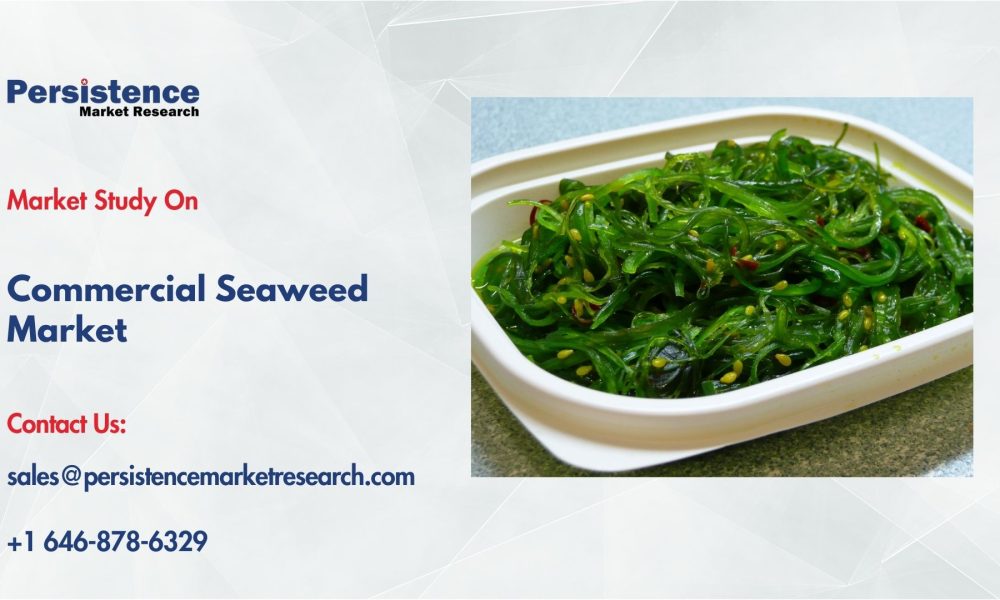
The global commercial seaweed market is poised for substantial growth over the coming decade. Valued at US$ 11.3 billion in 2025, the market is projected to reach US$ 16.8 billion by 2032, reflecting a compound annual growth rate (CAGR) of 5.9% during the forecast period. This upward trajectory is primarily driven by the increasing demand for sustainable food ingredients, natural additives, and bio-based materials across multiple industries including food and beverages, pharmaceuticals, cosmetics, and agriculture. Seaweed, rich in nutrients, hydrocolloids, and bioactive compounds, is gaining widespread recognition as a versatile raw material with applications in human nutrition, animal feed, and bio-packaging solutions.
Sustainability imperatives are also playing a key role in boosting adoption. With rising concerns over climate change and environmental degradation, commercial seaweed cultivation is being embraced as a low-carbon, renewable solution that supports ocean biodiversity while reducing reliance on synthetic and non-renewable raw materials. Governments and private investors alike are increasing support for seaweed aquaculture, enhancing infrastructure, and incentivizing eco-friendly practices, further fueling global market expansion.
What is driving the demand for commercial seaweed in the global market?
The demand for commercial seaweed is being fueled by its nutritional value, functional benefits, and versatility in applications. Consumers are increasingly shifting towards plant-based and natural food ingredients, boosting the use of seaweed in food formulations, snacks, and beverages. Additionally, industries are leveraging seaweed-derived hydrocolloids such as carrageenan, alginate, and agar as stabilizers, thickeners, and gelling agents. Beyond food, seaweed is gaining traction in bioplastics, pharmaceuticals, and cosmetics for its anti-inflammatory and antioxidant properties. The combination of sustainability benefits, functional applications, and rising consumer awareness positions seaweed as a high-growth commodity in the coming years.
Get a sample copy (including FULL TOC, graphs and tables) of this report: https://www.persistencemarketresearch.com/samples/14698
Segmentation Analysis
By Type
The commercial seaweed market can be segmented into red seaweed, brown seaweed, and green seaweed. Among these, red seaweed dominates the market, largely due to its high utilization in carrageenan and agar production, which are widely applied in the food and beverage industry. Red seaweed varieties such as Eucheuma, Gracilaria, and Porphyra are in high demand for processed food applications, including dairy products, confectionery, and ready-to-eat meals. Meanwhile, brown seaweed, particularly species like kelp and Sargassum, is experiencing rapid growth, driven by its use in alginate production and rising demand for natural fertilizers and animal feed. Green seaweed, though a smaller segment, is expected to gain attention for its applications in health supplements, functional foods, and personal care products due to its high protein and chlorophyll content.
By Product/Service Type
The market by product type is broadly classified into hydrocolloids (carrageenan, alginate, agar), direct consumption seaweed, and seaweed extracts. Hydrocolloids account for the largest share, thanks to their widespread applications as gelling, stabilizing, and thickening agents in processed food, dairy, and meat products. Direct consumption seaweed, including nori, wakame, and kombu, is gaining traction in Asian cuisines and increasingly in Western markets as consumers seek healthier snacks and plant-based protein sources. Seaweed extracts are also rising in demand, particularly in nutraceuticals and cosmetics, where bioactive compounds from seaweed are valued for their antioxidant and anti-aging properties.
By Technology/Channel
Technological advancements are revolutionizing seaweed farming and processing. Aquaculture-based cultivation dominates the market, with controlled environments improving yield, consistency, and sustainability. Emerging technologies such as IoT-enabled monitoring systems are helping farmers optimize seaweed growth by tracking ocean temperature, salinity, and nutrient levels in real-time. Advanced processing techniques are also enabling efficient extraction of bioactive compounds, paving the way for novel applications in biofuels, biodegradable packaging, and pharmaceuticals.
Regional Insights
Asia-Pacific continues to dominate the global commercial seaweed market, accounting for the largest revenue share. Countries such as China, Indonesia, South Korea, and Japan are leading producers and consumers, with a long history of seaweed cultivation and consumption. The region benefits from favorable climatic conditions, established aquaculture practices, and strong demand from the food, feed, and cosmetics industries. Europe is emerging as a lucrative market, fueled by increasing demand for plant-based food, stringent regulations on synthetic additives, and the EU’s emphasis on sustainable aquaculture practices. North America is projected to be the fastest-growing region, driven by rising consumer awareness of the health benefits of seaweed, growing demand for natural ingredients, and strong investment in seaweed-based startups focused on bioplastics and alternative proteins. The Middle East & Africa and Latin America are also witnessing gradual adoption, supported by initiatives in sustainable agriculture and diversification of food systems.
Unique Features and Innovations in the Market
The commercial seaweed market is being shaped by unique features and innovations that differentiate modern solutions from traditional applications. Advances in biotechnology are enabling the development of engineered seaweed strains with higher nutrient content and resistance to environmental stressors. AI and IoT technologies are optimizing aquaculture management, improving operational efficiency, and reducing environmental impact. Moreover, the integration of seaweed into sustainable packaging materials and biofuel production showcases its role in the circular economy. Companies are also innovating with seaweed-based proteins and functional ingredients, catering to the rising demand for plant-based alternatives in the global food market. These technological enhancements are not only expanding the scope of applications but also positioning seaweed as a vital component of the future sustainable economy.
Market Highlights
Several factors underscore the growing adoption of commercial seaweed across industries. Regulatory support for natural and eco-friendly ingredients is accelerating market penetration, particularly in the European Union and North America. Cost reduction in farming practices, combined with scalable aquaculture models, is making seaweed cultivation more accessible to producers. Sustainability remains the cornerstone of adoption, as seaweed cultivation requires no freshwater or arable land, making it an environmentally responsible resource. Additionally, rising awareness of seaweed’s role in reducing carbon emissions and improving marine ecosystems is further strengthening its appeal. For businesses, seaweed represents an opportunity to align with consumer preferences for health and sustainability while diversifying revenue streams.
Key Players and Competitive Landscape
The competitive landscape of the global commercial seaweed market is characterized by the presence of established players and innovative startups. Leading companies include:
Cargill Incorporated – A global leader in food and agriculture, Cargill is investing in seaweed-derived hydrocolloids to strengthen its portfolio of natural ingredients.
DuPont de Nemours, Inc. – Focused on leveraging seaweed for specialty food applications, DuPont emphasizes research and development in bio-based materials.
Qingdao Gather Great Ocean Algae Industry Group – A major Chinese producer specializing in carrageenan and alginate, the company benefits from its large-scale production capabilities.
Acadian Seaplants Limited – Based in Canada, Acadian is a pioneer in seaweed-based agricultural products, particularly biostimulants and animal feed additives.
Mara Seaweed – A UK-based company emphasizing sustainable seaweed cultivation and premium food products, catering to the rising European demand.
Ocean Harvest Technology – Known for its innovative use of seaweed in animal feed solutions, the company is focused on enhancing livestock health and sustainability.
These players are adopting strategies such as regional expansion, investment in advanced aquaculture technologies, and diversification of product portfolios to gain a competitive edge. Collaborations between research institutions and commercial producers are also becoming more common, accelerating innovation and market growth.
The global commercial seaweed market is set for robust growth as industries and consumers increasingly prioritize sustainability, health, and innovation. From its role as a nutritious food ingredient to its potential in bioplastics, pharmaceuticals, and biofuels, seaweed is emerging as a transformative commodity in the global economy. The forecast period will see heightened investments in technology, aquaculture expansion, and research collaborations that will further unlock the market’s potential. Future opportunities lie in scaling seaweed-based solutions for climate change mitigation, advancing circular economy practices, and meeting the rising global demand for natural and functional products. With supportive regulations, technological advancements, and growing consumer awareness, the commercial seaweed market is positioned to play a pivotal role in shaping sustainable industrial practices worldwide.
Explore the Latest Trending Research Reports:




