

Coal Power Generation Market Size, Share and Trend Analysis Report : Global Opportunity Analysis and Industry Forecast 2023-2032
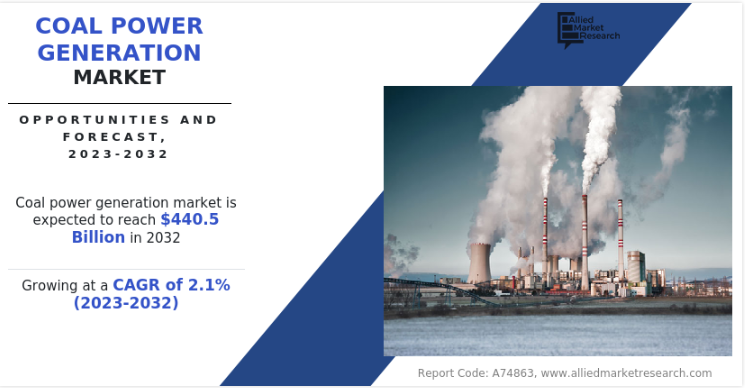
According to a new report published by Allied Market Research, The coal power generation market size was valued at $361.1 billion in 2022 and is estimated to reach $440.5 billion by 2032 growing at a CAGR of 2.1% from 2023 to 2032.
Coal power generation refers to the process of producing electricity by burning coal as a fuel in power plants. Coal is one of the most widely used sources of energy for electricity generation worldwide.
Download PDF Brochure: https://www.alliedmarketresearch.com/request-sample/75347
Asia-Pacific is the largest consumer of coal; thus, the region dominated the coal power generation market in 2022 and is expected to continue this trend during the projection year cycle. Coal power generation continues to play a prominent role in Asia-Pacific, particularly in China and India. However, there is a growing recognition of the need to address environmental concerns and transition toward cleaner and more sustainable energy sources, including renewable energy.
The key players operating in the coal power generation market are Adani Power Limited, China Huadian Corporation LTD., Dominion Energy, NTPC Limited, KEPCO E&C, Jindal India Thermal Power Ltd., Uniper SE, China Shenhua Energy Company Limited, Saudi Electricity Company, China Huaneng Group Co., Ltd., American Electric Power Company, Inc., and Duke Energy Corporation.
The process of coal power generation involves the following steps:
Coal mining: Coal is extracted from underground mines or surface mines through various mining techniques, depending on the geological characteristics of the coal deposit.
Transportation: Once mined, coal is transported to power plants by trucks, trains, barges, or conveyor belts.
Pulverization: Before being burned, coal is pulverized into a fine powder. This increases the surface area of the coal particles, allowing for better combustion efficiency.
Combustion: The pulverized coal is burned in a boiler or furnace. The combustion process produces heat, which is used to convert water into steam.
Steam generation: The high-pressure steam produced from the combustion of coal is used to drive a turbine connected to a generator. As the steam expands and flows over the turbine blades, it causes the turbine to spin, generating mechanical energy.
Electricity generation: The spinning turbine is coupled to a generator, which converts the mechanical energy into electrical energy. The electricity generated is then fed into the power grid for distribution to homes, businesses, and industries.
The circulating fluidized bed (CFB) technology for power generation from coal has been advancing steadily since the last decade. This technology can efficiently combust a wide range of coal types, including lower-quality coals such as sub-bituminous and lignite.
It can handle other solid fuels such as biomass and waste coal, providing higher fuel flexibility. This capability allows power plants to utilize a variety of fuel sources, which can help optimize costs and reduce dependence on specific coal types.
Advantages of Coal Power Generation:
Reliable Baseload Power: Coal power plants can provide a consistent and reliable source of electricity, making them suitable for meeting the baseload demand of the electrical grid.
Abundant Fuel: Coal reserves are widely available in many countries, providing a stable and relatively cheap source of fuel.
Existing Infrastructure: Many coal power plants are already in operation, which means that the infrastructure is in place, reducing the need for new construction.
Energy Security: Using domestic coal resources can enhance a nation’s energy security by reducing dependence on foreign energy sources.
Research and development efforts are focused on advancing coal technologies to improve efficiency and reduce emissions. Technologies such as high-efficiency, low-emission (HELE) power plants and carbon capture, utilization, and storage (CCUS) offer potential opportunities to make coal power generation cleaner and more sustainable.
Carbon capture, utilization, and storage (CCUS) technologies possess the ability to capture carbon emissions from coal power plants and use or store them to mitigate their impact on climate change. Captured CO2 can be used for enhanced oil recovery (EOR) or in industrial processes, reducing emissions and creating value-added products.
Buy This Report (227 Pages PDF with Insights, Charts, Tables, and Figures): https://bit.ly/3DSwxoL
On the basis of technology, the market is divided into pulverized, cyclone furnaces, and others. The pulverized segment dominated the coal power generation market share for 2022 and is expected to maintain its domination throughout the forecast period.
By application, the coal power generation market is categorized into residential, commercial, and industrial. The industrial segment garnered the highest revenue and is expected to grow at a faster pace in the coming future, as the industrial segment requires a high amount of power to operate its machinery and furnaces to continue its operations.
Coal power plants can provide a stable and consistent supply of electricity, as they can operate continuously and meet the demand for power consistently. Coal is a widely available and relatively inexpensive source of fuel, particularly in regions with large coal reserves. This accessibility contributes to energy security and helps maintain a steady supply of electricity.
Global Trends
- Declining Use: Many countries are transitioning away from coal due to environmental concerns and the rise of renewable energy sources.
- Policy Changes: Governments are implementing regulations to limit emissions and promote cleaner energy alternatives.
- Investment in Clean Coal Technology: Some regions continue to invest in technologies to make coal power cleaner and more efficient.
Future Outlook
- Transition to Renewables: The global shift towards renewable energy and energy efficiency is likely to continue impacting coal power generation.
- Hybrid Systems: Future developments may include hybrid systems that combine coal with renewable energy sources for more sustainable power generation.
Other Trending Reports:
About Us:
Allied Market Research (AMR) is a market research and business-consulting firm of Allied Analytics LLP, based in Portland, Oregon. AMR offers market research reports, business solutions, consulting services, and insights on markets across 11 industry verticals. Adopting extensive research methodologies, AMR is instrumental in helping its clients to make strategic business decisions and achieve sustainable growth in their market domains. We are equipped with skilled analysts and experts and have a wide experience of working with many Fortune 500 companies and small & medium enterprises.
Pawan Kumar, the CEO of Allied Market Research, is leading the organization toward providing high-quality data and insights. We are in professional corporate relations with various companies. This helps us dig out market data that helps us generate accurate research data tables and confirm utmost accuracy in our market forecasting. Every data company in the domain is concerned. Our secondary data procurement methodology includes deep presented in the reports published by us is extracted through primary interviews with top officials from leading online and offline research and discussion with knowledgeable professionals and analysts in the industry.




