
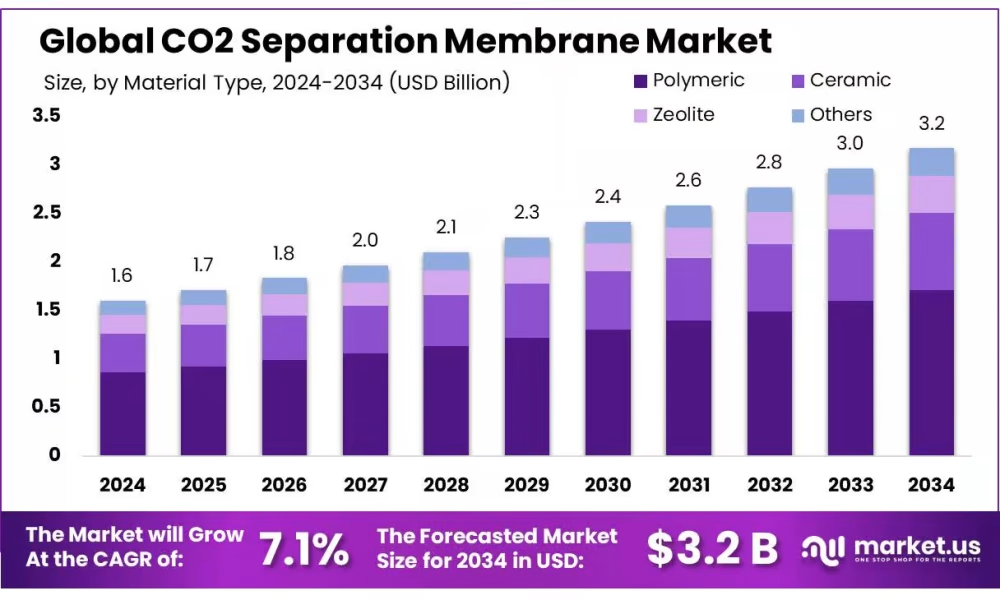
According to market.us, the global CO2 separation membrane market is projected to grow from USD 1.6 billion in 2024 to approximately USD 3.2 billion by 2034, expanding at a CAGR of 7.1% during the forecast period. This growth reflects the rising demand for sustainable industrial processes and the urgent need to reduce greenhouse gas emissions. CO2 separation membranes play a vital role in carbon capture across various sectors, including power generation, oil and gas, and chemical manufacturing.
By 2025, the market is estimated to reach a value of USD 1.2 billion, supported by a historical annual growth rate of around 8% over the past five years. Stringent environmental regulations, such as the EU Green Deal targeting net-zero emissions by 2050, are accelerating the adoption of membrane-based carbon capture solutions. In addition, technological improvements in membrane materials—particularly those offering enhanced selectivity and resilience in challenging environments—are driving commercial viability.
Government support continues to be a key growth catalyst. The U.S. Department of Energy, for example, has committed USD 24 million to advancing carbon capture technologies. In Asia, national strategies in countries like Japan and South Korea actively promote CCS integration, reinforcing the market’s global momentum and relevance in achieving climate goals.
Key Takeaways
- CO2 Separation Membrane Market size is expected to be worth around USD 3.2 Billion by 2034, from USD 1.6 Billion in 2024, growing at a CAGR of 7.1%.
- Polymeric membranes held a dominant position in the CO2 separation membrane market, capturing more than a 54.30% share.
- Hollow Fiber modules maintained a leading position in the CO2 separation membrane market, capturing more than a 47.20% share.
- Post-combustion Capture held a dominant market position in the CO2 separation membrane market, capturing more than a 44.40% share.
- Oil & Gas sector held a dominant market position in the CO2 separation membrane market, capturing more than a 37.50% share.
- North America emerged as a dominant force in the CO2 Separation Membrane market, capturing an impressive 46.44% share, which translated into a market value of approximately USD 0.7 billion.
Access a Complimentary Sample of This Premium Report: https://market.us/report/co2-separation-membrane-market/request-sample/
Factors Affecting the Growth of the CO2 Separation Membrane Market
Stringent Environmental Regulations: Governments across the globe are implementing tighter emission control policies to combat climate change. Regulations targeting industrial carbon emissions are compelling companies to adopt effective carbon capture technologies, thereby increasing the demand for CO₂ separation membranes.
Technological Advancements in Membrane Materials: Progress in membrane technology—especially improvements in permeability, selectivity, and thermal stability—has significantly enhanced the efficiency and durability of CO₂ separation systems. These innovations support wider adoption across energy-intensive industries.
Expansion of Carbon Capture and Storage (CCS) Infrastructure: The global expansion of CCS facilities is directly influencing the deployment of CO₂ separation membranes. As industries integrate CCS into their operations to reduce carbon footprints, the use of advanced membrane systems is gaining prominence.
Growing Industrial Applications: CO₂ separation membranes are being adopted across various sectors such as power generation, natural gas processing, and chemical manufacturing. The increasing industrial focus on sustainable operations is further accelerating the use of membrane-based carbon capture solutions.
Government Funding and Policy Support: Public sector investment in clean energy and carbon capture initiatives is providing crucial momentum to the market. Financial support for research, pilot projects, and industrial-scale deployments is encouraging innovation and commercial uptake of membrane technologies.
Key Market Segmentation
By Material Type Analysis
In 2024, polymeric membranes accounted for over 54.30% of the CO₂ separation membrane market, leading the segment due to their strong gas separation efficiency and durability in industrial settings. Their ability to perform under fluctuating pressure and temperature conditions has made them a preferred choice across multiple sectors. Continued innovations in polymeric materials are projected to enhance their efficiency and lifespan, reinforcing their dominant position in the market through 2025.
By Module Analysis
In 2024, hollow fiber modules held a dominant 47.20% share of the CO₂ separation membrane market, driven by their high surface-area-to-volume ratio that improves gas separation efficiency. Their fine fiber structure enables superior CO₂ contact, making them suitable for high-throughput, selective applications. With continued advancements in fabrication techniques, their performance is expected to improve further in 2025, supporting broader industrial adoption for carbon reduction efforts.
By Application Analysis
In 2024, post-combustion capture dominated the CO₂ separation membrane market with a share exceeding 44.40%, driven by its effectiveness in capturing emissions from power plants and industrial processes after combustion. Its prominence is supported by stringent emission regulations and its critical role in climate change mitigation.
As advancements continue to improve its efficiency and cost-effectiveness, the segment is expected to maintain strong growth into 2025, reinforcing its importance in meeting global sustainability goals.
By End-use Analysis
In 2024, the oil and gas sector led the CO₂ separation membrane market with a 37.50% share, driven by its efforts to meet environmental regulations and lower carbon emissions. The use of membranes in natural gas purification and enhanced oil recovery highlights their essential role in the industry. Continued focus on cleaner technologies is expected to sustain strong demand for CO₂ separation solutions through 2025.
Key Market Segments
By Material Type
- Polymeric
- Ceramic
- Zeolite
- Others
By Module
- Hollow Fiber
- Spiral Wound
- Others
By Application
- Pre-combustion Capture
- Post-combustion Capture
- Industrial Separation
By End-use
- Oil & Gas
- Chemicals
- Power Generation
- Food & Beverage
- Others
Regional Analysis
In 2024, North America dominated the CO₂ separation membrane market with a 46.44% share, valued at approximately USD 0.7 billion. This leadership is driven by advanced technological capabilities, strict environmental regulations, and strong investments in carbon capture and storage (CCS).
The U.S. and Canada play key roles due to their industrial strength and focus on emission reduction. Government-backed R&D initiatives and the presence of major industry players further support the region’s prominent position, fostering continued innovation and market expansion.
Top Key Players
- UBE Corporation
- BORSIG GmbH
- Toray Industries, Inc.
- NGK INSULATORS, LTD.
- Pall Corporation
- Fujifilm Holdings Corporation
- SLB
- Air Liquide Advanced Separations
- GENERON
- JGC HOLDINGS CORPORATION
- Evonik Industries AG
- Membrane Technology and Research, Inc.
- Grasys
- Other Key Players
Get in Touch with Us:
Market.us (Powered By Prudour Pvt. Ltd.)
Address: 420 Lexington Avenue, Suite 300 New York City, NY 10170, United States
Send Email: [email protected]
Refer to More Related Reports:



