
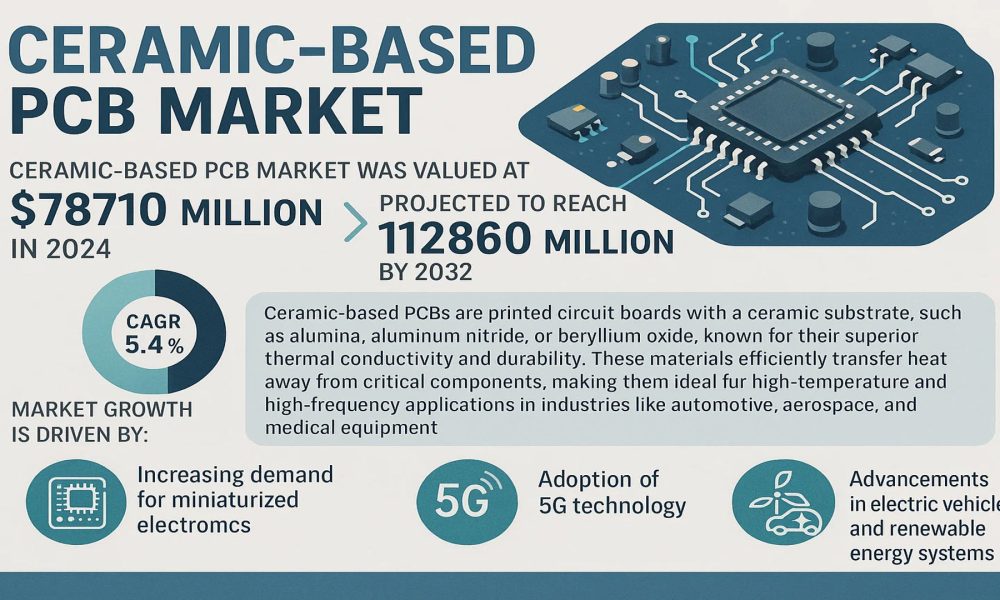
Ceramic-based PCB Market was valued at 78710 million in 2024 and is projected to reach US$ 112860 million by 2032, at a CAGR of 5.4% during the forecast period.
Ceramic-based PCBs are printed circuit boards with a ceramic substrate, such as alumina, aluminum nitride, or beryllium oxide, known for their superior thermal conductivity and durability. These materials efficiently transfer heat away from critical components, making them ideal for high-temperature and high-frequency applications in industries like automotive, aerospace, and medical equipment.
The market growth is driven by increasing demand for miniaturized electronics, adoption of 5G technology, and advancements in electric vehicles and renewable energy systems. However, challenges such as high manufacturing costs and material brittleness may restrain expansion. Leading players like Panda PCB, Anaren, and Micro Systems Engineering are investing in R&D to enhance material performance and cost-efficiency, further propelling market opportunities.
Claim Your Free Sample Report-https://semiconductorinsight.com/download-sample-report/?product_id=107177
MARKET DYNAMICS
MARKET DRIVERS
Expansion of High-Power Electronics Industry Accelerates Adoption of Ceramic PCBs
The global ceramic-based PCB market is experiencing robust growth, primarily driven by the expanding high-power electronics industry. With power electronics applications growing at an annual rate of nearly 8%, the demand for substrates capable of efficient thermal management has intensified. Ceramic PCBs, with their exceptional thermal conductivity properties, are becoming the preferred choice for applications requiring high temperature stability up to 350°C. The automotive sector’s electrification trend, which sees electric vehicle production increasing by approximately 30% year-over-year, further propels demand for ceramic PCB solutions in power modules and battery management systems.
5G Infrastructure Development Creates New Growth Avenues
The rollout of 5G networks worldwide is creating significant opportunities for ceramic PCBs. These advanced circuit boards are critical in 5G base stations, where they handle high-frequency signals while dissipating heat effectively. With global 5G infrastructure investments projected to exceed $500 billion by 2025, the demand for high-performance ceramic substrates is surging. Notably, the millimeter wave frequency bands in 5G require PCBs with low dielectric losses, making aluminum nitride-based ceramic PCBs particularly valuable in RF applications.
Growing Semiconductor Industry Boosts Market Expansion
The semiconductor industry’s continuous technological advancement, particularly in power devices and high-frequency applications, is fueling ceramic PCB demand. The emergence of wide bandgap semiconductors like SiC and GaN, which operate at higher temperatures and frequencies than traditional silicon, creates compatibility requirements that ceramic PCBs are uniquely positioned to satisfy. Global semiconductor capital expenditures reaching record levels underscore the market potential for ceramic substrate solutions.
Recent Developments:
- Material Advancements: Companies are focusing on improving thermal conductivity and mechanical strength of ceramic PCBs using advanced materials like aluminum nitride (AlN) and silicon nitride.
- High-Frequency Applications: Growing demand from 5G infrastructure, radar systems, and satellite communications is pushing manufacturers to develop low-loss, high-frequency ceramic-based PCBs.
- Automotive Electronics Adoption: Increasing integration of ceramic PCBs in EV battery management, LED lighting, and advanced driver-assistance systems (ADAS) due to high heat resistance and durability.
- Miniaturization Trends: Rising adoption of multilayer ceramic PCBs to meet compact design requirements in medical devices, aerospace, and consumer electronics.
- Collaborations & Expansions: Key players are expanding manufacturing capacities and forming partnerships with semiconductor and automotive companies to strengthen market presence.
MARKET OPPORTUNITIES
Emerging Medical Applications Present High-Growth Potential
The medical device industry represents a significant growth opportunity for ceramic PCBs, particularly in implantable devices and advanced diagnostic equipment. The biocompatibility and hermetic sealing properties of certain ceramic materials make them ideal for long-term implantation, with the medical PCB segment expected to grow at a 7.5% CAGR through 2030. Emerging applications in neuromodulation devices and high-resolution imaging systems are creating new demand for specialized ceramic substrates.
Space Exploration and Defense Applications Drive Innovation
Increasing investments in space exploration and defense technologies are creating premium opportunities for ceramic PCB manufacturers. The extreme environmental conditions in aerospace applications require substrates that can withstand temperature fluctuations from -150°C to +500°C while maintaining electrical performance. With global space economy projections exceeding $1 trillion by 2040, ceramic PCBs are well-positioned to benefit from this high-value market segment.
Material Innovation Opens New Application Areas
Ongoing research into advanced ceramic composites and nano-engineered materials is expanding the potential applications for ceramic PCBs. The development of ceramic-polymer hybrids combines the thermal performance of ceramics with the flexibility of polymers, potentially opening new markets in wearable electronics and flexible displays. These material innovations could significantly broaden the addressable market for ceramic-based circuit boards in coming years.
Claim Your Free Sample Report-https://semiconductorinsight.com/download-sample-report/?product_id=107177
List of Key Ceramic-based PCB Companies Profiled
- Panda PCB (China)
- PCB Global Pty Ltd (Australia)
- Anaren (U.S.)
- Noritake (Japan)
- Millennium Circuits Ltd (U.S.)
- Micro Systems Engineering (Germany)
- DK-Daleba (France)
- Micro-Precision Technologies (U.S.)
- Oneseine Enterprise (China)
- Hitech Circuits Co (China)
- Super PCB (U.S.)
- Bestpcb (China)
- CERcuits (U.K.)
- Rocket PCB Solution Ltd (China)
- JINRUIXIN (China)
- Venture (Singapore)
Segment Analysis:
By Type
Alumina Segment Dominates the Market Due to Widespread Adoption in High-Temperature Applications
The market is segmented based on type into:
- Alumina
- Subtypes: 96% Alumina, 99% Alumina, and others
- Aluminum Nitride
- Beryllium Oxide
- Others
- Includes silicon carbide and zirconia-based PCBs
By Application
Automotive Segment Leads Due to Rising Demand for High-Performance Electronics in Vehicles
The market is segmented based on application into:
- Automobile
- Includes engine control units, power modules, and LED lighting
- Medical Equipment
- Aerospace
- Semiconductor
- Others
- Includes telecommunications and industrial equipment
By End User
Electronics Manufacturers Lead the Market Due to Continuous Innovations in Consumer Electronics
The market is segmented based on end user into:
- Electronics Manufacturers
- Automotive OEMs
- Medical Device Companies
- Aerospace & Defense Contractors
- Others
- Includes research institutions and industrial equipment manufacturers
Other Topic-Electronic Bird Deterrent Market
CONTACT US:
City vista, 203A, Fountain Road, Ashoka Nagar, Kharadi, Pune, Maharashtra 411014
[+91 8087992013]




