
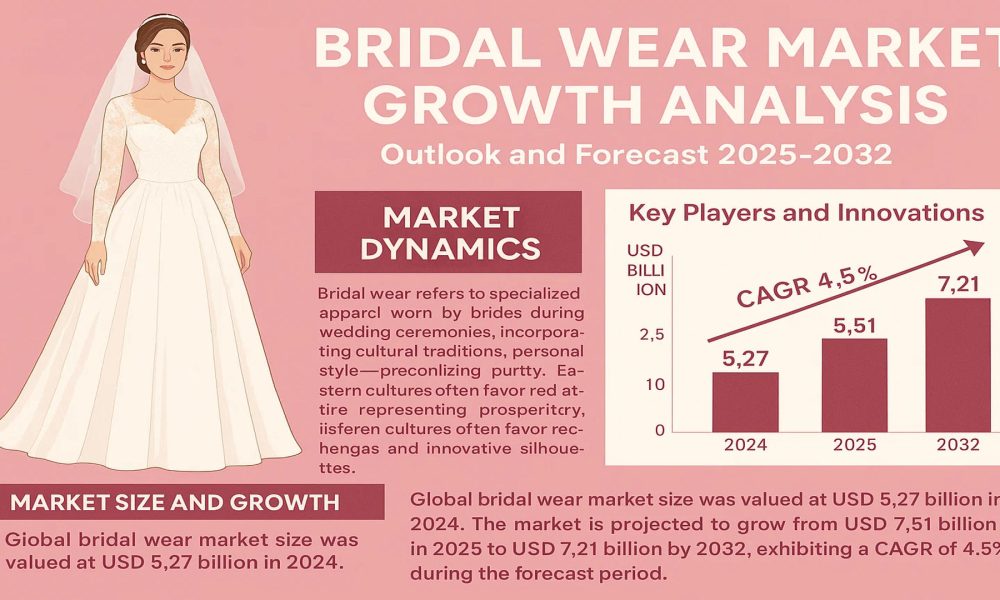
Global bridal wear market size was valued at USD 5.27 billion in 2024. The market is projected to grow from USD 5.51 billion in 2025 to USD 7.21 billion by 2032, exhibiting a CAGR of 4.5% during the forecast period.
Bridal wear refers to specialized apparel worn by brides during wedding ceremonies, incorporating cultural traditions, personal style, and fashion trends. These garments vary significantly across regions – while Western brides predominantly wear white gowns symbolizing purity, Eastern cultures often favor red attire representing prosperity. The category encompasses everything from traditional lehengas and qipaos to contemporary designer gowns featuring intricate embroidery, lacework, and innovative silhouettes.
Access Full Research: Global Bridal Wear Market Report 2025-2032
MARKET DRIVERS
Rising Disposable Incomes and Wedding Expenditure to Fuel Market Growth
The global bridal wear market is witnessing substantial growth driven by increasing disposable incomes, particularly in emerging economies. As households allocate larger budgets to wedding ceremonies, spending on bridal apparel has surged significantly. The average wedding expenditure has grown by nearly 25% over the past five years, with bridal wear accounting for approximately 10-15% of total wedding costs in developed markets. This trend is particularly evident in Asia-Pacific countries like China and India, where rising middle-class populations are embracing more lavish wedding traditions while maintaining cultural attire preferences.
A survey conducted by the Confederation of All India Traders (CAIT) revealed that approximately 3.5 million weddings were expected during this 23-day period, generating a substantial economic upturn in the industry. The CAIT Research & Trade Development Society survey projected a flow of around US$ 57.2 billion (Rs. 4,74,000 crore) in wedding-related expenditure and services.
Social Media Influence and Celebrity Weddings Reshaping Consumer Preferences
Social media platforms have become powerful drivers of bridal fashion trends, with Pinterest and Instagram serving as key inspiration sources for over 60% of brides worldwide. High-profile celebrity weddings have demonstrated measurable impact on demand for specific styles – the Meghan Markle effect increased sales of boat-neck designs by 40% post the royal wedding. Furthermore, the visual nature of platforms like TikTok has accelerated trend cycles in bridal fashion, with micro-trends now lasting 6-12 months compared to the traditional 2-3 year cycles. This continuous refresh of styles encourages multiple purchases and drives market growth.
Growing Popularity of Destination Weddings Expanding Market Reach
The destination wedding market, valued at over $50 billion globally, is creating new opportunities for bridal wear manufacturers. Brides are increasingly opting for multiple outfits to suit different wedding events and locations, with European and tropical destinations driving demand for specialized designs. The Mediterranean region has seen 18% annual growth in destination weddings, prompting bridal brands to develop lightweight, travel-friendly collections. This trend towards elaborate multi-event weddings has increased average bridal wardrobe expenditures by 30-35% compared to traditional single-ceremony weddings. The destination wedding boom has created demand for specialized bridal collections featuring convertible designs, wrinkle-resistant fabrics, and weather-appropriate silhouettes.
MARKET OPPORTUNITIES
Technological Innovations Creating New Design and Retail Possibilities
Advancements in digital design tools and manufacturing technologies are revolutionizing bridal wear customization. 3D design software now allows brides to visualize modifications to standard designs in real-time, while body scanning technology enables precise measurements without physical fittings. Some forward-thinking brands have reported 30% increases in conversion rates after implementing virtual try-on systems. These technologies not only enhance the customer experience but also reduce sample production costs and minimize returns.
Rental and Secondhand Models Gaining Mainstream Acceptance
The bridal wear rental market has grown by approximately 40% annually as economic and environmental concerns drive demand for alternative ownership models. Platforms specializing in pre-owned designer gowns offer prices 50-70% below retail while maintaining quality through rigorous inspection processes. This shift is particularly pronounced among eco-conscious urban brides, with 25% now open to wearing pre-owned attire. Established brands are responding by launching their own rental programs and certified resale platforms to capture this growing segment.
Emerging Markets Present Untapped Growth Potential
While North America and Europe currently dominate bridal wear sales, the Asia-Pacific region is projected to witness 6.8% CAGR through 2030 – nearly double the global average. Countries like India and China, with their large populations and strong wedding traditions, represent particularly promising opportunities. Local designers blending Western silhouettes with traditional motifs are gaining popularity, creating demand for fusion styles. Furthermore, increasing exposure to global fashion trends through digital platforms is driving premiumization in these markets.The success of localized collections demonstrates how cultural sensitivity combined with global design aesthetics can unlock significant growth in emerging bridal markets.
What is Bridal Wear?
Bridal wear encompasses specialized wedding attire worn by brides across cultures, including Western-style gowns, traditional lehengas, qipaos, and custom designer creations. These garments integrate cultural traditions with contemporary fashion, featuring intricate embroidery, luxurious fabrics, and personalized detailing to commemorate weddings – the most photographed events in people’s lives.
List of Key Bridal Wear Companies Profiled
- David’s Bridal Inc. (U.S.)
- Aolisha (China)
- Pronovias Fashion Group (Spain)
- Milla Nova (Poland)
- Famory (China)
- Maggie Sottero Designs (U.S.)
- Essense of Australia (Australia)
- Vera Wang (U.S.)
- Kleinfeld Bridal (U.S.)
- Rosa Clara (Spain)
- Paloma Blanca (Canada)
- Justin Alexander Limited (U.K.)
- Ming Shang Sha (China)
- The Knot Worldwide (U.S.)
- Allure Bridals, Inc. (U.S.)
- Morilee LLC (U.S.)
- Enzoani (U.S.)
- Oscar De La Renta (U.S.)
Segment Analysis:
By Type
The market is segmented based on type into:
- Wedding Gowns/Dresses
- Bridal Lehengas & Sarees
- Bridal Suits & Tuxedos
- Accessories
By Category
The market is segmented based on Cateogy into:
- Rental
- Non Rental
- Ready made
- Customized
By Fabric Type
The market is segmented based on fabric type into:
- Silk & Satin
- Lace & Tulle
- Velvet & Brocade
- Georgette & Chiffon
- Others
By Price Range
Luxury Segment Shows Significant Growth Due to Premiumization Trends
The market is segmented based on price range into:
- Economy/Value
- Mid-Range
- Premium
- Luxury/Designer
By Distribution Channel
The market is segmented based on distribution channel into:
- Offline Stores
- Specialty Bridal Boutiques
- Department Stores
- Luxury Fashion Houses
- Online Stores
- E-commerce Retailers (e.g., Net-a-Porter, Etsy)
- Brand-owned Websites
- Rental Platforms
BRIDAL WEAR MARKET TRENDS
Sustainability and Eco-Conscious Choices Reshaping Bridal Fashion
The bridal wear market is undergoing a significant transformation as sustainability becomes a key driver of consumer preferences. Recent studies indicate that nearly 65% of millennial brides consider environmental impact when selecting their wedding attire, leading to increased demand for ethically sourced materials like organic silk, recycled polyester, and biodegradable lace. Luxury bridal brands are responding by launching eco-conscious collections, with some designers reporting that sustainable lines now account for 20-30% of their total bridal sales. This shift is complemented by the rising popularity of pre-owned bridal gown marketplaces, which have seen growth rates exceeding 15% annually as brides seek both sustainability and cost-effectiveness without compromising on quality or design.
Other Trends
Cultural Fusion and Personalization
The modern bridal wear landscape reflects a growing preference for cultural fusion and highly personalized designs. Contemporary brides are increasingly blending traditional elements with contemporary styles, resulting in hybrid designs that honor heritage while embracing modern aesthetics. About 40% of bridal boutiques now report increased demand for customizable options, from adjustable silhouettes to modular accessories. This trend is particularly prominent in multicultural societies where 35% of weddings incorporate elements from multiple cultural traditions. The personalization wave extends beyond design to include made-to-measure services, which currently represent nearly 25% of the premium bridal market segment.
Recent Developments in the Bridal Wear Market
- Sustainable & Eco-Friendly Collections: Major bridal fashion houses are launching gowns made from organic fabrics, recycled materials, and ethically sourced lace, reflecting growing demand for sustainable luxury in bridal wear.
- Digital & Virtual Fittings: The adoption of AI-powered virtual try-on platforms, AR mirrors, and 3D body scanning is revolutionizing the bridal shopping experience, enabling brides to preview gowns without physical trials.
- Customization & Personalization: Increasing consumer preference for bespoke and semi-custom bridal wear has encouraged designers to offer modular gowns with detachable trains, sleeves, and accessories for versatile styling.
- Rise of Online & Omnichannel Retail: Bridal brands are expanding their e-commerce presence and integrating virtual consultations, enhancing accessibility for global customers while maintaining in-store experiences.
- Cultural & Inclusive Designs: Designers are catering to diverse cultural preferences and body types, introducing inclusive sizing and multicultural bridal attire to appeal to a broader demographic.
- Celebrity & Influencer Collaborations: Partnerships with celebrities and social media influencers are boosting visibility and driving new bridal fashion trends across global markets.
- Regional Expansion: Leading brands are expanding in Asia-Pacific and Middle Eastern markets, driven by high wedding spending and evolving luxury fashion preferences.
Download Sample: Free Bridal Wear Market Sample
About Intel Market Research
Intel Market Research delivers actionable insights across consumer retail markets through:
- Real-time trend monitoring
- Techno-economic feasibility analysis
Trusted by Fortune 500 companies, our 100+ country coverage empowers strategic decision-making with precision.
Contact: International: +1(332) 2424 294 | Asia: +91 9169164321
Website: https://www.intelmarketresearch.com
LinkedIn: https://www.linkedin.com/company/intel-market-research




