
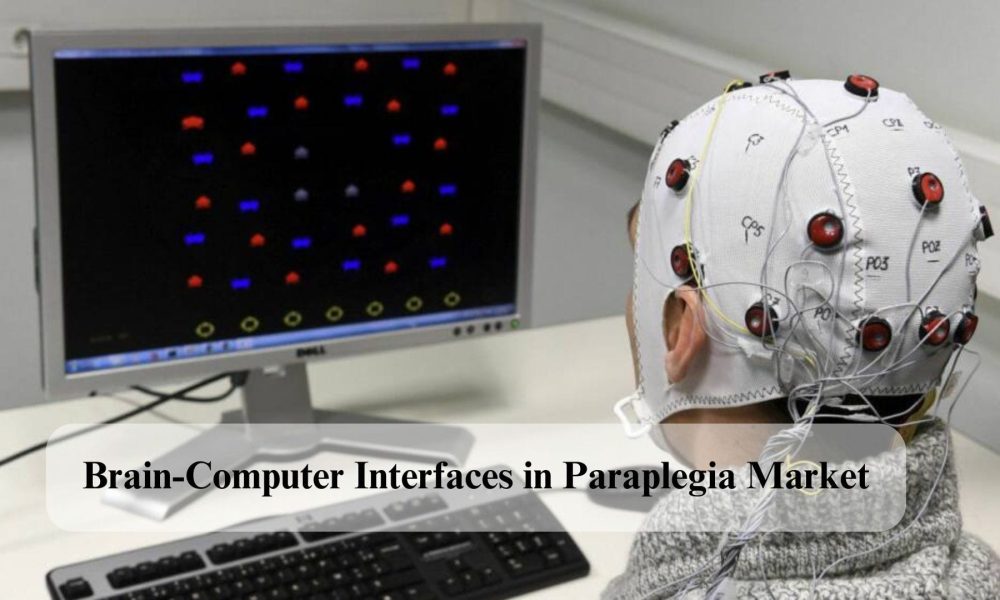
The Global BCI (brain-computer interfaces) in paraplegia market reached US$ 238.5 million in 2023 and is expected to reach US$ 346.2 million by 2031, growing at a CAGR of 4.2% during the forecast period 2024-2031.
Brain-Computer Interfaces in paraplegia refer to advanced neurotechnology that enables individuals with spinal cord injuries to regain mobility and communication by directly linking brain signals to external devices such as prosthetics, exoskeletons, or computer systems. These interfaces bypass damaged neural pathways, translating brain activity into actionable commands, enhancing independence for paraplegic patients.
The market for BCIs in paraplegia is expanding due to advancements in neuroprosthetics, AI-driven signal processing, and increased research funding. The growing prevalence of spinal cord injuries, coupled with rising demand for assistive technologies, drives market growth. Government initiatives, collaborations between tech and healthcare companies, and innovations in wireless and non-invasive BCI solutions further propel adoption. North America and Europe lead the market, while Asia-Pacific shows promising growth due to increasing healthcare investments. Despite ethical concerns and high costs, ongoing technological progress continues to enhance the feasibility and accessibility of BCI solutions for paraplegic individuals.
Download Free Sample PDF: https://www.datamintelligence.com/download-sample/brain-computer-interfaces-in-paraplegia-market
Market Growth Drivers:
Increasing Investments and Advancements in R&D
Brain-computer interface (BCI) devices for paraplegia patients are still in the development phase, with several neurotechnology companies striving to bring them to clinical use. Many of these companies have secured regulatory approvals for human trials, driving market expansion. As research efforts intensify, the industry is expected to experience significant growth.
For instance, in April 2021, IpsiHand became the first FDA-approved BCI device for clinical use. Developed by Neurolutions, Inc., it aids in upper extremity rehabilitation for chronic stroke patients and can be used in both home and clinical settings. Following this, the FDA designated Blackrock Neurotech’s MoveAgain Brain-Computer Interface System as a Breakthrough Device for individuals with mobility impairments, enabling control of computers, mobile devices, and wheelchairs through neural signals.
Additionally, companies like Neuralink are conducting groundbreaking research. In early 2024, Neuralink implanted its proprietary BCI device in a human patient as part of the PRIME study, evaluating its safety and functionality in helping paralyzed individuals control external devices using their thoughts.
These advancements are set to transform therapy for paraplegia patients, paving the way for a future where BCI technology significantly enhances mobility and independence.
Market Segments:
By Type: Invasive, Minimally Invasive, Non-Invasive.
By Technology: Microelectrode Array (MEA), Electrocorticography (EcoG), Electroencephalograph (EEG), Functional Near Infrared Spectroscopy (fNIRS), Others.
By Application: Mobility Assistance, Communication, Rehabilitation, Others.
Competitive Landscape
- Neurolutions, Inc
- Synchron
- Neuralink
- Blackrock Neurotech.
- BrainGate.
- Paradromics.
- Cognixion
- EMOTIV
- Precision Neuroscience
- Bitbrain Technologies
Customize Your Scope: https://www.datamintelligence.com/customize/brain-computer-interfaces-in-paraplegia-market
Regional Growth
North America to Lead the BCI Market in Paraplegia with a 49.5% Share
North America is expected to dominate the global brain-computer interface (BCI) market for paraplegia, accounting for a 49.5% market share. This dominance is driven by its advanced healthcare infrastructure, substantial investments from market players, and strong regulatory support for innovation.
Currently, the only FDA-approved BCI systems, such as IpsiHand, are available exclusively in the U.S., offering prescription-based access for individuals with mobility impairments. Additionally, Neuralink’s BCI system is undergoing clinical evaluation in the U.S., and if successful, it will first be introduced to American paraplegia patients.
The high prevalence of paralysis in the U.S. further boosts market opportunities for BCI innovations. According to a 2022 study by the Christopher & Dana Reeve Foundation, approximately 17 people per 1,000 in the U.S. suffer from some form of paralysis, translating to a total of 5.78 million affected individuals in 2023.
Considering these factors, North America is expected to maintain its leading position in the BCI market for paraplegia, emerging as a key hub for investments and technological advancements in neurotechnology.
For Detailed Report: https://www.datamintelligence.com/enquiry/brain-computer-interfaces-in-paraplegia-market




