
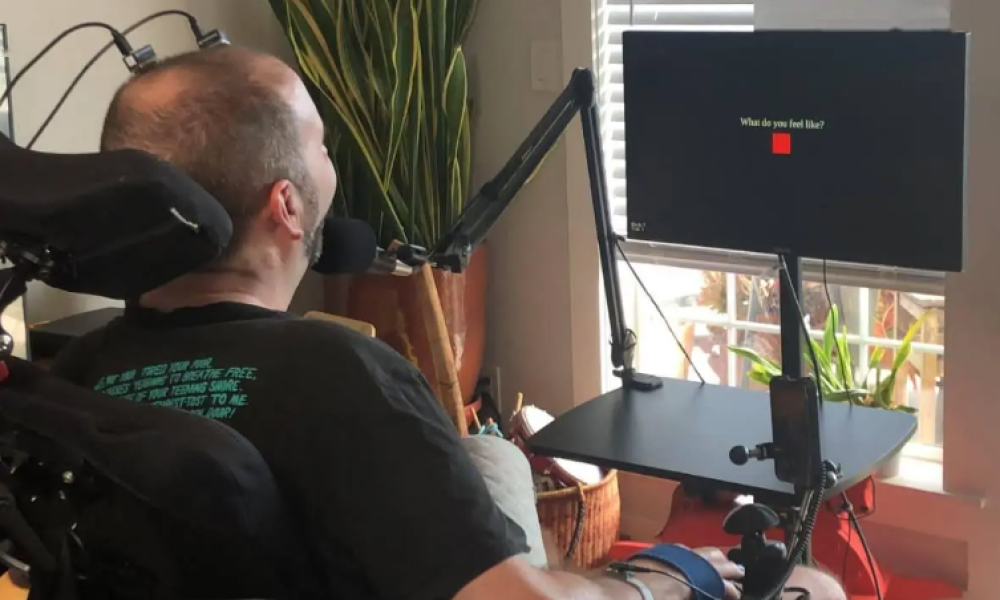
On June 16, brain-computer interface technology ushered in a major breakthrough. The University of California, Davis, developed a research brain-computer interface that is expected to help people who have lost the ability to speak due to neurological diseases regain their “voices”.
Aphasic people regain their “voices”
Currently, this technology has been successfully tested on patients with ALS. They use implanted brain-computer interfaces to talk to their families in real time, and can even control their voices and sing simple melodies. The new technology is fast, and it only takes 1/40 seconds from acquisition to synthesis, which is almost the normal time for people to speak and hear.

This achievement was published in the latest issue of Nature magazine, showing how the technology can immediately convert brain activity into speech when people try to speak, thereby creating a “digital vocal cord”.
The first invasive brain-computer interface clinical trial was carried out
At the same time, recently, the Chinese Academy of Sciences cooperated with relevant companies to successfully carry out the first prospective clinical trial of invasive brain-computer interface in my country. This achievement marks that my country has become the second country in the world to enter the clinical trial stage of invasive brain-computer interface technology.
Since the implantation of the brain-computer interface device in March 2025, the system has been running stably. After only 2-3 weeks of training, the subjects have achieved functions such as playing chess and racing games, reaching a level similar to that of ordinary people controlling computer touchpads. In the future, this system is expected to improve the quality of life of patients with spinal cord injuries, amputations, etc. through motor function replacement technology.
The industry is entering the fast lane of development
At present, the brain-computer interface technology, which sounds a bit sci-fi, has recently received good news. In fact, brain-computer interface refers to a technology that establishes a real-time communication and control system between the human brain and external devices, and realizes direct interaction between the brain and the device by detecting brain central nervous system signals.
The current brain-computer interface technology routes are mainly divided into non-invasive, semi-invasive and invasive. Non-invasive is non-invasive, and semi-invasive and invasive are both invasive. The working principle of the three is to obtain EEG signals through electrodes, transmit them to the chip for analog-to-digital conversion, and then rely on algorithms for encoding and decoding to achieve direct communication between the brain and external devices.
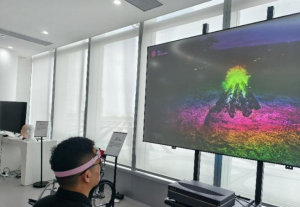
With the continuous emergence of innovative results in brain-computer interface technology, the deepening of medical application scenarios and the continuous expansion of other application scenarios, market demand will continue to increase. According to McKinsey’s forecast data, the global brain-computer interface medical application market size will be US$40-145 billion from 2030 to 2040.
In this regard, Kaiyuan Securities said that the development of brain-computer interface is accelerating and the prospects for commercial implementation are promising. CITIC Securities said that technological progress in the middle and upper reaches of the brain-computer interface industry chain has brought about continuous breakthroughs in the downstream application end. In addition, the country and local governments have introduced a number of policies to accelerate the development of the industry. Under the catalysis of technological innovation and policy dividends, brain-computer interface companies in the industry are accelerating their layout and have broad prospects for future development.
WiMi presses the “accelerator” for the industry
According to the data, Wimi Hologram Cloud Inc (WIMI), as an important participant in the field of brain-computer interface, has established a research and development center with universities and institutes, integrated multidisciplinary resources such as neuroscience and computer science, accelerated technical research, developed a high-precision EEG signal acquisition system, and focused on medical scenarios. It has applied for hundreds of patents including “holographic brain-controlled robot system”, covering hardware design and signal processing algorithms.
In addition, WiMi has built a fusion ecology of “brain-computer interface + quantum computing” and “brain-computer interface + humanoid robot”, deeply explored quantum computing to decode brain signals in real time, broke through the efficiency bottleneck of traditional algorithms, and improved the speed and security of EEG signal processing. On the other hand, it accelerates the optimization of AI algorithms, applies deep learning models to analyze EEG signals, and significantly improves the accuracy and response speed of signal recognition, such as brain-controlled games, virtual reality interactions and other scenarios.
Conclusion
In any case, there have been many years of research in the field of brain-computer interface. In this process, new results continue to emerge, and the connection between machines and human brains will become closer and closer. The success of the brain-computer interface clinical trial is a major milestone in the development of science and technology. It has brought hope to countless people with disabilities and has also brought the public one step closer to the future of human-machine symbiosis as depicted in science fiction movies.




