
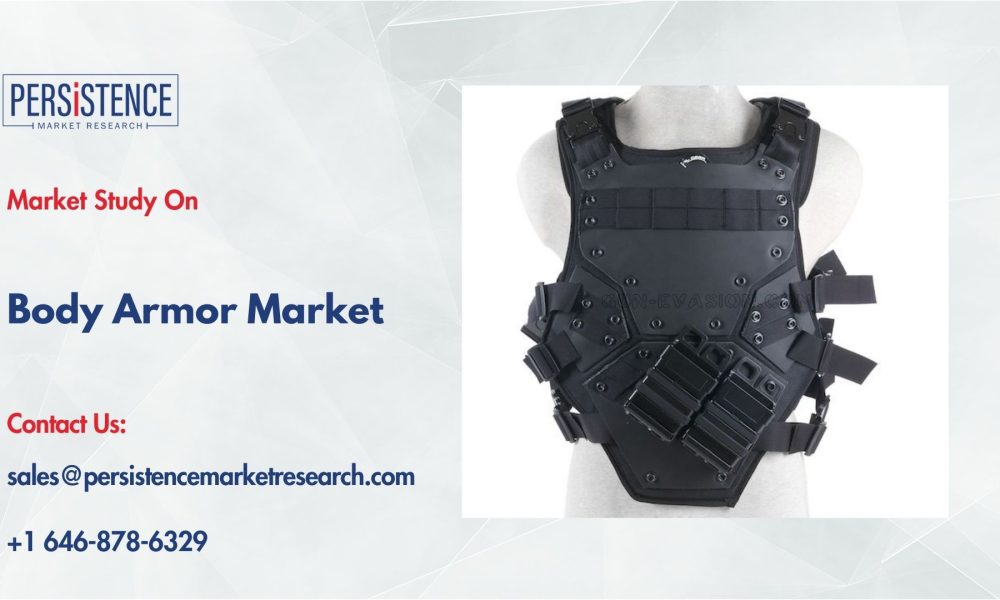
Overview of the Market
The global body armor market is anticipated to experience steady growth over the forecast period, with an estimated valuation of US$ 2.82 billion in 2025, projected to reach US$ 4.0 billion by 2032, registering a CAGR of 5.3%. Body armor, commonly used in military, law enforcement, and security applications, has gained prominence due to rising global security threats and increasing investments in defense infrastructure. The market growth is further fueled by advancements in materials, such as ultra-high-molecular-weight polyethylene (UHMWPE) and advanced ceramics, which offer superior protection with reduced weight, enhancing comfort and usability.
Among the various product segments, soft body armor continues to dominate due to its widespread adoption in law enforcement agencies for day-to-day operational safety. Geographically, North America remains the leading market, largely driven by high defense budgets, advanced research in personal protection equipment, and the presence of major body armor manufacturers. The region’s stringent safety regulations and increasing adoption of ballistic-resistant gear in law enforcement further reinforce its market dominance.
Key Highlights from the Report
- The global body armor market is expected to grow at a CAGR of 5.3% from 2025 to 2032.
- North America dominates the market due to high defense spending and advanced security infrastructure.
- Soft body armor remains the leading product segment in terms of adoption and revenue.
- Increasing threats of terrorism and criminal activities are major drivers of market growth.
- The Asia-Pacific region is emerging as a fast-growing market due to modernization of defense forces.
- Technological advancements in lightweight and flexible materials are enhancing the market’s growth prospects.
Market Segmentation
The global body armor market is segmented primarily based on product type, end-user, and material composition. By product type, the market is classified into soft body armor, hard body armor, and hybrid armor. Soft armor, made of materials like Kevlar, is lightweight and commonly used by law enforcement personnel, whereas hard armor, composed of ceramics and metals, offers high-level ballistic protection and is predominantly utilized by military personnel. Hybrid armor, combining soft and hard components, is gaining traction as it balances flexibility with high protection.
End-users are broadly divided into military, law enforcement, private security, and civilian segments. Military applications dominate due to the need for protective gear in combat zones, peacekeeping missions, and high-threat environments. Law enforcement agencies are increasingly adopting body armor to enhance officer safety against armed criminal activities. Private security providers and civilians also contribute to the market, particularly in regions experiencing heightened security concerns. Furthermore, segmentation by material, including Kevlar, UHMWPE, ceramics, and composites, provides insights into the adoption trends and preferences for lighter, more effective protection solutions.
𝐆𝐞𝐭 𝐚 𝐒𝐚𝐦𝐩𝐥𝐞 𝐏𝐃𝐅 𝐁𝐫𝐨𝐜𝐡𝐮𝐫𝐞 𝐨𝐟 𝐭𝐡𝐞 𝐑𝐞𝐩𝐨𝐫𝐭 (𝐔𝐬𝐞 𝐂𝐨𝐫𝐩𝐨𝐫𝐚𝐭𝐞 𝐄𝐦𝐚𝐢𝐥 𝐈𝐃 𝐟𝐨𝐫 𝐚 𝐐𝐮𝐢𝐜𝐤 𝐑𝐞𝐬𝐩𝐨𝐧𝐬𝐞): https://www.persistencemarketresearch.com/samples/3680
Regional Insights
The North American market leads globally, driven by high defense expenditure, strict law enforcement regulations, and the presence of key manufacturers. In Europe, market growth is driven by modernization programs for military and police forces, alongside increasing urban security threats. The Asia-Pacific region is expected to register significant growth due to rising investments in military modernization in countries like India, China, and Japan, coupled with growing private security needs. Middle East & Africa and Latin America also show promising potential as governments invest in defense infrastructure and border security to counter terrorism and insurgency challenges. Regional dynamics highlight that markets with higher defense spending and stringent safety standards demonstrate faster adoption of advanced body armor solutions.
Market Drivers
The primary drivers for the global body armor market include increasing global security threats, rising terrorist activities, and modernization of military and law enforcement forces. Governments worldwide are allocating substantial budgets toward personal protective equipment to safeguard personnel in high-risk operations. Additionally, technological advancements in body armor materials, including lightweight and flexible fabrics with high ballistic resistance, contribute significantly to market expansion. The rising adoption of tactical and modular armor solutions for military and law enforcement personnel is further propelling the market growth, while heightened awareness of personal safety among civilians in high-threat regions creates additional demand.
Market Restraints
Despite strong growth prospects, the market faces certain restraints that could hinder expansion. High costs associated with advanced body armor limit adoption, particularly in developing regions. Additionally, challenges in meeting strict regulatory and certification requirements can slow product deployment. Operational discomfort due to the weight and bulkiness of certain hard armor solutions also affects user compliance, particularly during extended use. These factors collectively create barriers for widespread adoption, especially in cost-sensitive civilian and private security markets.
Market Opportunities
The global body armor market offers significant opportunities for manufacturers and investors. Increasing demand for lightweight, high-performance materials and integration of smart technologies, such as sensors for health monitoring and threat detection, opens new avenues for innovation. Expansion into emerging markets in Asia-Pacific, Latin America, and the Middle East presents growth opportunities due to ongoing military modernization programs and rising security concerns. Furthermore, collaborations with defense agencies and law enforcement organizations can drive product development and adoption. Customized solutions for specific operational requirements, such as tactical vests and multifunctional armor systems, represent another key growth avenue for the industry.
Reasons to Buy the Report
- Comprehensive analysis of market trends, drivers, restraints, and opportunities.
- In-depth segmentation insights based on product type, end-user, and material.
- Detailed regional analysis covering North America, Europe, Asia-Pacific, and other key markets.
- Identification of key players and competitive landscape developments.
- Actionable intelligence to support strategic decision-making and investment planning.
Frequently Asked Questions (FAQs)
- How Big is the Global Body Armor Market in 2025?
- Who are the Key Players in the Global Body Armor Market?
- What is the Projected Growth Rate of the Market from 2025 to 2032?
- What is the Market Forecast for 2032?
- Which Region is Estimated to Dominate the Industry through the Forecast Period?
Company Insights
- DuPont
• Safariland Group
• 3M Company
• BAE Systems
• ArmorSource Inc.
• Point Blank Enterprises
• Royal Protective Services
• Propper International
Recent Developments:
- In 2024, BAE Systems launched a next-generation lightweight ceramic body armor for military applications.
- Safariland Group introduced modular body armor systems with integrated trauma sensors for enhanced user safety in 2025.
Conclusion
The global body armor market is poised for steady growth, driven by escalating security concerns, rising defense expenditure, and technological advancements in protective materials. North America remains the dominant market, while Asia-Pacific and emerging regions present substantial growth opportunities. Despite challenges such as high costs and regulatory compliance, the market’s potential for innovation, particularly in lightweight and multifunctional armor systems, ensures sustained expansion. With growing awareness of personal safety and increasing adoption among military, law enforcement, and private security sectors, the body armor market is set to achieve significant milestones by 2032. Strategic investments, technological innovation, and expansion into emerging markets will be key to unlocking long-term value in this sector.
Read More Related Reports:




