
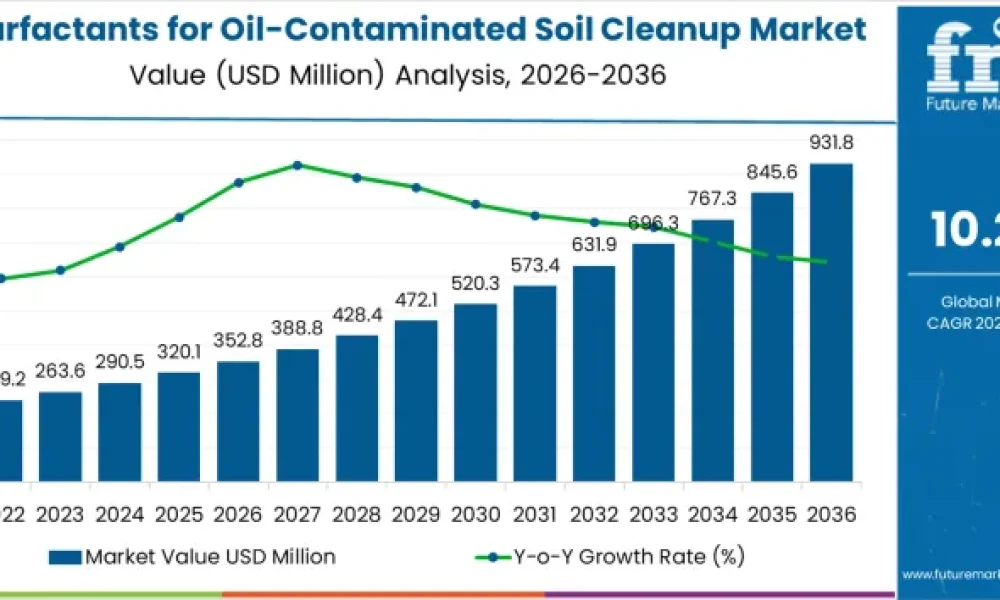
The global Biosurfactants for Oil-Contaminated Soil Cleanup Market is projected to reach USD 931.8 million by 2036, expanding from an estimated USD 352.8 million in 2026 at a 10.2% compound annual growth rate (CAGR) over the forecast period, fueled by increasing environmental regulations and a strong shift toward sustainable soil remediation solutions worldwide. This robust expansion reflects not only the intensifying need for eco-friendly cleanup technologies that replace harsh synthetic surfactants, but also the rapid adoption of biosurfactants in industrial and environmental applications where biodegradability, low toxicity, and performance efficacy are paramount.
Key Market Insights at a Glance: The biosurfactants segment led by rhamnolipids, sophorolipids, lipopeptides and glycolipids is driving innovation in bioremediation, with rhamnolipids alone accounting for around 30% market share due to their superior emulsifying capabilities that enhance hydrocarbon removal. In application terms, oil spill soil remediation dominates with approximately 36% share, highlighting the critical role biosurfactants play in mitigating environmental damage from spill incidents and industrial contamination. Growth is strongly supported by regulatory emphasis on sustainable remediation practices across North America, Europe and the Asia-Pacific region, where demand continues to escalate alongside environmental compliance imperatives.
The rising need to remediate oil-impacted soils—whether from pipeline leaks, refinery waste sites, or industrial spills—alongside stringent soil and groundwater protection norms, is compelling stakeholders to adopt green remediation approaches that minimize secondary ecological impact. Biosurfactants, produced by microorganisms, enhance contaminant bioavailability and mobilization, improving natural biodegradation while reducing reliance on synthetic chemicals that pose long-term environmental concerns. This makes them especially attractive for environmental agencies, remediation firms and oil & gas companies pursuing both compliance and sustainability goals.
Segment Overview: Market segmentation reveals that rhamnolipids maintain a leading edge due to high efficacy in hydrocarbon emulsification and biodegradation acceleration. Sophorolipids and other biosurfactant types also contribute significantly, offering versatility across varied soil conditions. Application segments extend beyond oil spill soil remediation to include industrial hydrocarbon contaminated sites, refinery and petrochemical waste sites, oil storage and pipeline leak areas, and marine shoreline cleanup projects—each segment benefiting from tailored biosurfactant solutions that address specific contaminant profiles and environmental sensitivities.
To access the complete data tables and in-depth insights — Request Your Sample Report Now
Regional Overview: Growth dynamics vary by geography, with Asia-Pacific—particularly India and China—emerging as high-growth markets due to rapid industrialization, escalating environmental concerns, and strengthening regulatory frameworks that prioritize sustainable remediation technologies. India, for instance, is anticipated to exhibit one of the highest regional CAGRs, driven by expanding oil & gas, manufacturing and agricultural sectors that demand effective soil cleanup solutions. North America and Europe continue to demonstrate steady uptake, supported by advanced environmental legislation and proactive remediation practices that accelerate biosurfactant adoption across multiple contaminated site contexts.
Competitive Landscape: The market’s competitive environment comprises established chemical and biotechnological innovators offering advanced biosurfactant formulations aimed at optimizing cleanup outcomes while ensuring environmental safety. Leading players include Evonik (Biotech), Solvay, Kao Chemicals, Stepan Company and REGENESIS, all of which are focused on product innovation, regulatory compliance, and solutions that deliver cost-effective, sustainable performance. These companies are leveraging microbial strain advancements, fermentation process improvements and formulation science to expand product portfolios and broaden commercial deployment.
Market Outlook: Powering the Next Decade: The biosurfactants market for oil-contaminated soil cleanup is poised for continued momentum into the next decade as environmental challenges persist and demand for green remediation technologies intensifies. Innovations in biosurfactant production, enhanced field performance through tailored blends and integration with comprehensive bioremediation strategies (such as bioaugmentation and biostimulation) are set to unlock further value. Increasing investments in infrastructure redevelopment and brownfield projects will also support long-term growth, underscoring the strategic importance of biosurfactants in global efforts to restore contaminated lands responsibly and sustainably.
Key Players of Sustainable Label Industry: The market landscape features multiple players focusing on eco-friendly biosurfactant solutions that balance environmental stewardship with remediation efficacy. Companies like Evonik (Biotech), Solvay, Kao Chemicals, Stepan Company and REGENESIS are at the forefront, competing through enhanced performance data, sustainability credentials and robust technical support that ensure successful remediation outcomes. These leaders are shaping market standards and expanding green remediation adoption across diverse end-use sectors.
Recent Strategic Developments: Recent moves within the industry include heightened investment in production scalability, development of specialized biosurfactant blends for varying hydrocarbon classes and increasing collaborations between remediation firms, regulatory bodies and technology providers. These initiatives aim to accelerate product validation, streamline deployment and reinforce biosurfactant adoption in critical environmental cleanup programs worldwide.
Have a specific Requirements and Need Assistant on Report Pricing or Limited Budget please contact us – [email protected]
About Future Market Insights (FMI)
Future Market Insights, Inc. (FMI) is an ESOMAR-certified, ISO 9001:2015 market research and consulting organization, trusted by Fortune 500 clients and global enterprises. With operations in the U.S., UK, India, and Dubai, FMI provides data-backed insights and strategic intelligence across 30+ industries and 1200 markets worldwide.
Why Choose FMI: https://www.futuremarketinsights.com/why-fmi



