
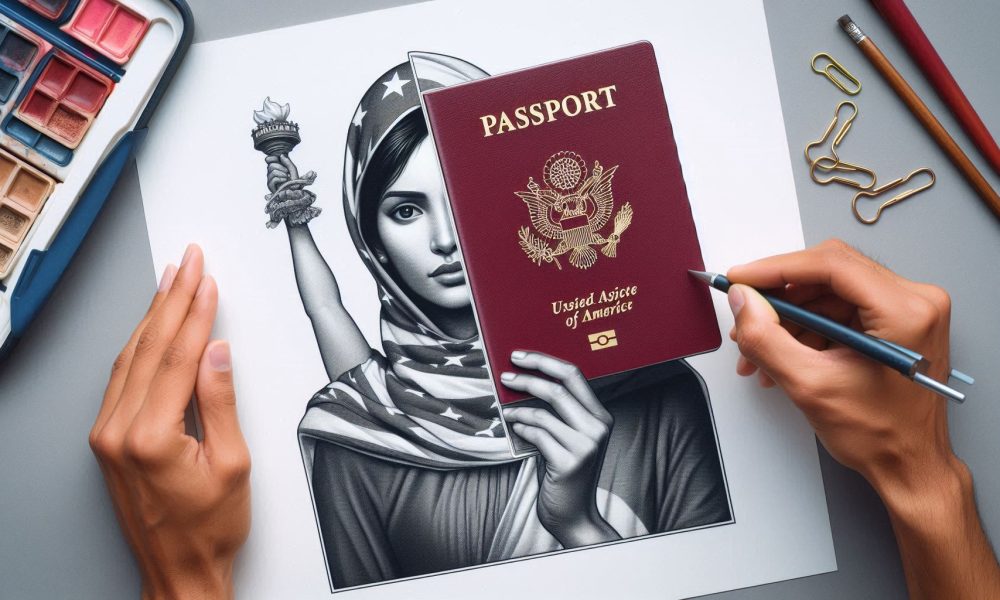
From Clearance to Confinement — How the U.S. Quietly Rejects Travellers at the Gate
VANCOUVER, British Columbia — June 5, 2025 — For millions of travellers around the globe, the United States remains a coveted destination for education, business, and family reunification. But for a growing number of international visitors, that dream is being extinguished on arrival—literally.
According to a new report by Amicus International Consulting, hundreds of travellers are being denied entry at U.S. airports despite holding valid visas, Electronic System for Travel Authorization (ESTA) clearances, or visa-free access. These individuals are being detained, interrogated, and deported—often without formal explanation, due process, or recourse.
Behind this trend is a dangerous combination of algorithmic profiling, biometric scanning, and secretive risk scoring systems used by U.S. Customs and Border Protection (CBP) and Homeland Security. The agency’s enforcement of visa policy has shifted from adjudication to preemptive denial based on machine learning risk indicators and foreign intelligence feeds, many of which are faulty, discriminatory, or unverifiable.
From Approved to Abandoned: The Airport Reversal Phenomenon
For most travellers, receiving a U.S. visa is the final hurdle. However, as Amicus has documented, entry into the country is never guaranteed, even after obtaining a visa. Under Section 235 of the Immigration and Nationality Act, CBP officers have broad discretionary power to detain, question, or deny entry to any non-citizen deemed a potential risk.
In 2024, over 78,000 travellers were denied entry at U.S. ports of entry, according to DHS statistics—a record high.
“What many don’t realize is that a visa is merely permission to approach the border, not to cross it,” said a senior legal advisor at Amicus International. “And today, that border is defended by machines.”
Case Study 1: A Ghanaian Software Engineer Denied Entry at JFK
In September 2024, Kwame A., a 29-year-old software engineer from Accra, arrived at John F. Kennedy International Airport with a valid B1/B2 visa to attend a tech conference in Boston. After passing through immigration, he was pulled aside by Customs and Border Protection (CBP) agents.
He was held in secondary inspection for 12 hours and told that an algorithm flagged his travel pattern—he had previously visited Dubai and Malaysia—as suspicious. His phone was searched, and a WhatsApp message referencing “encryption protocols” triggered further scrutiny. Despite having a formal invitation and proof of return, he was deported back to Ghana without ever leaving the airport.
“There was no crime, no accusation, just an assumption,” said his attorney. “That’s the future of travel.”
The Role of Biometric Surveillance at Entry Points
Since 2023, CBP has expanded facial recognition and iris scanning to all major international airports. These systems are linked to watchlists maintained by:
INTERPOL
FBI and DHS databases
Foreign intelligence agencies
Behavioural risk engines using AI modelling
Travellers arriving at U.S. airports are automatically scanned, and if a facial match, movement pattern, or metadata tag raises suspicion, they are flagged for secondary inspection—regardless of visa status.
One 2024 DHS internal memo described the goal of these systems as “proactive interdiction based on pattern deviation,” meaning a traveller can be denied entry simply for acting or appearing different than expected.
Case Study 2: British Journalist Turned Away in Chicago
Fiona H., a British citizen with no criminal history, arrived in Chicago for a human rights conference in March 2025. Her ESTA application had been approved two weeks prior. However, upon arrival, her social media was reviewed, and she was questioned about posts criticizing U.S. immigration policies.
Despite assurances she was attending in a non-reporting role, she was deemed a “potential agitator” and returned to London on the next available flight.
Fiona had never been arrested, was not on any official watchlist, and held a passport ranked among the highest for global mobility. Yet a few critical tweets were enough to brand her a threat.
Predictive Algorithms and the ‘Behavioural Watchlist’
CBP’s use of predictive analytics has drawn international concern. Through tools like the Automated Targeting System (ATS) and the National Targeting Center (NTC), immigration authorities flag travellers using behavioural, linguistic, and travel metadata before they even step off the plane.
Red flags include:
Visiting certain countries (e.g., Turkey, Iran, Lebanon, Afghanistan)
Encrypted messaging activity
Multiple entries in short timeframes
Phone numbers linked to “digital heat maps” in unstable regions
Family surnames matching international law enforcement entries
Yet travellers flagged for these reasons are often never informed of the exact cause, leaving them unable to contest or correct the record.
Case Study 3: Syrian-German Family Separated in Atlanta
In 2024, a Syrian-German couple travelling with their two children were stopped in Atlanta while visiting relatives in Georgia. The parents held German passports and had travelled visa-free under the U.S. Visa Waiver Program.
Facial recognition flagged the father’s resemblance to a man on an outdated no-fly list from 2016. CBP detained the father for two days, separated the family, and revoked their ESTA clearances. They were forced to return to Munich and have since been barred from reentry.
The family has filed a formal human rights complaint, which Amicus is assisting with.
No Appeal, No Explanation: The Legal Black Hole
One of the most troubling aspects of these denials is the lack of recourse. Travellers who are turned away are rarely given written explanations for the decision. In many cases:
Their ESTA or visa is cancelled electronically.
They are marked as “inadmissible” in the DHS Arrival and Departure Information System (ADIS)
They are denied future entry without being told why
There is no formal appeals process for these airport denials. Travellers are instructed to reapply—often without success.
Amicus International’s Role in Challenging Digital Exclusion
As more travellers fall victim to algorithmic immigration control, Amicus International Consulting has stepped in to provide legal, technical, and diplomatic assistance. Their services include:
Visa reinstatement and reconsideration requests
Appeals under privacy and transparency laws
Biometric challenge petitions under GDPR and U.S. privacy law
Second citizenship acquisition for improved mobility
Real-time legal intervention for airport detentions
In 2024 alone, Amicus successfully resolved 212 airport denial cases and prevented 63 unjust removals through emergency diplomatic interventions.
Black Market Reaction: Dark Web Visa Solutions on the Rise
With official routes increasingly unreliable, dark web vendors are offering counterfeit solutions to circumvent these denials:
Fake ESTA and DS-160 confirmations
Forged interview records and fake sponsor letters
Cloned biometric passports with embedded data
AI-generated travel histories to “clean” an applicant’s profile
Interpol reports that in 2024, over 30,000 U.S. visas and travel authorizations were fraudulently obtained or forged, many through increasingly sophisticated synthetic ID kits.
Second Passports: The Legal Escape Hatch
For high-risk travellers, Amicus recommends pursuing second citizenship in countries that offer favourable visa-free access to the U.S. (such as Grenada, Portugal, and Malta) or expanding their regional mobility to jurisdictions outside the U.S. sphere of influence.
Second passports not only improve travel prospects but can also bypass specific risk triggers associated with nationality or origin.
One Amicus client, a Lebanese national with a clean record, was denied entry three times under a valid B1/B2 visa. After obtaining Grenadian citizenship via legal investment, he was able to enter the U.S. under the Visa Waiver Program without incident.
Conclusion: The Future of U.S. Entry is Preemptive Denial
For all its rhetoric about openness and opportunity, the United States has constructed a digital fortress where visas no longer guarantee access. Entry is subject to invisible systems—algorithmic judgments, AI surveillance, biometric mismatches, and global metadata fusion.
For travellers, the implications are clear: the moment of denial doesn’t come at the embassy—it comes at the gate.
Until legal transparency, human oversight, and international safeguards are restored, freedom of movement will remain an illusion for many. Amicus International is working to protect that freedom and to ensure that legal, verified travellers do not become collateral damage in a war waged by machines.
Contact Information
Phone: +1 (604) 200-5402
Email: [email protected]
Website: www.amicusint.ca




