
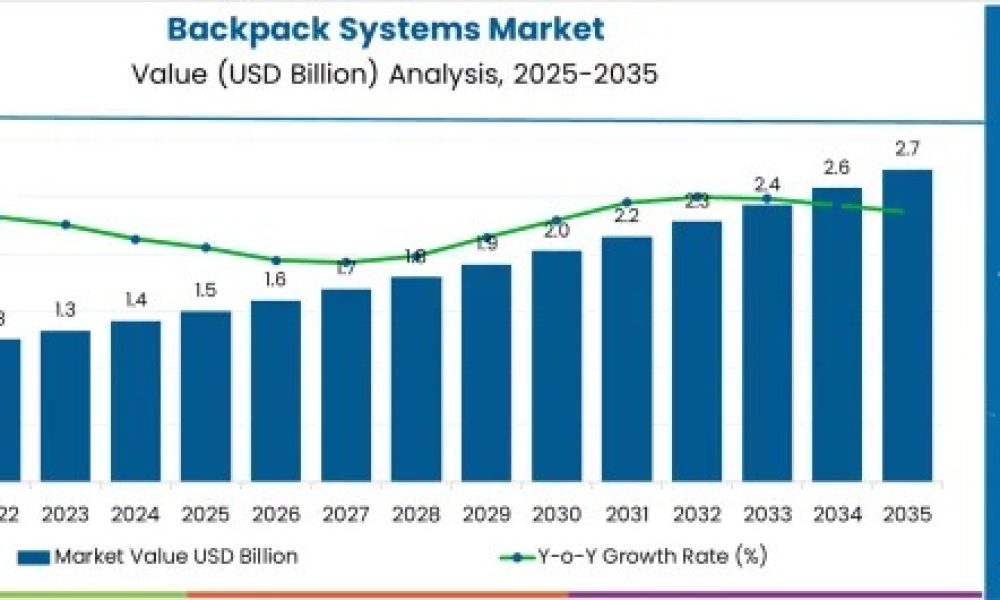
The global backpack systems market is entering a phase of steady and resilient growth, driven by lifestyle shifts that prioritize mobility, comfort, and multi-purpose design. Valued at USD 1.5 billion in 2025, the market is forecast to reach USD 2.7 billion by 2035, expanding at a CAGR of 6.2% over the decade. This trajectory reflects the evolving role of backpacks from simple carry solutions to essential lifestyle products that integrate ergonomics, fashion, and technology. Rising participation in outdoor recreation, growing travel culture, and increased adoption of backpacks in professional and educational environments are redefining demand. Today’s consumers expect backpacks to deliver durability, organization, and digital readiness, making innovation a central growth driver across both mass-market and premium segments.
Industry Meaning
Backpack systems refer to wearable storage solutions designed to distribute weight ergonomically across the back and shoulders, enabling hands-free transport of personal or professional belongings. Unlike conventional bags, backpack systems emphasize comfort engineering, load stability, and modular compartments tailored for specific applications such as trekking, sports, military, or daily commuting. Modern backpack systems encompass a broad range of designs, including rucksacks, daypacks, hydration packs, trekking backpacks, cycling backpacks, and work backpacks. These products increasingly function as personal mobility platforms, integrating technology features such as USB charging ports, anti-theft mechanisms, hydration reservoirs, and smart tracking modules.
Request For Sample Report | Customize Report |purchase Full Report – Sample link
Strategic Outlook
Strategically, the backpack systems market benefits from strong alignment with macro lifestyle trends urbanization, fitness culture, experiential travel, and digital nomadism. Growth between 2025 and 2030 will be led by expanding outdoor tourism and the rapid rise of e-commerce distribution channels, which enable brands to reach global audiences without heavy retail infrastructure.
From 2030 onward, market competitiveness will increasingly depend on:
- Sustainable material adoption (recycled nylon and polyester),
- Smart backpack integration (IoT tracking, power systems),
- Customization and modular design platforms,
- Expansion into emerging markets such as China and India.
Brands that successfully blend functional design with sustainability and technology are expected to capture the most value.
Market Evolution
Historically, backpacks were associated primarily with students and hikers. Over time, the category evolved into a multi-segment lifestyle market spanning sports, corporate mobility, military use, and everyday urban commuting.
The evolution can be mapped across three stages:
- Utility phase– basic durability and storage.
- Ergonomic phase– padded straps, airflow backs, weight distribution.
- Smart phase– charging ports, tracking, modular compartments.
Today, backpacks are positioned as personal infrastructure, serving professionals, athletes, travelers, and digital workers who require organized, durable, and stylish carrying solutions.
Growth Opportunities
Several structural growth pathways define the next decade:
- Smart Backpacks– integration of power banks, GPS tracking, RFID locks.
- Sustainable Materials– recycled nylon and eco-certified fabrics.
- Outdoor Adventure Boom– trekking, camping, hiking, and cycling.
- Urban Mobility Solutions– commuter backpacks with laptop safety and theft protection.
- Emerging Markets Expansion– China (8.4% CAGR) and India (7.8% CAGR).
- Customization Platforms– modular pockets, interchangeable straps.
- Military and Institutional Contracts– rugged, high-capacity systems.
Together, these pathways reflect a shift from product-centric to experience-centric backpack design.
Demand Patterns
By product type, rucksacks lead with 25% market share, driven by their versatility and high capacity. Rucksacks serve both urban and adventure consumers, offering padded back systems, hydration compatibility, and modular compartments.
By material, nylon dominates with 50% share, favored for its lightweight strength, water resistance, and adaptability to vibrant designs. Recycled nylon is gaining traction as sustainability becomes a purchase criterion.
By application, sports account for 20% of demand, reflecting rising global participation in fitness, cycling, and recreational activities. Consumers increasingly seek backpacks that offer:
- Ventilated back panels,
- Sweat-resistant materials,
- Dedicated equipment compartments.
Demand is strongest in Asia-Pacific, North America, and Europe, where disposable income and outdoor culture intersect.
Technology Trends
Technology is reshaping backpack systems from static accessories into smart personal devices. Key innovations include:
- USB charging ports and wireless power integration,
- Anti-theft systems with biometric locks,
- GPS-enabled smart tracking,
- Hydration monitoring sensors,
- Lightweight composite materials for structural support.
Manufacturers are also investing in AI-assisted ergonomic design, using user data to optimize strap geometry and load distribution. Sustainability-driven technology is equally prominent, with brands introducing recycled fabrics, biodegradable coatings, and low-impact dyes.
Competitive Landscape
The backpack systems market features a mix of global sports brands, outdoor specialists, and emerging technology-focused manufacturers.
Market leader NIKE leverages its lifestyle positioning and brand loyalty to dominate sports and urban backpack segments, focusing on performance-driven design and sustainable materials.
Pentland Group strengthens its position through diversified outdoor and athletic brands, serving both professional and recreational users.
Asian powerhouse Anta International Group Holdings is expanding aggressively in Asia-Pacific with stylish, affordable backpack systems tailored to younger consumers.
Emerging players like AMPL LABS focus on smart backpacks featuring charging systems and modular tech compartments, targeting digital nomads and professionals.
Outdoor specialists such as Exxel Outdoors and lifestyle product firms like Newell Rubbermaid strengthen the market through durable designs and wide retail networks.
Meanwhile, niche innovators like KAIMAN, ZOGGS, and OxTS are introducing application-specific backpacks for hydration sports, swimming, and cycling—demonstrating how specialization is becoming a competitive advantage.
Executive-Level Insights
- Market Size (2025): USD 1.5 billion
- Market Forecast (2035): USD 2.7 billion
- Growth Rate: 6.2% CAGR
- Leading Product: Rucksacks (25%)
- Dominant Material: Nylon (50%)
- Key Applications: Sports, trekking, urban commuting
- Top Growth Markets: China, India, Germany
- Technology Focus: Smart charging, tracking, sustainable fabrics
Conclusion
The backpack systems market is evolving into a technology-enabled lifestyle industry, where functionality, sustainability, and digital integration define consumer expectations. As outdoor culture expands and urban mobility intensifies, backpacks are no longer simple accessories they are becoming personal mobility platforms. Over the next decade, growth will be shaped by smart design, sustainable materials, and emerging market expansion. Companies that successfully blend comfort engineering, fashion aesthetics, and digital innovation will not only capture market share but also redefine how consumers carry their lives on their backs.
Why FMI: https://www.futuremarketinsights.com/why-fmi
About Future Market Insights (FMI)
Future Market Insights, Inc. (FMI) is an ESOMAR-certified, ISO 9001:2015 market research and consulting organization, trusted by Fortune 500 clients and global enterprises. With operations in the U.S., UK, India, and Dubai, FMI provides data-backed insights and strategic intelligence across 30+ industries and 1,200 markets worldwide.
Contact Us:
Future Market Insights Inc.
Christiana Corporate, 200 Continental Drive,
Suite 401, Newark, Delaware – 19713, USA
T: +1-347-918-3531
For Sales Enquiries: [email protected]



