
The Automotive Roof Rack Market is witnessing steady growth as consumer mobility patterns evolve and demand for vehicle storage solutions increases. Roof racks have become essential accessories for vehicles, especially for customers who travel frequently, participate in outdoor activities, or require additional cargo space. With rising interest in road trips, adventure tourism, and sports activities such as cycling and kayaking, automotive roof racks are gaining popularity among private vehicle owners. Automakers and aftermarket suppliers are also introducing innovative roof rack designs that enhance aerodynamics, durability, and vehicle aesthetics.
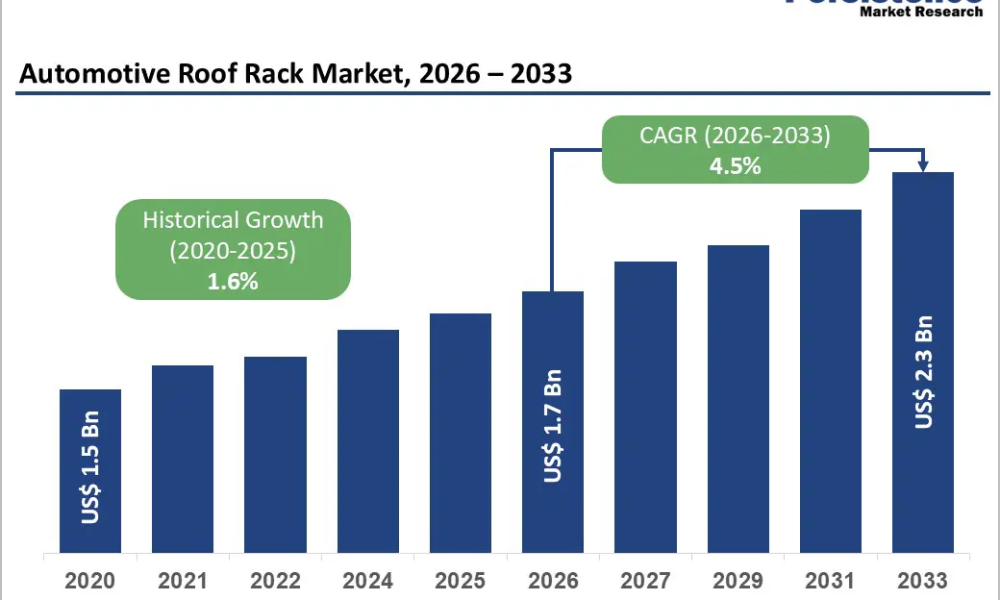
According to Persistence Market Research, the global automotive roof rack market size is likely to be valued at US$ 1.7 Bn in 2026 and is projected to reach US$ 2.3 Bn by 2033, growing at a CAGR of 4.5% between 2026 and 2033. The sustained expansion of this market is largely supported by the growing sales of SUVs and crossover vehicles worldwide. These vehicles typically offer roof rail compatibility, making them ideal for roof rack installations. In addition, the increasing adoption of lightweight materials such as aluminum alloys in automotive manufacturing has encouraged the development of durable yet lightweight roof rack systems. The SUV segment is expected to remain the leading vehicle category due to its design compatibility and higher cargo requirements, while North America is likely to remain a dominant regional market driven by strong outdoor recreation culture and high vehicle ownership rates.
Get Your FREE Sample Report Instantly Click Now: https://www.persistencemarketresearch.com/request-customization/35060
The key players studied in the report include:
- Thule Group
- Atera GmbH
- Rhino-Rack
- Yakima Products Inc.
- JAC Products
- Cruzber SA
- Perrycraft
- ROLA
- Surco Products Inc.
- Shrepa Equipment Co.
- Other Key Players
Key Highlights from the Report
➤ The automotive roof rack market is projected to grow from US$ 1.7 Bn in 2026 to US$ 2.3 Bn by 2033 at a CAGR of 4.5%.
➤ Rapid expansion of the global SUV and crossover vehicle segment is significantly supporting market demand.
➤ Increasing consumer participation in outdoor recreational activities is boosting the adoption of vehicle storage accessories.
➤ Lightweight material technologies, particularly aluminum alloys, are improving durability and performance of roof rack systems.
➤ Automakers and aftermarket suppliers are focusing on aerodynamic and modular roof rack designs to enhance functionality.
➤ Rising demand for adventure travel and road trips is strengthening the aftermarket sales channel globally.
Market Segmentation
By Material
- Aluminum
- Composite Plastic
- Iron
- Others
By Vehicle
- Passenger Cars
- Commercial Vehicles
- Others
By Product Type
- Roof Mount
- Raised Rail
- Gutter
- Others
By Region
- North America
- Europe
- East Asia
- South Asia and Oceania
- Latin America
- Middle East and Africa
Customize This Report for Your Exact Requirements: https://www.persistencemarketresearch.com/request-customization/35060
Regional Insights
North America continues to hold a strong position in the automotive roof rack market. The region benefits from a well-established outdoor recreation culture, where activities such as camping, skiing, biking, and kayaking are highly popular. Consumers often require vehicle storage solutions to transport equipment conveniently. High SUV ownership rates, long-distance road travel, and developed automotive accessory markets are key factors contributing to the region’s leadership in the roof rack industry.
Europe also represents an important market for automotive roof racks due to the growing popularity of adventure travel and seasonal sports activities. Countries with active tourism industries and winter sports traditions often generate consistent demand for vehicle cargo solutions. In addition, European consumers are increasingly adopting lightweight and aerodynamic automotive accessories, which supports the adoption of advanced aluminum roof rack systems.
Market Drivers
The increasing demand for SUVs and crossover vehicles is one of the strongest drivers of the automotive roof rack market. SUVs typically come with built-in roof rails or mounting systems that allow easy installation of roof racks. As global consumers continue to shift toward larger vehicles that offer better comfort, safety, and cargo capacity, the demand for compatible storage accessories is also increasing. This trend is particularly noticeable in markets where families prefer multi-purpose vehicles for travel and daily commuting.
Another significant driver is the growing interest in outdoor recreational activities. Consumers are increasingly participating in activities such as cycling, skiing, hiking, and camping. Transporting sports equipment often requires additional cargo space that standard vehicle trunks cannot accommodate. Roof racks offer a practical solution by allowing users to carry bikes, skis, kayaks, and luggage securely. This lifestyle shift toward adventure travel and recreational tourism is fueling consistent demand for roof rack systems worldwide.
Market Restraints
Despite steady growth, the automotive roof rack market faces certain limitations that could affect expansion. One of the primary restraints is concerns regarding vehicle fuel efficiency and aerodynamic drag. Roof racks, when installed permanently, can increase air resistance, which may slightly reduce fuel efficiency. As automotive manufacturers increasingly focus on improving vehicle aerodynamics and efficiency, some consumers may hesitate to install external accessories that could impact performance.
Another challenge is limited awareness among vehicle owners in emerging markets. In several developing regions, roof racks are still perceived as optional accessories rather than essential travel equipment. Additionally, cost considerations may discourage consumers from purchasing premium roof rack systems made from advanced materials. These factors can slow market penetration in price-sensitive markets where consumers prioritize affordability over convenience.
Market Opportunities
The automotive roof rack market presents promising opportunities with the integration of lightweight materials and advanced design technologies. Manufacturers are increasingly using aluminum alloys and composite materials to produce roof racks that are both durable and lightweight. These materials help minimize the impact on vehicle aerodynamics and fuel efficiency, addressing one of the key concerns associated with traditional steel racks.
Another emerging opportunity lies in the growing e-commerce and aftermarket automotive accessories industry. Online retail platforms allow consumers to easily compare and purchase roof rack products that suit their vehicles and travel requirements. As digital sales channels expand globally, manufacturers can reach a wider customer base and offer customizable rack systems designed for specific vehicles and recreational uses.
Ready to Dive Deep? Buy Full Report Today: https://www.persistencemarketresearch.com/checkout/35060
Recent Developments
- March 2024 – A major roof rack manufacturer introduced a lightweight aluminum modular roof rack system designed for SUVs and crossover vehicles.
- September 2023 – A global automotive accessory company expanded its product line with aerodynamic roof racks aimed at improving fuel efficiency and reducing wind noise.
Future Opportunities and Growth Prospects
The automotive roof rack market is expected to maintain consistent growth in the coming years as consumer travel behavior evolves and outdoor recreation becomes more popular worldwide. Increasing SUV ownership, combined with the rising popularity of adventure tourism and road trips, will continue to create strong demand for vehicle cargo solutions. Manufacturers are likely to focus on aerodynamic design improvements and lightweight materials to ensure better compatibility with modern vehicles.
Additionally, technological advancements and product innovation will play a key role in shaping the market’s future. Smart mounting systems, modular racks, and customizable storage accessories may become more common as consumers seek versatile solutions for transporting sports equipment and luggage. As global vehicle ownership increases and lifestyle trends continue to favor travel and recreation, the automotive roof rack market is expected to offer steady opportunities for both manufacturers and aftermarket suppliers.




