
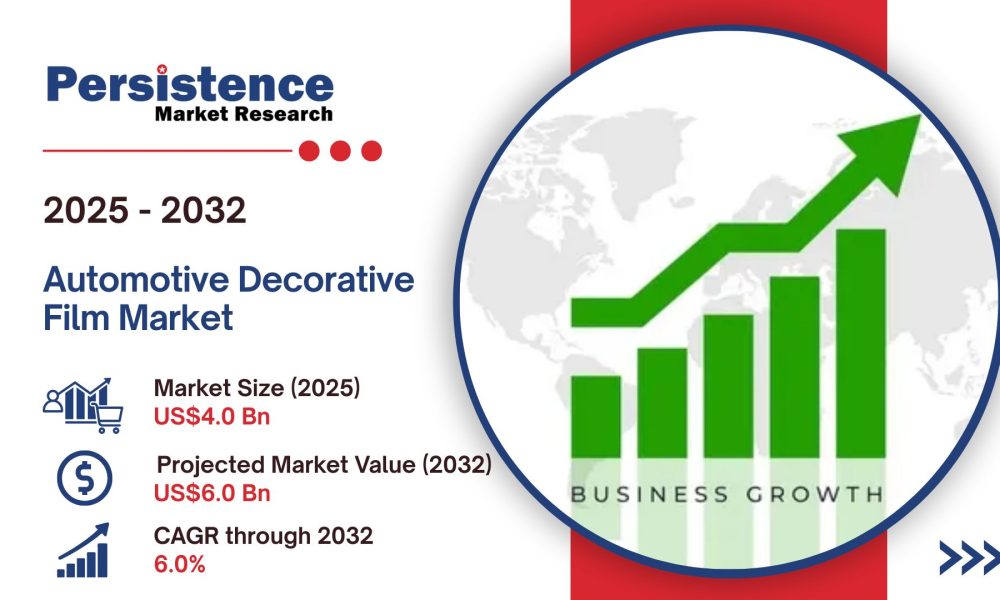
The global automotive decorative film market is entering a period of accelerated expansion, driven by rising consumer demand for enhanced aesthetics, protective finishes, and customized vehicle solutions. The market is estimated to be valued at US$5.8 billion in 2025, with projections indicating it will reach US$9.4 billion by 2032, representing a compound annual growth rate (CAGR) of 7.1% during the forecast period.
This sustained growth is underpinned by several critical factors. Foremost is the increasing trend of vehicle personalization, as consumers across global markets seek to distinguish their vehicles with unique exterior and interior finishes. Furthermore, ongoing advancements in decorative film technologies—such as multi-layered films, enhanced UV resistance, and eco-friendly materials—are expanding application opportunities for both original equipment manufacturers (OEMs) and the aftermarket. Additionally, the dual role of decorative films—offering both aesthetic appeal and protective properties against scratches, fading, and wear—continues to position them as a cost-effective solution in the automotive industry.
Request Sample Copy of Report: https://www.persistencemarketresearch.com/samples/26035
Segmentation Analysis
By Type
The market for automotive decorative films is broadly segmented into vinyl films, polyester films, polycarbonate films, and specialty decorative films. Among these, vinyl-based decorative films dominate the market due to their cost-effectiveness, flexibility, ease of application, and compatibility with diverse surface types. Vinyl films also offer superior printability, enabling detailed patterns and textures that resonate strongly with consumer demand for customization.
The polyester film segment is anticipated to record the fastest growth during the forecast period, supported by its superior durability, lightweight properties, and eco-friendly characteristics. Increasing regulatory focus on sustainable materials is pushing manufacturers to innovate with recyclable and biodegradable polyester films, making them attractive for OEM partnerships.
By Vehicle Type
In terms of vehicle application, the market can be categorized into passenger vehicles, light commercial vehicles (LCVs), and heavy commercial vehicles (HCVs). Passenger vehicles represent the largest market share, attributed to the growing popularity of aesthetic enhancements, interior customization, and the availability of decorative films as an affordable alternative to costly paint finishes.
Light commercial vehicles are increasingly adopting decorative films, particularly in fleet branding and corporate identity applications, as businesses seek cost-efficient solutions for vehicle wraps and advertising. Meanwhile, the luxury vehicle segment is emerging as a strong contributor, with premium decorative films offering advanced finishes such as carbon fiber textures, matte metallics, and iridescent color-shifting effects.
By Technology and Distribution Channel
On the technology front, self-healing films, advanced adhesives, and nano-coatings are reshaping the landscape, offering longer product lifespans and enhanced protection. Decorative films are distributed through both OEM channels and the aftermarket, with the aftermarket currently holding a dominant share. Rising consumer interest in aftermarket customization, coupled with the ease of installation and replacement, ensures steady demand. However, OEM adoption is growing, particularly as manufacturers integrate decorative films into new models to enhance aesthetics without significant additional cost.
Request Customization of Report: https://www.persistencemarketresearch.com/request-customization/26035
Regional Insights
Leading Regions
Asia-Pacific leads the global automotive decorative film market, accounting for the largest share in 2025. Rapid urbanization, expanding middle-class populations, and robust growth in automotive production in countries such as China, India, Japan, and South Korea are fueling demand. Moreover, the prevalence of aftermarket customization culture across these regions further strengthens market penetration.
North America represents a mature market, driven by a strong aftermarket industry, high consumer preference for personalization, and the popularity of vehicle wraps for both individual and commercial applications. Meanwhile, Europe demonstrates strong adoption, underpinned by stringent environmental regulations and an increasing focus on sustainable film materials. European automakers are particularly active in integrating decorative films into premium and luxury models to differentiate product offerings.
Fastest-Growing Region
The Middle East and Africa (MEA) region is projected to experience the fastest CAGR during the forecast period. A combination of rising disposable incomes, increased vehicle ownership, and strong demand for high-performance decorative solutions—driven by extreme weather conditions—positions MEA as a critical growth hotspot. Additionally, luxury and premium vehicles dominate in Gulf countries, where consumers are highly inclined toward customization, further accelerating adoption.
Unique Features and Innovations in the Market
The automotive decorative film market is evolving rapidly, distinguished by technological innovations and unique features that set modern solutions apart. Current decorative films not only enhance the aesthetic appeal of vehicles but also integrate advanced protective features, including scratch resistance, heat management, and UV shielding.
Technologies such as artificial intelligence (AI) and Internet of Things (IoT) are also making inroads, enabling smart film solutions that adapt to environmental conditions or allow digital pattern changes. For instance, AI-enabled films can adjust opacity or color intensity based on ambient lighting, while IoT integration facilitates remote monitoring of film performance and durability.
Furthermore, the rollout of 5G technology is set to enable connected customization experiences, where consumers can design film finishes digitally and visualize them in real-time using augmented reality (AR) applications before installation. These innovations highlight the growing convergence of automotive, materials science, and digital technologies in shaping the future of decorative films.
Market Highlights
Businesses and consumers are increasingly adopting decorative films due to their ability to reduce costs while enhancing vehicle appearance and durability. Compared to traditional paint finishes, films are more cost-effective, easier to replace, and offer flexibility for temporary or seasonal customization. This affordability is driving widespread adoption across both premium and budget vehicle categories.
Regulatory trends are also influencing adoption. With growing emphasis on sustainability and reduced VOC emissions in automotive coatings, decorative films are emerging as an eco-friendly alternative. The recyclability of certain films and reduced environmental impact in manufacturing are aligning with global green automotive initiatives.
Additionally, decorative films offer a marketing and branding advantage for commercial fleets, enabling businesses to create high-impact visual identities without permanent alterations to vehicles. This multifunctional utility continues to broaden the market’s appeal across industries.
Buy Now: https://www.persistencemarketresearch.com/checkout/26035
Key Players and Competitive Landscape
The automotive decorative film market is characterized by the presence of both global leaders and regional innovators. Key players include:
- 3M Company: A global leader with a robust product portfolio in decorative and protective films, 3M emphasizes R&D investment and material innovations to expand its market share.
- Avery Dennison Corporation: Known for its extensive range of automotive wrap films, Avery Dennison focuses on premium textures, finishes, and sustainability-driven products.
- Eastman Chemical Company: Leveraging its expertise in advanced materials, Eastman continues to develop durable, high-performance films for both OEM and aftermarket use.
- Hexis S.A.: A European innovator, Hexis specializes in decorative films with a strong emphasis on regional expansion and tailored customization solutions.
- Saint-Gobain Performance Plastics: With a diversified materials portfolio, Saint-Gobain is investing in technologically advanced, environmentally sustainable films.
- Orafol Group: Known for its cost-effective and versatile decorative films, Orafol is expanding in emerging markets through strategic partnerships and distribution networks.
Competition in the market is increasingly centered on innovation, product differentiation, and regional presence. Companies are investing in eco-friendly film formulations, advanced adhesives, and digital visualization technologies to attract both OEM and aftermarket customers.
Future Opportunities and Growth Prospects
Looking ahead, the automotive decorative film market is poised for substantial opportunities. As automotive design increasingly emphasizes personalization, sustainability, and technology integration, decorative films will become a central component of the value chain. The rising trend of electric vehicles (EVs) further supports growth, as EV manufacturers explore lightweight, eco-friendly decorative solutions to enhance vehicle appeal while meeting efficiency standards.
Evolving regulatory landscapes will also play a pivotal role. With global restrictions on solvent-based coatings and increased promotion of recyclable materials, decorative films are positioned as a compliant and innovative alternative. At the same time, the integration of digital and connected technologies is expected to revolutionize consumer engagement, enabling immersive customization experiences and dynamic decorative functionalities.
In conclusion, the global automotive decorative film market is entering a transformative growth phase, fueled by consumer demand, technological innovations, and regulatory alignment. With a projected market size of US$9.4 billion by 2032, stakeholders ranging from OEMs to material innovators have significant opportunities to shape the industry’s future. Companies that strategically align with sustainability, digital transformation, and regional demand trends will be best positioned to capitalize on this expanding market.




