
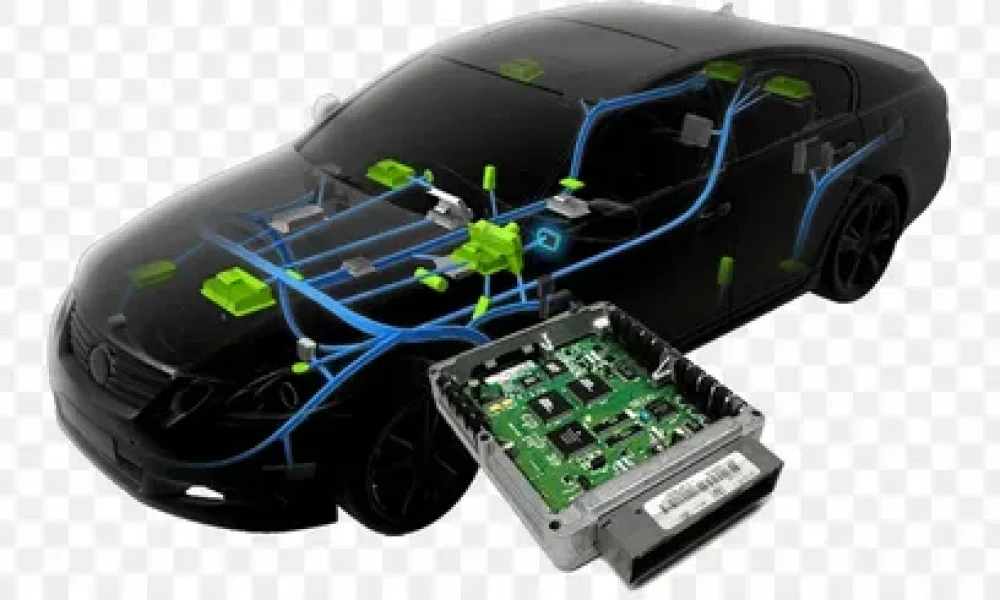
The global demand for Automotive Connectivity is estimated to be worth USD 42.0 billion in 2025 and is anticipated to reach a value of USD 101.2 billion by 2035. Demand for Automotive Connectivity is projected to rise at a CAGR of 9.2% over the forecast period between 2025 and 2035. The revenue generated by implementation of Automotive Connectivity in 2024 was USD 38.4 billion. The industry is predicted to exhibit a Y-o-Y growth of 9.1% in 2025. This projected growth indicates a value growth of nearly 2.4X from the current value over the study period.
The Automotive Connectivity Market is poised for substantial growth, driven by the increasing demand for smart, connected vehicle solutions that enhance driving experience, safety, and vehicle efficiency. As the automotie industry undergoes a digital transformation, connectivity technology has become a fundamental aspect, facilitating seamless communication between vehicles, infrastructure, and external devices. Automakers are actively integrating connectivity solutions that support infotainment, navigation, and real-time diagnostics, marking a new era of innovation in mobility.
Market Growth:
The rise in consumer expectations for advanced in-car experiences, coupled with stringent regulatory requirements for vehicle safety and emission reduction, has spurred the adoption of connected automotive technologies. The proliferation of 5G networks, the expansion of the Internet of Things (IoT), and increased investment in autonomous driving technology are further propelling growth in the automotive connectivity sector.Connected vehicles equipped with telematics, V2X (Vehicle-to-Everything) communication, and over-the-air updates are setting new standards for innovation in the automotive space.
Get Ahead with Our Report: Request Your Sample Now!
https://www.futuremarketinsights.com/report-sample#5245502d47422d3135393033
Key Takeaways:
- Rising Demand for Enhanced In-Car Experiences:
Growing consumer expectations for connected, feature-rich vehicles are driving automakers to develop advanced infotainment and connectivity solutions. - Increasing Focus on Safety and Efficiency:
Automotive connectivity technologies, including telematics and V2X communication, are improving driver safety and vehicle efficiency, meeting regulatory standards and customer demands. - Impact of 5G and IoT Expansion:
The deployment of 5G networks and the proliferation of IoT devices are enabling real-time communication and data transfer, which are key to the success of autonomous and connected vehicles. - Growth in Autonomous Vehicle Development:
As automakers progress toward autonomous vehicle technology, connected solutions are becoming essential for vehicles to communicate with infrastructure and other vehicles on the road. - Strategic Partnerships and Innovation in Connectivity Solutions:
Industry leaders are collaborating with tech firms to enhance automotive connectivity, integrating features like over-the-air updates and advanced navigation systems to improve vehicle functionality.
Detailed Market Study: Full Report and Analysis
https://www.futuremarketinsights.com/reports/automotive-connectivity-market
Competitive Landscape
Quality and compliance tests and certifications for automotive connectivity modules can be complex and time-consuming. As a result, companies like Rolling Wireless and LG that specialize in car networking modules dominate the industry. As a result of its success in the Chinese market, IoT module market leader Quectel has entered the top three. Telecom providers in North America and Europe have approved Quectel’s automotive-grade modules. Traditional specialists like Rolling Wireless, LG, Continental, and Harman will face stiff competition as a result.
Even though the automotive transition presents an alluring revenue potential, the entry barriers for IoT module players are still substantial. However, Chinese IoT module players will face challenges reaching overseas markets because of geopolitical trade conflicts and data security concerns.
To meet the rising demand for connectivity and mitigate supply-chain risks, automakers will look to diversify the sources of their modules. Moreover, several developing nations like India, Indonesia, Thailand, and Brazil are likely to want to establish their own manufacturing ecosystem to gain more influence over their respective supply chains.
Key Segments in the Automotive connectivity Market
Technology:
- 3G
- 4G/LTE
- 5G
Connectivity:
- Integrated
- Embedded
- Tethered
End-Users:
- Original Equipment Manufacturer (OEMs)
- Aftermarket
Region:
- North America
- Latin America
- Asia Pacific
- MEA (Middle East and Africa)
- Europe
About Future Market Insights (FMI)
Future Market Insights, Inc. (ESOMAR certified, recipient of the Stevie Award, and a member of the Greater New York Chamber of Commerce) offers profound insights into the driving factors that are boosting demand in the market. FMI stands as the leading global provider of market intelligence, advisory services, consulting, and events for the Packaging, Food and Beverage, Consumer Technology, Healthcare, Industrial, and Chemicals markets. With a vast team of 400 analysts worldwide, FMI provides global, regional, and local expertise on diverse domains and industry trends across more than 110 countries.




