
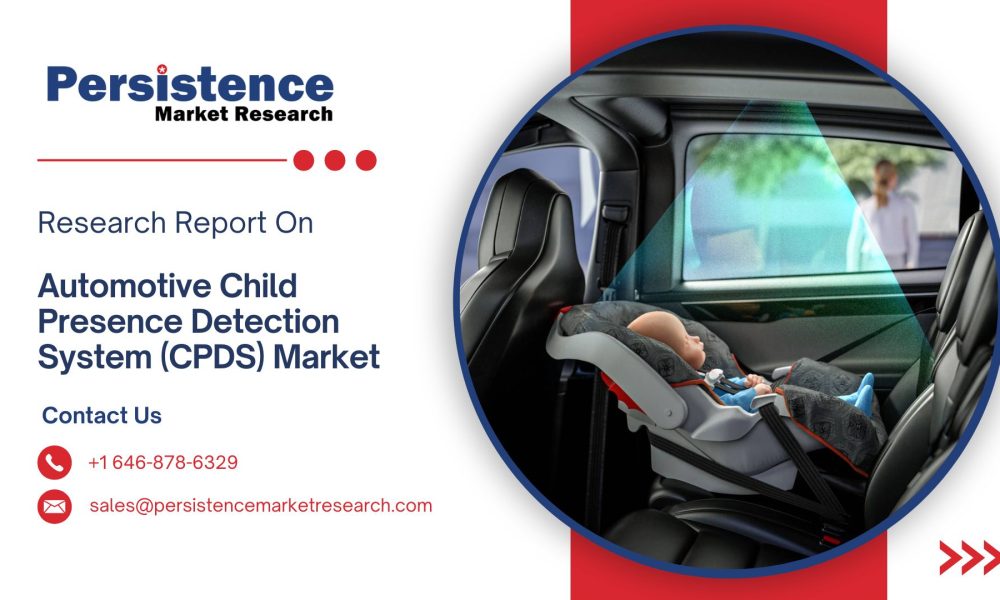
The global automotive child presence detection system (CPDS) market is undergoing transformative growth, with increasing regulatory emphasis on child safety and the adoption of advanced in-cabin monitoring technologies. According to market estimates, the CPDS industry is projected to rise from US$508.7 million in 2025 to US$1,554.4 million by 2032, registering a robust CAGR of 17.3% during the forecast period. This growth trajectory underscores the rapid evolution of automotive safety standards and the role of technology in reducing preventable child fatalities due to heatstroke and unattended vehicle incidents.
The rising adoption of radar-integrated modules and AI-enhanced cabin sensing architectures has positioned CPDS solutions at the forefront of next-generation automotive safety. Original equipment manufacturers (OEMs) are spearheading adoption by integrating CPDS with advanced occupant monitoring systems, particularly in passenger vehicles. The leading segment is expected to be OEM-fitted systems due to regulatory mandates and rising consumer demand for factory-installed safety features. Regionally, North America is projected to dominate the market, owing to stringent child safety regulations and active adoption by U.S.-based automakers.
Get a Sample Copy of Research Report (Use Corporate Mail id for Quick Response): https://www.persistencemarketresearch.com/samples/35555
Key Highlights from the Report
➤ The global automotive CPDS market is valued at US$508.7 million in 2025.
➤ It is projected to reach US$1,554.4 million by 2032.
➤ The market is expected to grow at a CAGR of 17.3% from 2025 to 2032.
➤ Radar-integrated CPD modules are accelerating adoption in premium vehicles.
➤ OEM-grade occupant monitoring systems remain the leading segment.
➤ North America is anticipated to lead due to stringent regulatory compliance.
Market Segmentation
The automotive CPDS market can be segmented by product type, including radar-based detection systems, camera-based systems, and hybrid sensor architectures. Radar-based systems are gaining rapid traction due to their accuracy in detecting micro-movements such as breathing, even when a child is asleep. Camera-based systems, while widely adopted, often face limitations in low-light conditions, making radar-hybrid solutions more attractive for future adoption. Hybrid systems are expected to register the fastest growth as they combine the strengths of both radar and vision technologies to deliver comprehensive cabin safety.
Segmentation can also be examined through end-user channels, namely OEMs and aftermarket installations. OEM-fitted systems currently dominate due to growing pressure from regulatory authorities and the need for integrated, factory-standard safety compliance. Aftermarket solutions, however, are expected to see steady demand in emerging economies, where retrofitting existing vehicles with child detection technologies is seen as a cost-effective solution. This balance between OEM-driven growth and aftermarket potential is shaping the industry’s competitive landscape.
Regional Insights
North America is expected to remain the leading regional market, driven by strong government mandates aimed at curbing child fatalities due to hot car incidents. The United States, in particular, has seen a significant increase in CPDS adoption, with automakers aligning closely with safety directives and implementing these systems as standard features in newer models.
Europe is another key growth region, benefiting from progressive automotive safety regulations and rapid penetration of advanced driver-assistance systems (ADAS). Germany, as a hub for premium automotive brands, is spearheading integration efforts, while countries such as Italy and France are witnessing adoption fueled by consumer awareness and growing child safety advocacy.
Market Drivers
One of the primary drivers of the CPDS market is the increasing regulatory focus on child safety across global automotive industries. Rising public awareness of tragic heatstroke deaths in children has pushed governments to make CPDS adoption a priority. Furthermore, OEMs are actively adopting radar-integrated and AI-enhanced systems to differentiate their offerings and comply with upcoming mandates. Technological advances in sensor accuracy and cabin monitoring are also fueling adoption, making CPDS a core feature in new-generation vehicles. The convergence of safety advocacy groups and consumer preference for technologically advanced cars further boosts market expansion.
Market Restraints
Despite strong growth potential, the CPDS market faces several restraints that could hinder widespread adoption. The high cost of advanced sensor systems, particularly radar-hybrid solutions, remains a barrier in cost-sensitive markets. Integration challenges with existing vehicle architectures, along with potential issues related to false alerts, can limit consumer trust. Additionally, slower regulatory adoption in certain developing regions could delay market penetration. Privacy concerns related to camera-based monitoring also present hurdles, as consumers are becoming increasingly cautious about in-cabin surveillance
Market Opportunities
Significant opportunities lie in the expansion of CPDS into emerging markets where rising disposable incomes and vehicle sales are creating demand for advanced safety features. The aftermarket segment presents a lucrative growth path, with retrofitting options enabling older vehicles to comply with evolving safety standards. Innovations such as AI-based predictive monitoring and multi-sensor fusion are set to create differentiated offerings, boosting consumer confidence. Collaborations between sensor manufacturers, automotive OEMs, and technology providers also open doors for cost-optimized, scalable CPDS solutions that can penetrate both premium and mid-range vehicle segments globally.
Frequently Asked Questions (FAQs)
➤ How Big is the Automotive Child Presence Detection System (CPDS) Market?
➤ Who are the Key Players in the Global Market for Automotive CPDS?
➤ What is the Projected Growth Rate of the Automotive CPDS Market?
➤ What is the Market Forecast for Automotive CPDS by 2032?
➤ Which Region is Estimated to Dominate the Industry through the Forecast Period?
Company Insights
Key players operating in the global automotive child presence detection system market include:
- Continental AG
- Robert Bosch GmbH
- Denso Corporation
- Texas Instruments Incorporated
- IEE S.A.
- Infineon Technologies AG
- Magna International Inc.
- Vayyar Imaging Ltd.
- ZF Friedrichshafen AG
Recent Developments
- A leading automotive OEM partnered with a radar technology provider in 2024 to integrate hybrid CPDS solutions across its new SUV line.
- In 2025, a semiconductor company launched an AI-powered cabin sensing chipset designed to improve CPDS accuracy in multi-occupant environments.
Explore more related market insights and reports by visiting our website.




