
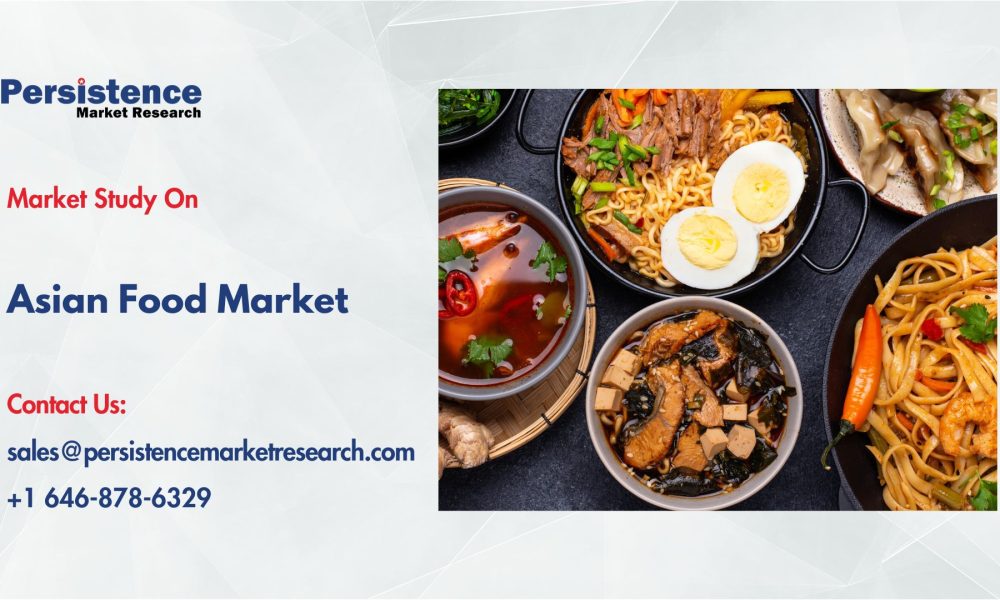
The global Asian food market is poised for significant expansion over the coming years, driven by changing consumer preferences, increasing exposure to international cuisines, and the growing popularity of Asian flavors across both developed and emerging economies. The market is likely to be valued at approximately US$ 39.0 billion in 2026 and is expected to reach US$ 66.8 billion by 2033, reflecting a strong compound annual growth rate (CAGR) of 8.0% during the forecast period from 2026 to 2033.
Asian food, encompassing a wide range of cuisines such as Chinese, Japanese, Indian, Thai, Korean, Vietnamese, and other regional specialties, has transitioned from niche ethnic offerings to mainstream consumption globally. This shift is supported by increasing multicultural populations, the rapid expansion of Asian restaurants and quick-service formats, and the growing availability of packaged and ready-to-eat Asian food products through retail and online channels.
The market’s growth trajectory reflects not only rising demand from diaspora communities but also strong adoption among non-Asian consumers seeking diverse flavors, healthier food options, and authentic culinary experiences. As globalization continues to influence food consumption patterns, Asian food is emerging as one of the most dynamic and influential segments within the global food and beverage industry.
Key Factors Driving Market Growth
Several interconnected factors are contributing to the rapid growth of the global Asian food market. One of the primary drivers is the increasing consumer inclination toward international and ethnic cuisines. Younger demographics, in particular, are more open to experimenting with global flavors, fueling demand for Asian dishes in restaurants, foodservice outlets, and home-cooking formats.
Health and wellness trends are also playing a critical role in market expansion. Many Asian cuisines are perceived as healthier alternatives due to their emphasis on vegetables, lean proteins, fermented ingredients, and balanced use of spices. The growing popularity of plant-based diets has further supported the adoption of Asian food, as cuisines such as Japanese, Chinese, and Southeast Asian offer a wide variety of vegetarian and vegan-friendly options.
The rapid growth of urbanization and rising disposable incomes, especially in emerging economies, are enabling consumers to spend more on dining out and premium food products. Additionally, the proliferation of food delivery platforms and cloud kitchens has significantly increased the accessibility of Asian food, allowing consumers to enjoy diverse offerings with convenience.
Get Your FREE Sample Report Instantly – Click Now: https://www.persistencemarketresearch.com/samples/6853
Segmentation Analysis
By Product Type
- Instant Noodles
- Prepared Meals
- Snacks
- Sauces & Condiments
- Others
By Nature
- Vegetarian
- Non-vegetarian
Regional Insights
Leading Regions in the Global Market
From a regional perspective, Asia Pacific represents the largest share of the global Asian food market, driven by strong domestic consumption, a rich culinary heritage, and a large population base. Countries such as China, India, Japan, South Korea, and Southeast Asian nations contribute significantly to market revenues through both traditional consumption and modernized food formats.
North America holds a substantial market share, supported by a diverse population, high demand for ethnic cuisines, and a well-established foodservice industry. The United States, in particular, has witnessed strong growth in Asian food consumption, driven by the popularity of Asian fusion cuisine, premium dining experiences, and packaged food innovations.
Europe represents another important market, characterized by growing consumer interest in global cuisines and increasing availability of Asian food products across mainstream retail channels. Countries such as the United Kingdom, Germany, and France are experiencing rising demand for both restaurant-based and at-home Asian food consumption.
Fastest-Growing Region
While Asia Pacific remains the dominant region, North America and Europe are expected to be among the fastest-growing markets during the forecast period. This growth is fueled by evolving consumer tastes, increasing exposure to Asian cultures, and the strong influence of social media and food trends. The growing presence of Asian food brands, coupled with localized product adaptations, is further accelerating market penetration in these regions.
Unique Features and Innovations in the Market
The modern Asian food market is distinguished by continuous innovation, authenticity, and adaptability. One of the key differentiators is the focus on preserving traditional flavors while adapting products to meet local regulatory standards and consumer preferences. Manufacturers are increasingly investing in research and development to enhance shelf life, improve nutritional profiles, and maintain taste authenticity.
Technology is playing an increasingly important role in shaping the market. Artificial intelligence (AI) is being used to analyze consumer preferences, optimize product development, and forecast demand trends. Internet of Things (IoT) technologies are supporting supply chain transparency, quality control, and inventory management, particularly for perishable and frozen Asian food products. In advanced markets, 5G-enabled digital platforms are enhancing food delivery efficiency and enabling real-time customer engagement.
Sustainability-focused innovations are also gaining prominence. Companies are adopting eco-friendly packaging, responsibly sourced ingredients, and clean-label formulations to align with growing environmental and health-conscious consumer expectations.
Need Tailored Insights? Request Customization Now: https://www.persistencemarketresearch.com/request-customization/6853
Market Highlights
The growing adoption of Asian food across global markets is driven by several compelling factors. Authentic taste experiences, culinary diversity, and perceived health benefits are key reasons consumers continue to embrace Asian food products and dining concepts. For foodservice operators and retailers, Asian food offers strong growth potential, menu differentiation, and opportunities for premiumization.
Regulatory frameworks related to food safety, labeling, and import standards play a critical role in shaping market dynamics. Compliance with these regulations is encouraging manufacturers to invest in quality assurance, traceability, and standardized production processes. Additionally, cost efficiencies achieved through scalable production and global sourcing are supporting competitive pricing and wider market reach.
Sustainability considerations are becoming increasingly important, as consumers and regulators alike emphasize ethical sourcing, reduced food waste, and environmentally responsible operations. These factors are expected to further influence product development and branding strategies across the Asian food market.
Key Players and Competitive Landscape
- Ajinomoto Co. Inc.
- Nissin Food Holdings
- Nestlé S.A
- Toyo Suisan Kaisha Ltd.
- Calbee Group
- ITC Limited
- Unilever PLC
- Kikkoman Corporation
- Asians Food Products
- ConAgra Brands
Future Opportunities and Growth Prospects
Looking ahead, the global Asian food market is expected to offer substantial growth opportunities driven by evolving consumer lifestyles, technological advancements, and expanding global connectivity. Continued innovation in ready-to-eat and ready-to-cook products, along with the integration of digital technologies across the value chain, will further enhance market potential.
Evolving regulations related to food safety, sustainability, and labeling are likely to shape industry standards and encourage higher levels of transparency and quality. At the same time, the growing influence of social media, culinary tourism, and cultural exchange will continue to elevate the global appeal of Asian food.
As consumers increasingly seek diverse, flavorful, and convenient food experiences, the Asian food market is well positioned to sustain its strong growth momentum through 2033 and beyond.
Explore the Latest Trending Research Reports:




