
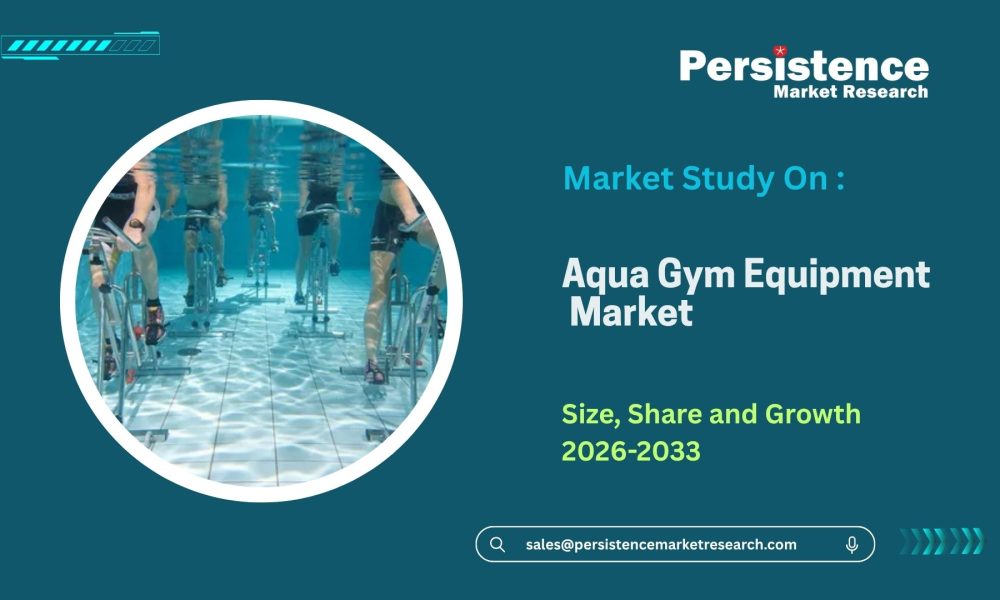
The global aqua gym equipment market is gaining steady traction as fitness enthusiasts and rehabilitation centers increasingly adopt water-based exercise solutions. Aqua gym equipment includes products such as underwater treadmills, resistance tools, aqua bikes, and flotation devices designed to enhance physical activity in aquatic environments. These products are widely used in fitness centers, physiotherapy clinics, and wellness facilities due to their ability to provide low-impact workouts that reduce stress on joints while improving strength and flexibility. The rising awareness of health and fitness, along with the growing popularity of aquatic therapy, is contributing significantly to market expansion.
According to Persistence Market Research, the global aqua gym equipment market size is expected to be valued at US$653.8 million in 2026 and projected to reach US$970.2 million by 2033, growing at a CAGR of 5.8% between 2026 and 2033. The market is driven by increasing demand for injury rehabilitation solutions, rising aging population, and expanding fitness infrastructure globally. Among segments, aqua bikes and underwater treadmills are leading due to their effectiveness in cardiovascular and resistance training. Regionally, North America leads the market due to advanced healthcare facilities and strong adoption of wellness trends.
Download Your Free Sample & Explore Key Insights : https://www.persistencemarketresearch.com/samples/36313
Key Highlights from the Report
➤ The aqua gym equipment market is projected to grow from US$653.8 Mn in 2026 to US$970.2 Mn by 2033.
➤ Increasing adoption of low-impact aquatic fitness solutions is driving demand globally.
➤ Rising use of aqua therapy in rehabilitation centers and physiotherapy clinics is supporting market growth.
➤ Technological advancements in underwater treadmills and aqua bikes are enhancing product efficiency.
➤ Growing popularity of wellness tourism and luxury fitness facilities is boosting equipment adoption.
➤ Expanding awareness about joint-friendly exercise alternatives is influencing consumer preferences.
Market Segmentation
The aqua gym equipment market is segmented based on product type, end-user, and application. Product types include aqua bikes, underwater treadmills, resistance equipment, flotation devices, and accessories. Among these, aqua bikes and treadmills dominate the market as they provide effective cardiovascular workouts while minimizing joint strain. Resistance tools and accessories are also gaining popularity among fitness enthusiasts seeking versatile aquatic training options. Continuous product innovation, including adjustable resistance levels and ergonomic designs, is further enhancing the appeal of these products.
From an end-user perspective, the market caters to fitness centers, rehabilitation clinics, sports training facilities, hotels, and residential users. Fitness centers and wellness clubs hold a major share due to increasing consumer demand for unique workout experiences. Rehabilitation centers are also emerging as a key segment, driven by the growing use of aquatic therapy for injury recovery and chronic pain management. The hospitality sector, particularly luxury resorts and wellness retreats, is integrating aqua gym equipment to enhance guest experiences and differentiate their services.
Customize This Report for Your Exact Requirements : https://www.persistencemarketresearch.com/request-customization/36313
Regional Insights
North America dominates the aqua gym equipment market due to the widespread adoption of advanced fitness technologies and a strong focus on health and wellness. The region benefits from a well-established network of fitness centers, rehabilitation clinics, and sports training facilities. Additionally, the increasing prevalence of obesity and musculoskeletal disorders is driving demand for low-impact exercise solutions such as aqua gym equipment.
Europe represents another significant market, supported by growing interest in aquatic fitness and rehabilitation programs. Countries such as Germany, France, and the UK are witnessing rising demand for aqua therapy solutions in both healthcare and fitness sectors. Meanwhile, the Asia-Pacific region is expected to witness rapid growth due to increasing disposable income, urbanization, and expanding fitness awareness. The development of premium wellness centers and luxury hospitality infrastructure is further boosting market adoption in emerging economies.
Market Drivers
The primary driver of the aqua gym equipment market is the growing demand for low-impact fitness solutions that reduce strain on joints and muscles. Water-based exercises provide natural resistance while minimizing injury risks, making them ideal for individuals with arthritis, obesity, or physical limitations. As awareness about the benefits of aquatic workouts increases, more consumers are incorporating these solutions into their fitness routines, thereby driving market growth.
Another key driver is the rising adoption of aquatic therapy in rehabilitation and physiotherapy. Healthcare professionals increasingly recommend water-based exercises for recovery from injuries, surgeries, and chronic conditions. Aqua gym equipment plays a crucial role in facilitating controlled movement and improving patient outcomes. This growing integration of fitness and healthcare is creating strong demand for specialized aquatic equipment across medical and wellness facilities.
Market Restraints
Despite its growth potential, the aqua gym equipment market faces certain challenges. One of the major restraints is the high initial cost of equipment and installation. Setting up aquatic fitness facilities requires significant investment in infrastructure, including pools and specialized equipment. This can limit adoption, particularly among small fitness centers and individual users with budget constraints.
Another limitation is the requirement for dedicated space and maintenance. Aqua gym equipment must be used in controlled aquatic environments, which require regular cleaning, water treatment, and operational management. These factors can increase operational costs and complexity for facility owners. Additionally, limited awareness in some regions about the benefits of aquatic fitness may hinder market penetration.
Market Opportunities
The aqua gym equipment market presents significant opportunities with the growing popularity of wellness tourism and luxury fitness experiences. Hotels, resorts, and spas are increasingly incorporating aqua fitness facilities to attract health-conscious travelers. This trend is creating new avenues for manufacturers to supply high-end equipment tailored to premium hospitality environments.
Another promising opportunity lies in technological innovation and product customization. Manufacturers are developing advanced aqua gym equipment with features such as digital monitoring, adjustable resistance, and ergonomic designs. These innovations enhance user experience and expand the appeal of aquatic fitness solutions. Additionally, expanding fitness awareness in emerging markets offers untapped growth potential for industry players.
Get Instant Access – Complete Your Purchase : https://www.persistencemarketresearch.com/checkout/36313
Company Insights
Key players operating in the aqua gym equipment market include:
- Aqua Lung International
- WaterGym LLC
- Speedo International Ltd.
- Theraquatics
- HydroWorx International, Inc.
- BECO Beermann GmbH & Co. KG
- Acquapole S.A.S.
- N-Fox Company
- AquaJogger
- Texas Recreation Corporation
- Sprint Aquatics
- Aqua Creek Products
- HYDRO-FIT, Inc.
- Aqualogix Fitness
- Aqua Sphere
- Hydrorider International
- AquaTrainer
- Waterflex SAS
Recent Developments
- June 2024: Waterflex introduced a new range of eco-friendly aqua bikes designed for improved durability and sustainability.
- October 2023: HydroWorx expanded its underwater treadmill product line with advanced digital tracking features for rehabilitation use.
Future Opportunities and Growth Prospects
The future of the aqua gym equipment market appears promising as global consumers increasingly prioritize health, wellness, and injury prevention. The integration of aquatic fitness into mainstream workout routines, combined with advancements in equipment design, is expected to drive sustained demand. Manufacturers focusing on innovation, affordability, and accessibility will be well-positioned to capture emerging opportunities.
Furthermore, the expansion of fitness infrastructure in developing regions and the rising popularity of personalized wellness experiences will continue to support market growth. Strategic collaborations with healthcare providers, fitness chains, and hospitality brands will play a crucial role in shaping the long-term success of the aqua gym equipment market.




