
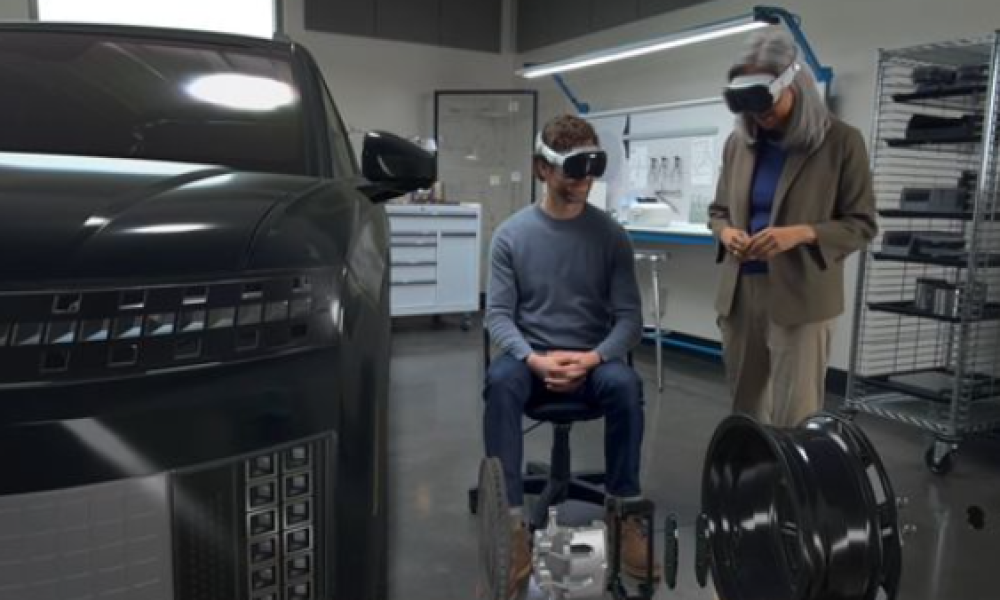
It is learned that the highly anticipated WWDC 2025 developer conference will be held from June 10th to 14th. As Apple’s (AAPL) annual technology feast, WWDC 2025 will bring a series of exciting software updates and new features.
According to the news, at this WWDC 2025 conference, Apple iOS 26 ushered in major design innovations, bringing a transparent and light visual experience and new AI features. For AI-related new features, Apple has been actively developing AI technology, such as smarter voice assistants and more accurate image recognition.

In addition, the system upgrade of Apple Vision Pro is also highly anticipated. In VisonOS 26, widgets become more three-dimensional and can be seamlessly integrated into the space. Widgets support more custom functions, such as clock widgets that can be “hung on the wall” and photo widgets that can display scenery like a window.
The AI/AR industry is expected to usher in a major uptrend
It is reported that Apple plans to launch its first AI smart glasses by the end of 2026. Industry insiders have analyzed that Apple is accelerating the layout of wearable devices and AI hardware, trying to revive its wearable business through lighter and more practical devices. Apple’s layout in the field of smart glasses will promote the commercial use of the market and bring users a more convenient and intelligent life experience.
At present, facing the industry development trend of AI and AI intelligent bodies, AI technology and AR glasses have a mutually beneficial relationship. On the one hand, as one of the important trends in the technology industry in recent years, AI’s application innovation can pay for the high investment of technology companies in AI computing power and large models, and smart wearable devices including AR glasses may be one of the important directions.
On the other hand, AI can also better enable the practical functions of AR glasses. For example: visual assistance and recognition. With the image recognition capabilities of AI large models, smart glasses can identify product information when users shop, identify the names of attractions when traveling, etc., and the gameplay is more diverse.
Google AI Glasses Strategy
It is worth mentioning that after Google I/O this year, Android XR, as a key step in Google’s (GOOG) strategy in the field of AI glasses, not only has Google’s own AI glasses equipped with Android XR as the finale, but also debuted in the keynote speech.
At the same time, Google still has plans to build AI glasses in the future, and will focus on “cooperating with hardware manufacturers”, reducing the proportion of Google’s hardware investment in AI glasses, and focusing on improving Android XR – especially the Gemini experience that Google values most.
As a Silicon Valley giant that has stepped into the same river after Meta and Apple, Google relies on Gemini this time to replicate Android’s success in the XR field, and now Google no longer has to fight alone, they already have “excellent partners” such as Samsung (Project Moohan) and Xreal (Project Aura) to develop Android XR together.
WiMi promotes the interactive innovation of “AI+AR” technology
Public information shows that Wimi Hologram Cloud Inc (WIMI), the first holographic AR stock, has relied on its self-developed technical advantages to accurately anchor its technology matrix to the R&D iteration, market expansion and ecological system construction of the core technology of smart glasses. At the same time, it has deployed AI industry-education integration, enabled AI smart glasses to be applied in multiple scenarios, covered mass consumer needs, and helped the popularization of smart glasses.
At present, WiMi has invested in a multimodal interactive system to integrate multi-dimensional technologies such as vision, voice, and gestures to overcome the limitations of a single interactive mode. It aims to achieve environmental perception and real-time analysis through AI visual algorithms, improve the accuracy of smart glasses interaction, and further promote the use of “AI+AR” applications to empower marketing, industry, education and other fields. At the same time, these innovative applications will inject new quality productivity into multiple industries and help companies reduce costs and increase efficiency.
Ending
Apple’s smart glasses and operating system upgrades are important layouts of Apple in the field of science and technology. WWDC 2025 is still an important technology event for Apple this year. Other new operating systems may be released at WWDC, such as iPadOS 26, macOS 26, tvOS 26, watchOS 12 and visionOS 3, etc. These new systems will also bring many new features and improvements. In short, Apple does not seek quick wins, but prefers to fight a protracted war. Let us look forward to Apple’s future together!




