
The antacids market represents a vital segment of the global gastrointestinal therapeutics industry, addressing one of the most common health concerns worldwide—acid-related digestive disorders. Antacids are widely used for the symptomatic relief of heartburn, acid indigestion, sour stomach, and gastroesophageal reflux disease (GERD). Their rapid onset of action, affordability, and over-the-counter (OTC) availability have made them a first-line remedy for millions of consumers. As dietary habits evolve toward higher consumption of processed, fatty, and spicy foods, and as sedentary lifestyles become more prevalent, the demand for quick and accessible digestive relief continues to rise. Manufacturers are increasingly focusing on patient-friendly formulations, flavor innovations, and targeted marketing strategies to maintain brand relevance in a competitive OTC environment.
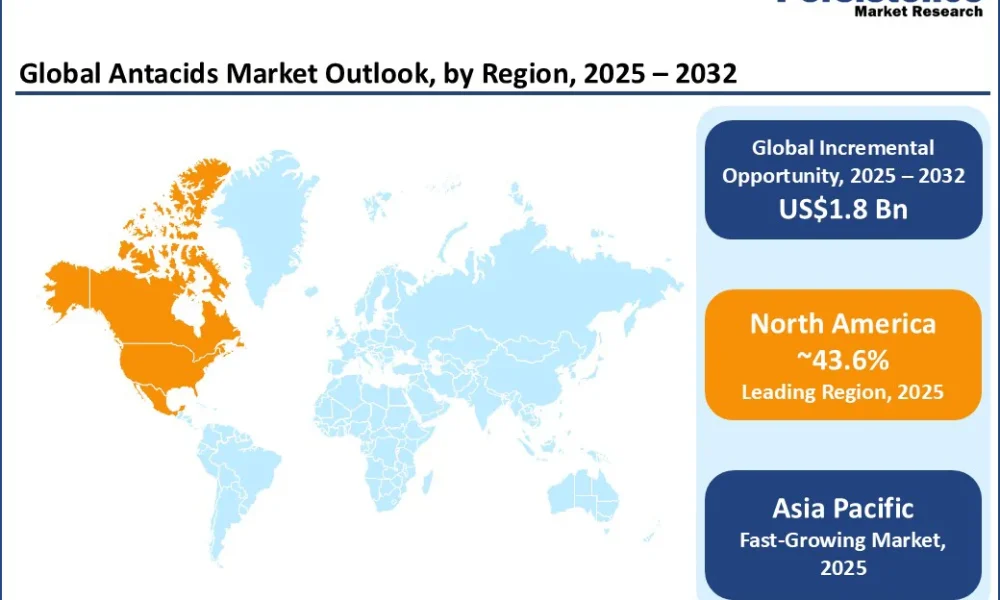
From a market sizing perspective, the global antacids market is projected to be valued at approximately US$7.1 billion in 2025 and is expected to reach US$8.9 billion by 2032, expanding at a compound annual growth rate (CAGR) of 3.3% during the forecast period. Growth is primarily driven by the rising incidence of gastrointestinal disorders, an aging global population, increasing self-medication trends, and broader access to healthcare products in developing economies. Tablets remain the leading formulation segment due to their convenience and shelf stability, while calcium carbonate continues to dominate as the preferred active ingredient because of its fast acid-neutralizing properties. Geographically, North America leads the market with a 43.6% share, supported by high OTC drug consumption and a large elderly population, whereas Asia Pacific is the fastest-growing region, fueled by expanding retail pharmacy networks, e-commerce penetration, and improving healthcare awareness.
Download Your Free Sample & Explore Key Insights: https://www.persistencemarketresearch.com/samples/35655
Key Highlights from the Antacids Market Report
• The global antacids market is projected to grow steadily at a CAGR of 3.3% between 2025 and 2032.
• Tablets remain the leading formulation, accounting for around 26.3% of total market share in 2025.
• Calcium carbonate dominates the active ingredient landscape with nearly 39.7% market share.
• GERD is the leading indication segment, contributing over 50% of antacid consumption globally.
• North America holds the largest regional share due to high OTC usage and aging demographics.
• Asia Pacific is emerging as the fastest-growing regional market driven by lifestyle changes and healthcare expansion.
Antacids Market Segmentation Analysis
The antacids market is segmented across multiple dimensions, including formulation type, active ingredient, indication, and distribution channel, each playing a crucial role in shaping overall demand patterns. By formulation, tablets lead the market owing to their portability, ease of dosing, and longer shelf life, making them suitable for on-the-go consumption. Liquid antacids, while offering faster relief, occupy a smaller share due to storage and convenience limitations. Meanwhile, chewable tablets and gummies are gaining traction, particularly among pediatric and geriatric populations, as well as consumers who prefer flavored and easy-to-consume alternatives.
Based on active ingredients, calcium carbonate accounts for the largest market share due to its high acid-neutralizing capacity and additional benefit of calcium supplementation. Magnesium hydroxide and aluminum hydroxide are also widely used, often in combination formulations to balance side effects such as constipation or diarrhea. Alginate-based antacids are emerging as a distinct and fast-growing category, particularly for GERD management, as they form a protective barrier that prevents acid reflux rather than simply neutralizing acid.
In terms of indication, GERD dominates the market, reflecting the growing prevalence of chronic acid reflux conditions globally. Heartburn and indigestion represent a substantial share as well, driven by sporadic dietary indiscretions and stress-related digestive issues. Distribution-wise, retail pharmacies remain the primary sales channel, supported by supermarkets, drugstores, and increasingly, online pharmacies that enhance consumer access and convenience.
Regional Insights into the Antacids Market
North America continues to dominate the global antacids market, driven by a high prevalence of gastrointestinal disorders, strong consumer awareness, and widespread availability of OTC medications. The United States accounts for a significant portion of regional revenue due to its aging population and established retail pharmacy infrastructure. The growing adoption of digital health platforms and e-commerce has further strengthened market penetration, allowing consumers to purchase antacids conveniently without prescriptions. Product innovation and aggressive marketing by leading pharmaceutical companies also contribute to sustained regional growth.
Asia Pacific is poised to experience the fastest growth through 2032, supported by rapid urbanization, changing dietary habits, and rising stress levels among working populations. Countries such as China, India, and Japan are witnessing increasing antacid consumption as healthcare access improves and disposable incomes rise. The expansion of retail pharmacy chains and online marketplaces has significantly improved product availability. However, regulatory challenges and quality control issues remain critical concerns, prompting stricter oversight in several emerging markets.
Europe represents a mature yet stable market for antacids, characterized by diverse product offerings and strong pharmacy-based distribution networks. While antacids continue to be widely used for immediate symptom relief, growing awareness of long-term side effects has led to more cautious consumption patterns. Despite competition from proton pump inhibitors and H2 antagonists, antacids maintain relevance due to their rapid action and suitability for occasional symptoms.
Get Custom Insights Designed for Your Business: https://www.persistencemarketresearch.com/request-customization/35655
Market Drivers
The growth of the antacids market is strongly driven by the rising global burden of gastrointestinal disorders, particularly GERD, indigestion, and acid reflux. Aging populations in North America and Europe are especially susceptible to digestive issues due to physiological changes and higher medication use, which often irritates the stomach lining. Additionally, modern lifestyles marked by sedentary behavior, irregular eating patterns, and high consumption of fatty, spicy, and processed foods have significantly increased the incidence of acid-related discomfort, directly boosting antacid demand.
Another key driver is the growing trend toward self-medication, supported by the widespread availability of antacids as OTC products. Consumers increasingly prefer managing mild digestive symptoms independently without consulting healthcare professionals, particularly in developing markets where access to physicians may be limited. The expansion of retail pharmacies and digital commerce platforms has further accelerated this trend by making antacids easily accessible across urban and semi-urban regions.
Market Restraints
Despite steady demand, the antacids market faces notable restraints related to safety concerns associated with prolonged and excessive use. Long-term consumption of antacids has been linked to acid rebound, electrolyte imbalances, kidney complications, and impaired absorption of essential nutrients such as magnesium and vitamin B12. These risks have led healthcare professionals to recommend cautious use and limit antacids to short-term symptom relief, thereby restricting sustained consumption.
Additionally, the increasing preference for alternative therapies such as proton pump inhibitors (PPIs) and H2 receptor antagonists poses a significant challenge. These medications offer longer-lasting symptom control by reducing acid production rather than neutralizing existing acid, making them more suitable for chronic conditions. As awareness of these alternatives grows, especially among patients with persistent GERD, demand for traditional antacids may face gradual substitution pressure.
Market Opportunities
Significant opportunities exist in the development of advanced antacid formulations and innovative drug delivery systems. Technologies such as gastro-retentive drug delivery systems and controlled-release formulations enhance therapeutic efficacy by prolonging gastric residence time and reducing dosing frequency. These innovations address key consumer demands for convenience and sustained relief, opening new avenues for product differentiation.
Emerging economies present another major growth opportunity as healthcare spending rises and access to OTC medications improves. Markets in Asia Pacific, Latin America, and parts of the Middle East are witnessing increased consumer awareness of digestive health. The rapid growth of e-commerce and online pharmacies further expands market reach, allowing manufacturers to tap into previously underserved populations and strengthen brand presence.
Checkout Now & Download Complete Market Report: https://www.persistencemarketresearch.com/checkout/35655
Company Insights
• Bayer AG
• Johnson & Johnson (Kenvue)
• Haleon Plc
• WellSpring Pharmaceutical Corporation
• Sanofi S.A.
• Sun Pharmaceutical Industries Ltd.
• CVS Health Corporation
• Advance Pharmaceutical Inc.
• Takeda Pharmaceutical Company Ltd.
• Reckitt Benckiser Group Plc
• Safetec of America Inc.
• Dr. Reddy’s Laboratories Ltd.
• Perrigo Company Plc
• Procter & Gamble Co.
Market Segmentation
By Formulation
- Tablets
- Liquids/Suspensions
- Powders
- Gummies/Chewable Soft Gels
- Effervescent Granules
- Other
By Active Ingredient
- Calcium Carbonate
- Magnesium Compounds
- Aluminum Compounds
- Sodium Bicarbonate
- Alginate-Based
- Combination Preparations
By Indication
- Heartburn
- Gastroesophageal Reflux Disease (GERD)
- Peptic Ulcer
- Functional Dyspepsia
- Others
By Distribution Channel
- Hospital Pharmacies
- Retail Pharmacies and Drug Stores
- E-commerce
- Others
By Region
- North America
- Europe
- East Asia
- South Asia & Oceania
- Latin America
- Middle East & Africa
Recent developments in the antacids market highlight the industry’s focus on innovation and localized marketing. In August 2025, Mankind Pharma launched a culturally resonant campaign for its Gas-O-Fast brand, positioning it as an “Asli Indian Solution” for digestive discomfort. Earlier, in July 2025, Abbott introduced Digene Insta On The Go, a water-free, ready-to-use antacid formulation designed to deliver relief within seconds, catering to consumers seeking convenience and rapid action.
Conclusion
The global antacids market continues to demonstrate resilient growth, supported by rising digestive health concerns, evolving consumer lifestyles, and the enduring appeal of fast-acting OTC remedies. While competition from alternative acid-suppressing therapies and safety concerns related to long-term use present challenges, ongoing advancements in formulation technology and expanding access in emerging markets offer substantial growth potential. As manufacturers focus on innovation, convenience, and regional customization, the antacids market is well-positioned to remain a cornerstone of gastrointestinal self-care worldwide through the forecast period and beyond.




