
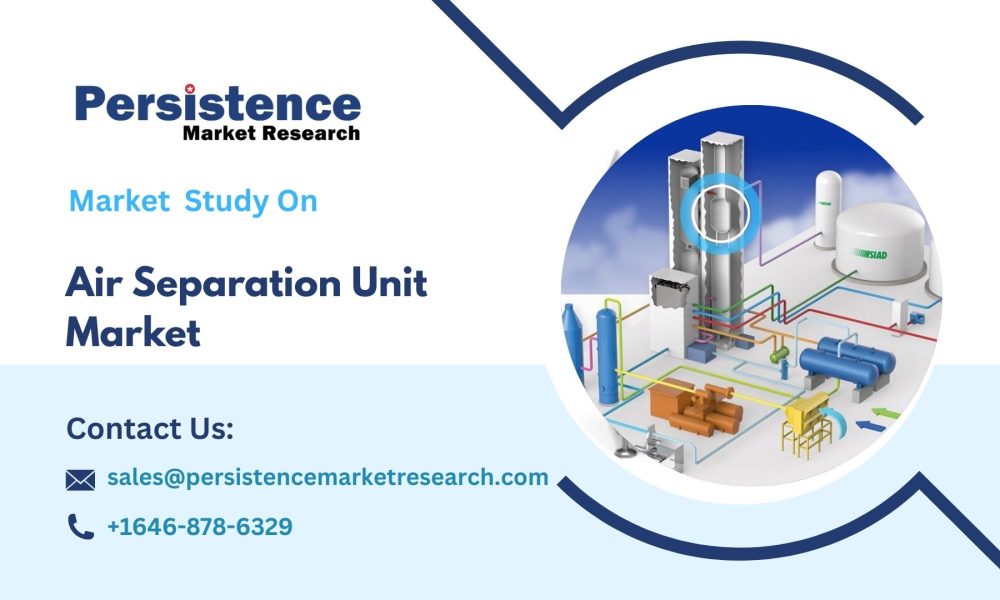
The air separation unit market is witnessing steady growth, driven by the increasing global demand for high-purity industrial gases across critical sectors. Air separation units are specialized facilities that separate atmospheric air into its primary components—oxygen, nitrogen, and argon—through processes such as cryogenic distillation, pressure swing adsorption (PSA), and membrane separation. These gases play a pivotal role in various industries including steel manufacturing, healthcare, chemical processing, and semiconductor production. According to market projections, the global air separation unit market size is expected to reach US$ 6.4 billion in 2026 and expand to US$ 8.8 billion by 2033, registering a compound annual growth rate (CAGR) of 4.3% between 2026 and 2033. The sustained demand for oxygen in steel production, nitrogen in semiconductor fabrication, and argon in welding and inerting processes underpins this market growth.
The steel industry remains the leading end-use segment in the air separation unit market due to the essential role of oxygen in blast furnace operations and basic oxygen steelmaking. According to the World Steel Association, global crude steel production reached 1,882.6 million tonnes in 2024, highlighting the ongoing demand for industrial gases. In addition, the Asia-Pacific region is the dominant geographical market, driven by rapid industrialization, expanding infrastructure projects, and the presence of major steel and chemical manufacturing hubs in China, India, and Southeast Asia. The region’s robust industrial base, combined with growing investments in semiconductor fabrication and healthcare facilities, makes it a key growth engine for the air separation unit market globally.
Key Highlights from the Report
• The air separation unit market is projected to grow at a CAGR of 4.3% between 2026 and 2033.
• Market size is expected to increase from US$ 6.4 billion in 2026 to US$ 8.8 billion by 2033.
• Steel manufacturing remains the largest end-use segment due to oxygen requirements in blast furnaces.
• Asia-Pacific leads the market, supported by industrialization and growing chemical and semiconductor industries.
• High-purity nitrogen and argon demand in healthcare and semiconductor sectors is boosting adoption.
• Cryogenic air separation units dominate due to their efficiency in producing large volumes of industrial gases.
𝐆𝐞𝐭 𝐚 𝐒𝐧𝐞𝐚𝐤 𝐏𝐞𝐞𝐤, 𝐒𝐚𝐦𝐩𝐥𝐞 𝐏𝐃𝐅 𝐈𝐧𝐬𝐢𝐝𝐞: https://www.persistencemarketresearch.com/samples/34712
Market Segmentation
The air separation unit market can be segmented based on technology type, product type, and end-use industry. In terms of technology, the market includes cryogenic distillation units, pressure swing adsorption (PSA) systems, and membrane-based units. Cryogenic ASUs are dominant due to their ability to produce large volumes of high-purity oxygen, nitrogen, and argon efficiently, making them ideal for steel plants, chemical facilities, and industrial gas suppliers. PSA systems are preferred for on-site nitrogen and oxygen generation, particularly in smaller industrial applications, while membrane units are commonly used for low-purity gas separation in niche applications.
Based on product type, air separation units are categorized by the gases they produce, including oxygen, nitrogen, and argon. Oxygen accounts for the largest share due to its extensive use in steel manufacturing, chemical processing, and medical applications. Nitrogen is critical for semiconductor fabrication, inerting processes, and chemical production. Argon, though used in smaller volumes, is essential for welding, metallurgy, and specialty chemical processes.
From an end-use industry perspective, the market serves steel manufacturing, chemical processing, healthcare, electronics and semiconductor manufacturing, and other industrial applications. Steel production represents the largest consumption segment, given the scale of blast furnace and basic oxygen furnace operations that require continuous, high-volume oxygen supply. The semiconductor and electronics industry is rapidly expanding its consumption of ultra-pure nitrogen for wafer fabrication, wafer cleaning, and inerting processes. Healthcare facilities also rely on oxygen and nitrogen supplied via ASUs to support patient care, surgical procedures, and medical gas requirements.
Regional Insights
Asia-Pacific is the leading regional market for air separation units, driven by high steel production, industrial expansion, and rapid urbanization. China and India are major consumers of industrial gases, fueled by large-scale infrastructure projects, chemical processing facilities, and expanding semiconductor manufacturing plants. Southeast Asia is emerging as a key market, supported by government initiatives to boost industrial growth and healthcare infrastructure.
North America maintains a significant share of the market due to established steel production, chemical manufacturing, and semiconductor fabrication facilities in the United States and Canada. The region also emphasizes healthcare and medical gas supply systems, contributing to steady ASU demand. Advanced infrastructure and technological expertise enable the region to adopt high-efficiency, cryogenic air separation units, optimizing industrial gas production.
Europe represents a mature market with strong demand from steel and chemical industries in Germany, France, and Italy. The region emphasizes energy efficiency and sustainability, driving investments in advanced ASU technologies, including energy-efficient cryogenic units. Environmental regulations also encourage the use of ASUs for on-site gas generation to reduce transportation emissions associated with industrial gas delivery.
Latin America and the Middle East & Africa are emerging markets with growing industrialization and infrastructure development. Brazil, Mexico, UAE, and Saudi Arabia are expanding steel, chemical, and energy projects, boosting the adoption of air separation units. Investment in oil & gas processing and petrochemical industries in these regions further supports market growth.
𝐆𝐞𝐭 𝐚 𝐂𝐮𝐬𝐭𝐨𝐦𝐢𝐳𝐞𝐝 𝐌𝐚𝐫𝐤𝐞𝐭 𝐕𝐢𝐞𝐰 𝐢𝐧 𝐎𝐧𝐞 𝐂𝐥𝐢𝐜𝐤 : https://www.persistencemarketresearch.com/request-customization/34712
Market Drivers
The primary driver of the air separation unit market is the rising demand for high-purity industrial gases across critical sectors. Oxygen remains essential for steel production, nitrogen for semiconductor manufacturing, and argon for welding and specialty applications. Expanding industrial output, particularly in steel, chemical, and electronics sectors, is fueling continuous demand for reliable air separation systems.
Another major driver is the growth of the semiconductor industry requiring ultra-pure nitrogen and argon for wafer fabrication and manufacturing processes. With rising adoption of advanced electronics, solar panels, and microchips, the need for high-purity industrial gases has increased substantially. Similarly, the healthcare sector’s reliance on oxygen supply systems for hospitals, surgical centers, and emergency care facilities supports ongoing ASU demand.
Market Restraints
Despite strong growth, the air separation unit market faces certain challenges. High capital expenditure and installation costs associated with cryogenic and large-scale ASUs may deter smaller manufacturers from adoption. Additionally, energy-intensive operations of traditional cryogenic units contribute to high operational costs, limiting their deployment in regions with elevated electricity prices. Regulatory compliance and environmental restrictions on industrial gas emissions also pose operational and logistical challenges for ASU operators.
Market Opportunities
The air separation unit market offers opportunities in energy-efficient and modular ASU solutions. Innovations in low-energy cryogenic systems, hybrid ASUs combining PSA and membrane technologies, and compact on-site gas generation units can reduce costs and expand adoption across smaller industrial facilities.
Additionally, emerging markets in Asia-Pacific, Latin America, and the Middle East present substantial growth opportunities due to increasing steel production, chemical processing, and healthcare infrastructure development. Expansion of semiconductor manufacturing in these regions also drives demand for high-purity nitrogen, creating new revenue streams for ASU manufacturers.
The shift towards sustainable industrial gas production, including integration of renewable energy sources for ASU operations, represents another significant opportunity. Companies investing in green technologies can improve operational efficiency and meet increasing environmental regulations while supporting long-term market growth.
𝐆𝐞𝐭 𝐈𝐧𝐬𝐭𝐚𝐧𝐭 𝐀𝐜𝐜𝐞𝐬𝐬 𝐓𝐨𝐝𝐚𝐲—𝐌𝐚𝐤𝐞 𝐒𝐦𝐚𝐫𝐭𝐞𝐫 𝐃𝐞𝐜𝐢𝐬𝐢𝐨𝐧𝐬 : https://www.persistencemarketresearch.com/checkout/34712
Company Insights
Leading players in the air separation unit market include:
• Linde plc
• Air Liquide S.A.
• Praxair Technology, Inc. (a Linde company)
• Air Products and Chemicals, Inc.
• Taiyo Nippon Sanso Corporation
• Messer Group GmbH
• The BOC Group
• Nikkiso Co., Ltd.
Recent developments in the market highlight technological advancement and strategic expansion. Companies have introduced energy-efficient cryogenic ASUs to reduce operational costs and carbon footprint. Additionally, investment in modular and on-site gas generation units allows rapid deployment in industrial and healthcare sectors, enhancing market reach and flexibility.
Conclusion
The air separation unit market is poised for consistent growth through 2033, driven by the escalating demand for high-purity industrial gases in steel, chemical, healthcare, and semiconductor sectors. The market’s expansion is supported by increasing industrialization, infrastructure development, and the need for reliable, high-volume gas supply solutions. While challenges such as high capital costs and energy-intensive operations persist, innovations in energy-efficient ASUs, modular systems, and emerging market expansion present significant opportunities. As industries continue to prioritize high-quality industrial gases for production and healthcare applications, air separation units will remain essential to global industrial operations and manufacturing efficiency.




