
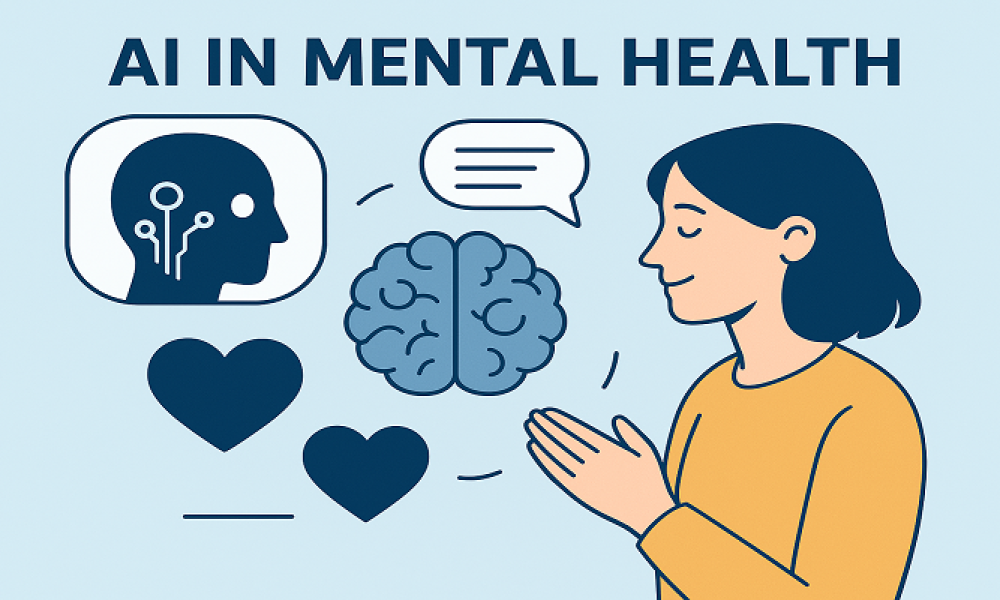
Overview
Global Ai in Mental Health Market size is expected to be worth around USD 14.89 Billion by 2033 from USD 1.61 Billion in 2024, growing at a CAGR of 32.1% during the forecast period from 2024 to 2033.
The AI in Mental Health market is experiencing robust growth, supported by the increasing burden of mental health disorders and the global shift toward digital healthcare solutions. The integration of Artificial Intelligence (AI) into mental health platforms has emerged as a transformative force, enabling timely diagnosis, remote intervention, and continuous patient engagement.
AI technologies, such as machine learning and natural language processing, are being utilized to enhance mental health care delivery through tools like virtual therapy assistants, predictive analytics, and emotion recognition systems. These innovations are significantly improving access to care, particularly in underserved and remote areas, while also enhancing clinical efficiency and treatment personalization.
The chatbot and virtual therapy segment leads the market due to its widespread adoption for cognitive behavioral therapy (CBT), mood tracking, and 24/7 support services. Healthcare providers remain the primary end-users, leveraging AI platforms to reduce clinician workload, support early detection, and offer scalable interventions for anxiety, depression, and other common disorders.
North America holds a prominent position in the market, driven by advanced digital infrastructure and favorable policy support for mental health technologies. Meanwhile, the Asia Pacific region is poised to witness the fastest expansion, fueled by growing mental health awareness and increasing investments in telepsychiatry and AI-based care models.
Click here to get a Sample report copy @ https://market.us/report/ai-in-mental-health-market/free-sample/

Key Takeaways
- The AI in Mental Health market surpassed a revenue milestone of over USD 1.61 billion and is projected to reach approximately USD 14.89 billion, registering a compound annual growth rate (CAGR) of 32.1% during the forecast period.
- By technology, Natural Language Processing (NLP) emerged as the leading segment, accounting for 39.6% of the overall market share.
- In terms of components, the Software-as-a-Service (SaaS) segment generated the highest revenue in 2023, capturing a dominant share of 65.7%.
- Hospitals and clinics were identified as the primary end-users in 2023, reflecting the widespread adoption of AI tools for clinical mental health applications.
- Regionally, North America remained the leading contributor to market revenue, with a reported value of USD 0.37 billion in 2023.
Segmentation Analysis
By Technology Analysis: The AI in mental health market is segmented into natural language processing (NLP), deep learning and machine learning, context-aware computing, and others. NLP dominated with a 39.6% market share and is projected to grow the fastest. NLP-powered chatbots and virtual therapists offer round-the-clock support, improving accessibility and affordability of mental health care. These systems analyze speech and text to detect user emotions, enabling responsive and personalized interventions, which continues to drive strong demand across digital mental health solutions.
By Component Analysis: The component segmentation includes software-as-a-service (SaaS) and hardware, with SaaS holding the leading position at 65.7% market share. SaaS platforms offer adaptability, scalability, and ease of integration, making them ideal for mental health providers, particularly during demand surges such as public health crises. These solutions simplify AI adoption across various platforms and enhance user accessibility. Due to these factors, the SaaS segment is expected to maintain its dominant position throughout the forecast period, supporting growth in AI-based mental health treatments.
By End-User Analysis: Hospitals and clinics accounted for the largest end-user segment, with a 45.6% share, and are expected to see the highest growth. These institutions increasingly implement AI tools for diagnostic assistance, improving clinical accuracy and efficiency. AI-enabled telepsychiatry platforms support remote consultations, expanding access to underserved populations. Additionally, hospitals use AI to assess population health trends and optimize resource use. These applications reinforce the segment’s leading role in the adoption of AI in mental health care.
Market Segments
By Technology
- Natural Language Processing
- Deep Learning and Machine Learning
- Context-Aware Computing
- Others
By Component
- Software-as-a-Service
- Hardware
By End-User
- Hospitals and Clinics
- Mental Health Centers
- Research Institutions
- Others
To Purchase this Premium Report @ https://market.us/purchase-report/?report_id=116887
Regional Analysis
North America Regional Analysis
North America accounted for 40.6% of the global AI in mental health market in 2023 and is anticipated to maintain its leading position throughout the forecast period. The widespread integration of AI in healthcare systems, particularly in the United States, is a key driver. Rising mental health disorder prevalence further accelerates market demand. According to Johns Hopkins Medicine, over 26% of U.S. adults are affected by diagnosable mental disorders annually. High healthcare costs, increased mental health awareness, and the presence of major AI firms also contribute significantly to regional growth.
Asia Pacific Regional Analysis
The Asia Pacific region is projected to exhibit the highest compound annual growth rate (CAGR) in the AI in mental health market. This growth is driven by substantial government and private sector investments in AI technologies across countries such as China, India, and Singapore. The region’s large population, combined with a limited number of mental health professionals, underscores the need for scalable AI-powered solutions. Furthermore, increased smartphone penetration and internet access enhance the adoption of virtual mental health platforms, supporting improved accessibility and service delivery across both urban and rural areas.
Key Players Analysis
The AI in mental health market is characterized by a diverse competitive landscape, with both established players and emerging innovators contributing to market growth. Leading companies hold substantial market shares, supported by their advanced AI capabilities and comprehensive healthcare technology portfolios. At the same time, emerging firms such as NeuroFlow and Woebot Health are gaining momentum by introducing novel, AI-powered mental health solutions tailored to digital therapy and remote care.
Research institutions and academic organizations also play a vital role by advancing AI algorithm development and exploring new clinical applications. The competitive environment is further shaped by increasing strategic collaborations, mergers, and acquisitions, which enhance technological capabilities and expand market reach. As a result, the distribution of market share remains dynamic, with continuous innovation and partnership-driven growth defining the sector’s evolution.
Market Key Players
- Wysa
- Woebot Health
- Ginger
- Mindstrong Health
- Marigold Health
- Lyra Health
- Bark Technologies
- Neuroflow
- Other Key Players
Market Dynamics
Market Driver: The rising global prevalence of mental health disorders is a major driver for the AI in mental health market. Increasing cases of anxiety, depression, and stress-related conditions are prompting healthcare providers to adopt AI-based tools for early diagnosis, remote intervention, and treatment optimization. These technologies enhance care delivery, reduce clinical workload, and support underserved populations. Additionally, growing demand for scalable, cost-effective mental health solutions is encouraging the integration of AI across public health systems and private practices.
Market Trend: A key trend in the AI in mental health market is the increasing use of AI-powered chatbots and virtual therapists. These tools, often utilizing natural language processing, are transforming how mental health support is delivered by providing real-time interaction, cognitive behavioral therapy (CBT), and emotional assessment. The shift toward digital self-help platforms is driven by the need for on-demand services, especially among younger populations. This trend reflects a broader movement toward personalized, tech-enabled mental health care delivery models.
Market Opportunity: A significant opportunity exists in expanding AI mental health solutions to underserved regions, particularly in developing economies. Limited access to mental health professionals and growing mobile and internet penetration create favorable conditions for digital therapy platforms. Governments and healthcare providers can leverage AI to bridge treatment gaps, improve outreach, and enhance early detection. Additionally, partnerships between AI developers and public health institutions can unlock new applications, extending care to rural and remote populations while improving mental health equity.
Conclusion
The AI in Mental Health market is positioned for remarkable growth, driven by the escalating global mental health crisis and increasing reliance on digital healthcare innovations. Advancements in technologies such as natural language processing and machine learning are enabling personalized, accessible, and scalable care solutions.
With strong adoption in North America and accelerating growth across Asia Pacific, the market reflects a global commitment to improving mental health outcomes. Strategic collaborations, rising investments, and expanding AI capabilities will continue to shape a dynamic landscape, offering significant opportunities for innovation, accessibility, and improved mental health care delivery worldwide.
View More Reports:
AI in Endoscopy Market Set for Explosive Growth, Hitting USD 838.9 Million by 2033
AI in Endoscopy Market Set for Explosive Growth, Hitting USD 838.9 Million by 2033
Hospital Services Market Sector Forecasted to Hit USD 24.1 Trillion by 2033
Hospital Services Market Sector Forecasted to Hit USD 24.1 Trillion by 2033
Pediatric Drugs Market to Hit USD 95.4 Billion by 2033, Reports 12.7% CAGR
Pediatric Drugs Market to Hit USD 95.4 Billion by 2033, Reports 12.7% CAGR



