
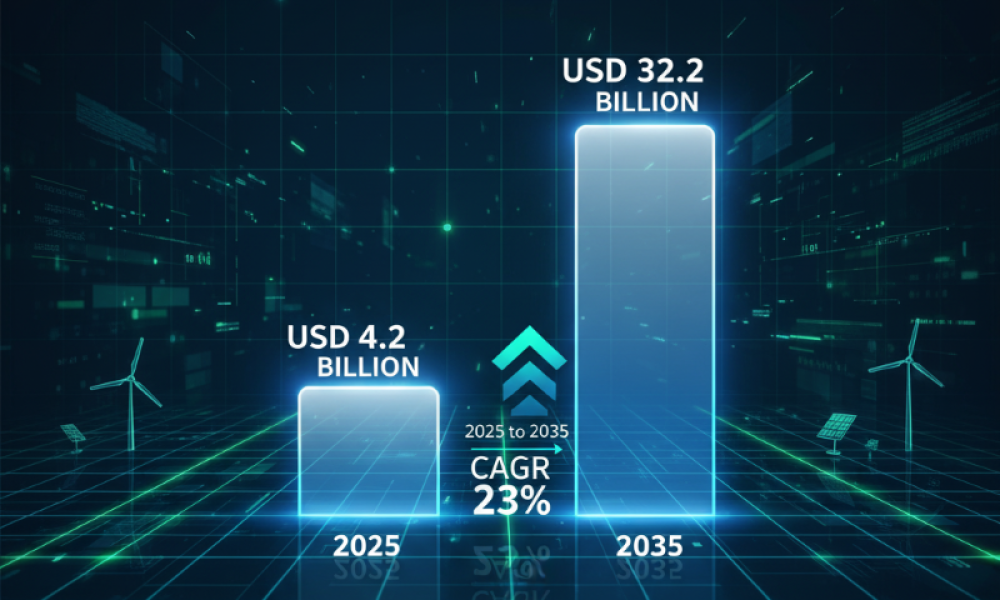
The global AI in energy distribution market is on track for impressive growth, set to expand from USD 4.2 billion in 2025 to an astounding USD 32.2 billion by 2035, reflecting a compound annual growth rate (CAGR) of 23%. This robust growth is driven by the increasing adoption of smart grid technologies, the demand for energy efficiency, and the integration of renewable energy sources into the grid.
AI technologies are revolutionizing the way energy is distributed by enabling predictive maintenance, real-time load balancing, fault detection, and energy optimization. These capabilities not only enhance operational efficiency but also help utilities and industrial consumers significantly reduce costs. With advancements in machine learning, IoT integration, and grid automation, AI is set to play a pivotal role in transforming the global energy landscape.
Unlock detailed analytics – Request your personalized report now! https://www.futuremarketinsights.com/reports/sample/rep-gb-26209
Key Market Drivers
The primary driver of this market expansion is the shift towards intelligent energy management systems that can handle the complexity of modern energy distribution networks. Smart grids, which are central to this transformation, require AI for real-time monitoring, load management, and integration of diverse energy sources. The growing demand for renewable energy, coupled with the need for efficient grid management, is accelerating the implementation of AI technologies across various sectors.
AI’s predictive capabilities are particularly beneficial for utilities, enabling them to forecast demand, prevent outages, and optimize energy flow across the distribution network. As renewable energy sources like wind and solar become increasingly integrated into grids, AI plays a crucial role in managing the variability of these energy sources.
Market Segment Insights
The AI in energy distribution market is segmented across multiple components, applications, and regions:
- By Component: The solutions segment dominates, accounting for 63% of the market share in 2025. AI-driven platforms that combine predictive analytics, real-time monitoring, and automated decision-making are vital for optimizing energy distribution networks.
- By Application: Smart grid management takes the lead with 32% of the market share. AI-powered smart grids offer real-time monitoring, fault detection, and automated control, essential for grid modernization and renewable energy integration.
- By Deployment: Cloud-based AI solutions dominate the market, projected to account for 84% of the market in 2025. The scalability and cost-effectiveness of cloud platforms are fueling widespread adoption among energy companies.
- By End Use: The industrial sector is the largest end user, representing 35% of the market share in 2025. Industrial facilities leverage AI to optimize energy consumption, reduce operational costs, and ensure reliable power distribution.
Regional Growth Insights
- Asia Pacific is expected to witness the highest growth rate, with China and India leading the way in AI adoption for energy distribution. China’s growth is bolstered by government-backed smart grid initiatives and large-scale renewable energy projects, while India benefits from rising investments in digital energy infrastructure and renewable integration.
- North America and Europe will continue to drive the adoption of AI in energy distribution, with utilities in these regions implementing AI-based grid management solutions to modernize aging infrastructure and improve grid resilience.
Competitive Landscape
The AI in energy distribution market is highly competitive, with key players continuously innovating to enhance their product offerings. Notable companies include:
- Siemens AG: A global leader in smart grid solutions, Siemens integrates AI with machine learning and predictive analytics to optimize grid efficiency and reliability.
- ABB Ltd: ABB focuses on AI-driven grid automation and control systems, facilitating intelligent monitoring and adaptive load balancing.
- General Electric (GE): GE leverages AI-powered platforms for grid modernization, predictive maintenance, and energy asset management.
- Honeywell International Inc.: Honeywell integrates AI with IoT technologies to improve energy distribution reliability and reduce losses.
Other key players include Alpiq Holding AG, SmartCloud Inc., Atos SE, AppOrchid Inc., and Zen Robotics Ltd., all contributing to the development and deployment of AI-driven solutions across the energy sector.
Download Brochure for Full Insights: https://www.futuremarketinsights.com/reports/brochure/rep-gb-26209
Future Outlook
The AI in energy distribution market is set to experience rapid growth over the next decade, with total market value expected to reach USD 32.2 billion by 2035. Advancements in machine learning, predictive analytics, and smart grid technologies are expected to drive market expansion, enabling energy companies to achieve greater efficiency, reduce operational costs, and integrate renewable energy sources seamlessly into the grid.
As government policies increasingly prioritize carbon reduction and the development of smart infrastructure, AI’s role in transforming the energy distribution sector is more crucial than ever. With a CAGR of 23% globally, the future of energy distribution is undeniably driven by artificial intelligence.
About Future Market Insights (FMI)
Future Market Insights, Inc. (ESOMAR certified, recipient of the Stevie Award, and a member of the Greater New York Chamber of Commerce) offers profound insights into the driving factors that are boosting demand in the market. FMI stands as the leading global provider of market intelligence, advisory services, consulting, and events for the Packaging, Food and Beverage, Consumer Technology, Healthcare, Industrial, and Chemicals markets. With a vast team of over 400 analysts worldwide, FMI provides global, regional, and local expertise on diverse domains and industry trends across more than 110 countries.



