
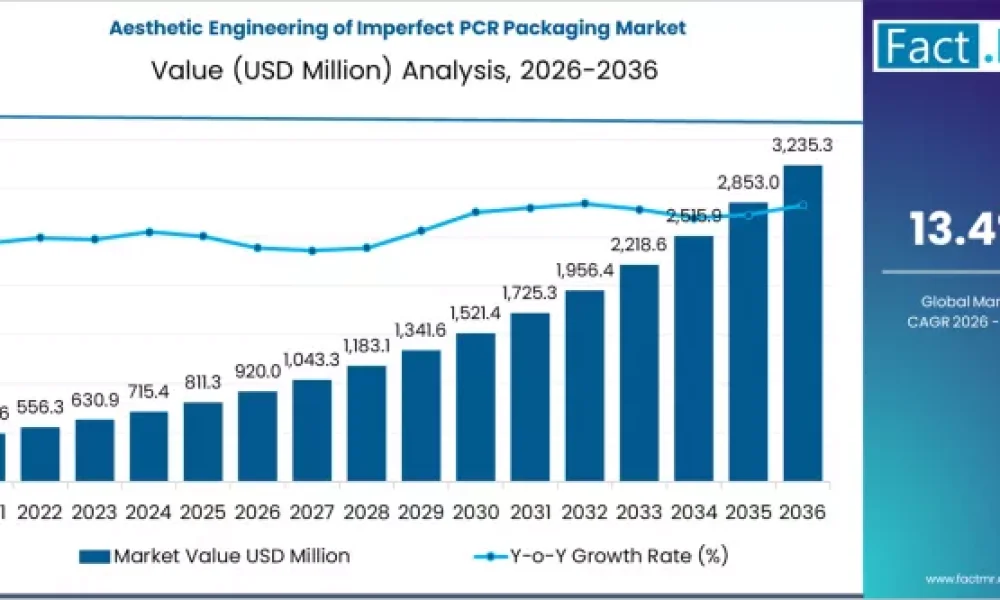
The global market for the aesthetic engineering of imperfect Post-Consumer Recycled (PCR) packaging is entering a transformative growth phase, with its valuation projected to rise from USD 450 million in 2026 to USD 1.1 billion by 2036. According to specialized industry analysis, the market is set to expand at a compound annual growth rate (CAGR) of 9.3%, driven by a radical shift in consumer psychology that views visual “flaws” in plastic—such as gels, specks, and grey tints—as badges of environmental authenticity.
Traditionally, packaging manufacturers spent millions attempting to make recycled plastic look identical to virgin resin. Aesthetic engineering flips this model, using advanced design techniques to embrace and enhance the natural variations of PCR. By “engineering” these imperfections, brands can utilize lower-purity, less-processed recycled streams, significantly lowering costs and carbon footprints while meeting the rising demand for transparently sustainable products.
Summary Table: Aesthetic Engineering of Imperfect PCR Packaging Market Outlook
| Metric | Details |
| Market Value (2026E) | USD 450 Million |
| Forecast Value (2036F) | USD 1.1 Billion |
| Projected CAGR (2026-2036) | 9.3% |
| Leading Technique | Surface Texturing & Frosted Finishes (48.5% Share) |
| Primary End-User | Personal Care & Cosmetics (42%+ Share) |
| Highest Growth Market | India (11.5% CAGR) |
Request for Sample Report | Customize Report | Purchase Full Report – https://www.factmr.com/connectus/sample?flag=S&rep_id=13673
Core Market Dynamics: Answering the Strategic ‘How’ and ‘Why’
Aesthetic engineering involves the use of specialized additives, textures, and color science to ensure that “imperfect” recycled materials appear intentional, premium, and safe.
Who is leading the sector? Industry pioneers including Berry Global, Amcor plc, Alpla, Eastman Chemical Company, and specialty design firms like James Cropper are at the forefront, developing “textured PCR” and “earth-tone” palettes that mask inconsistent resin clarity.
What is the dominant technique? Surface Texturing and Frosted Finishes command a significant 48.5% market share. By applying micro-textures or matte coatings, manufacturers can hide flow lines and particulates inherent in high-content PCR (up to 100%), creating a tactile, high-end feel.
Where is growth most accelerated? India is emerging as a global growth leader with a 11.5% CAGR, fueled by a surge in “Direct-to-Consumer” (DTC) wellness brands. China follows with a 10.2% CAGR, as urban Gen-Z consumers increasingly prioritize “visible sustainability” in their purchasing habits.
Why is the technology shifting? The market is moving toward Intentional Pigmentation. Instead of fighting the “greyish” tint of recycled PET, engineers are adding subtle mineral-inspired tints—like sea-glass green or charcoal—to make the material’s origin part of the brand’s story, eliminating the need for energy-intensive chemical bleaching.
Sector Insights: Premium Personal Care and Luxury Beverages Lead Adoption
The Personal Care and Cosmetics segment remains the primary engine of growth, projected to hold over 42% of the market share by 2026. Premium skincare brands are moving away from “clinical white” plastic toward “organic grey” PCR to signal their circularity. Simultaneously, the Luxury Spirits and Beverage segment is adopting imperfect PCR for secondary packaging and outer sleeves, utilizing “mottled” effects to create a unique, one-of-a-kind appearance for every bottle.
“We are entering the era of ‘Honest Packaging’,” the analysis states. “We are seeing a major trend where ‘Flaw-Positive Design’ is used as a marketing advantage. By educating consumers that a speck in the plastic means a fish saved from the ocean, brands are turning a technical challenge into a powerful emotional connection. Aesthetic engineering provides the tools to make those recycled materials look beautiful without the environmental cost of perfection.”
Key Market Trends and Strategic Outlook
1. Optimization through “Tactile” Sustainability
A significant absolute dollar opportunity lies in Bio-Mimetic Textures. Manufacturers are using laser-etching on molds to give imperfect PCR the feel of stone, wood, or paper. This masks visual inconsistencies while providing a “natural” sensory experience that justifies premium pricing for recycled products.
2. The Rise of “Certified Imperfection” Labels
Innovation is focused on consumer education. Brands are beginning to include QR codes on “imperfect” packaging that explain the specific waste stream the material came from, turning a visual gel or streak into a digital storytelling point.
3. Regulatory and Economic Tailwinds
In the United States (8.8% CAGR) and European Union (9.5% CAGR), growth is supported by the high cost of “Grade A” clear PCR resin. By engineering “Grade B” and “Grade C” resins to look premium, companies can meet recycled-content mandates while maintaining profit margins in a volatile commodity market.
Investment Perspective: The Intersection of Art and Circularity
The aesthetic engineering market represents a high-margin niche for masterbatch suppliers and industrial designers. As the supply of clear, high-purity PCR remains constrained, the ability to make “low-quality” recycled plastic look like a high-end design choice will be a critical competitive advantage for global FMCG brands through 2036.
Aesthetic Engineering of Imperfect PCR Packaging Market Key Segments
- End-use :
- Premium FMCG and cosmetics
- Beauty and personal care
- Mass cosmetics
- High-end packaging
- Emerging beauty brands
- Aesthetic Strategy :
- Texture and color-masking designs
- Matte and speckled finishes
- Visual defect masking
- Minimalist aesthetics
- Others
- Material :
- PCR-PET or PCR-PE
- PCR plastics
- PCR-PET
- PCR-PC or PCR-PET
- Others
- Technology :
- Surface texturing and controlled pigmentation
- Masterbatch-based visual tuning
- High-consistency color control
- Precision mould finish
- Others
- Region :
- North America
- USA
- Canada
- Mexico
- Europe
- Germany
- UK
- France
- Italy
- Spain
- Nordic Countries
- BENELUX
- Rest of Europe
- Asia Pacific
- China
- Japan
- South Korea
- India
- Australia
- Rest of Asia Pacific
- Latin America
- Brazil
- Argentina
- Rest of Latin America
- Middle East and Africa
- Kingdom of Saudi Arabia
- United Arab Emirates
- South Africa
- Rest of Middle East and Africa
- Other Regions
- Oceania
- Central Asia
- Other Markets
- North America
Have specific requirements or need assistance on report pricing or have a limited budget? Please contact [email protected]
About Fact.MR:
Fact.MR is a global market research and consulting firm, trusted by Fortune 500 companies and emerging businesses for reliable insights and strategic intelligence. With a presence across the U.S., UK, India, and Dubai, we deliver data-driven research and tailored consulting solutions across 30+ industries and 1,000+ markets. Backed by deep expertise and advanced analytics, Fact.MR helps organizations uncover opportunities, reduce risks, and make informed decisions for sustainable growth



