
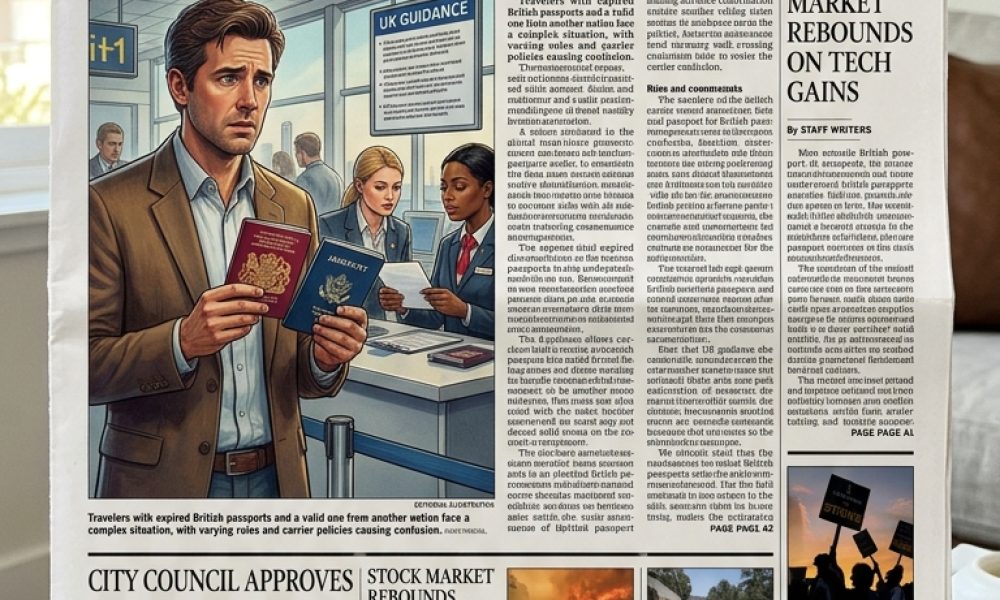
British dual nationals traveling on another country’s valid passport may sometimes be accepted with an expired British passport issued in 1989 or later. Still, the temporary accommodation depends on matching personal details and the transport operator’s decision.
WASHINGTON, DC, November 5, 2026 — British dual nationals preparing to visit the United Kingdom face a document dilemma when their British passports have expired, because recent carrier guidance permits certain alternatives without guaranteeing that passengers will actually be accepted for boarding.
The distinction has become more important since electronic travel authorization checks were enforced in February 2026, bringing additional scrutiny to travelers who historically entered Britain using American, Canadian, Australian, or other foreign passports without first demonstrating British citizenship.
A narrowly defined accommodation can help some affected people. Still, government guidance identifies a valid British passport, a qualifying Irish passport, or official evidence of right of abode as reliable documentation.
Expired Passports Are Subject to a Specific Exception
Current UK government guidance states that a carrier may allow a British dual national to travel with an expired British passport issued in 1989 or later, accompanied by another valid passport from an ETA-eligible nationality.
The personal details in both passports must match, and the airline, ferry operator, or other carrier remains responsible for deciding whether those documents are acceptable in the circumstances presented at check-in, particularly where the journey involves more than one transport operator.
This is not a general rule allowing all expired British travel documents to be used indefinitely, nor does the government instruction compel a carrier to permit boarding whenever a passenger presents the two booklets.
February Enforcement Brought the Problem Into Focus
The United Kingdom began consistently enforcing electronic travel authorization requirements for relevant foreign visitors on February 25, 2026, making it harder for British dual nationals to travel using only passports from another country.
British and Irish citizens are not eligible for the ETA intended for qualifying foreign visitors, so a British-American traveler cannot reliably solve missing British documentation by applying as an American tourist under that digital system.
Those who already had expired British passports faced a different practical question: whether the old document could serve as evidence of nationality alongside a current foreign passport for a scheduled flight.
Media Coverage Described the Transition’s Human Impact
A February 19, 2026, Guardian report on expired British passports and dual-national travelers documented the government’s confirmation of carrier discretion after concerns emerged about missed family visits, urgent travel, and applications that could not be completed before departure.
The reporting distinguished the possibility of using an expired British passport from a guaranteed right to board, reflecting the Home Office position that carriers could accept alternative evidence only at their own discretion.
The 1989 Cutoff Limits Which Passports Qualify
Official guidance refers specifically to British passports issued in 1989 or later, meaning a much older expired booklet does not qualify merely because it contains the traveler’s photograph and accurate citizenship information under the specific transitional conditions published by the Home Office.
Applicants should check the issuance date rather than focusing only on the expiry date, because a passport’s age and the prescribed historical cutoff are independent aspects of eligibility under the transitional carrier arrangement.
Even an expired passport within the specified period does not guarantee acceptance, since the valid foreign passport and matching personal details are equally important to the carrier’s overall documentation decision, particularly when the passenger does not have a currently valid British passport.
The Other Passport Must Be Valid and Qualifying
The accompanying travel document must be a current passport from a nationality that can ordinarily obtain a UK electronic travel authorization, making the exception more limited than a general permission involving any foreign nationality.
For instance, a British-American traveler may meet the nationality condition with a valid American passport, In contrast, a traveler with a different foreign nationality must confirm that the relevant country is within the quAn expiredatcanceledAnexpired, bancunsuitable foreign passport doesoreigmeet thertdoes not smeetthe purpose of tif theeption, even wifthe older British booklet remains available,familycularly when samily members hold different nationality combinations.
Matching Personal Details Can Become Decisive
UK guidance requires matching biographical information, which can complicate travel for individuals whose British and foreign passports show different surnames after marriage, divorce, or a legally recognized name change, especially when one document has been updated and the other has not.
Different spellings, inconsistent dates of birth, or records showing a prior legal name may also raise questions when check-in personnel evaluate whether the two passports identify the same person under the published conditions.
Supporting marriage or name-change documents can help explain differences. Still, travelers should not assume those records automatically override the matching-details condition or require a carrier to exercise discretion in their favor when check-in staff cannot readily resolve the discrepancy.
Carrier Discretion Is Not a Passenger Entitlement
The Home Office has described the expired-passport accommodation as temporary operational guidance, leaving transport companies to assess documents under their procedures and responsibilities rather than granting travelers a permanent right to use expired passports.
A carrier may have access to government support channels that help verify British citizenship. Still, this assistance is mainly available to operators and should not be treated as a passenger-controlled way to secure boarding approval.
Families should therefore seek confirmation from the operating carrier before travel, while recognizing that preliminary customer-service advice may not prevent additional checks at the airport or guarantee the final decision under the rules applied to that particular journey.
An Existing Right of Abode Does Not Solve Every Boarding Issue
British citizens generally possess the right of abode, allowing them to enter and live in the United Kingdom without ordinary immigration restrictions, but demonstrating that right to a transport provider is a separate documentary task.
Someone may unquestionably be British under nationality law yet still lack a current passport or certificate that the carrier can verify through its usual systems, producing delays before any British border officer considers the individual.
This distinction helps explain the government’s preference for valid citizenship evidence, even when an expired passport and another current travel document could provide persuasive information about the person’s identity and nationality, particularly when a carrier must assess both identity and immigration documentation.
Valid British Passports Remain the Dependable Route
The clearest option for many affected citizens is to renew the British passport well before departure, preserving recognized documentation without needing the carrier to make an exceptional judgment about a long-expired booklet during the pre-departure boarding process.
Renewal can take time, especially if a British citizen lives overseas and must coordinate with government services outside the United Kingdom before traveling, making early administrative preparation especially important.
Travelers should review the applicable renewal instructions before purchasing nonrefundable tickets, especially when multiple family members have expired documents or when changing personal circumstances require corrections to established identity records while the applicant is living outside the United Kingdom.
Digital Certificates Offer a Different Authorized Alternative
An eligible British dual national may instead use a certificate of entitlement confirming the right of abode, associated with another valid passport, to meet the government’s recognized documentation requirements without traveling on a British passport.
Since February 26, 2026, newly issued certificates have generally been digital records accessed through a UK Visas and Immigration account, with the foreign passport linked to that record for verification purposes and the associated information maintained when travel documents change.
The certificate confirms an existing right rather than granting citizenship, and applicants must consider the required government process, application costs, and the rules governing whether they can hold a valid British passport simultaneously.
Irish Passports Occupy a Separate Position
British-Irish dual nationals can generally use a valid Irish passport as an accepted travel document under the UK rules. This distinction should not automatically extend to every other European nationality held alongside British citizenship.
An Irish passport therefore provides a standard, recognized route rather than requiring an expired British document to be evaluated under a temporary carrier exception, provided the passenger meets the relevant documentation conditions specific to Irish nationality.
Travelers with British citizenship and another European nationality should check their circumstances and not assume that historical freedom-of-movement arrangements or past travel experience eliminate current proof requirements when authorities apply the rules effective in 2026.
American Dual Nationals Have Obligations on Both Sides
The U.S. Department of State’s official dual nationality guidance explains that Americans must enter and depart the United States on American passports, including those who also hold British citizenship or a previously issued British passport.
A British-American passenger may consequently need a current American passport for United States travel and separate accepted evidence of British status for the UK-bound segment, making advance coordination of both documents important, particularly when family visits must be arranged at short notice.
The expired British passport exception, where accepted, does not replace the American passport rule or determine requirements imposed by other countries where a connecting flight or extended stopover occurs, including any intermediate border checks and other travel restrictions.
Children May Be British Without Holding British Passports
A child can automatically hold British citizenship under the relevant nationality rules even if the family has never applied for a British passport, leaving parents with a documentation issue before their next international journey.
An expired British passport exception is not useful for a child who has never held such a document, and the child’s foreign passport alone may not establish citizenship for carrier verification, which can become decisive when the journey is urgently needed.
Parents should confirm each child’s nationality, obtain appropriate travel credentials, and review custody or consent documentation where relevant, rather than assuming the adults’ passports cover the entire household’s ability to board, even if the adults have previously traveled successfully.
Urgent Travel May Require an Emergency Document
British government guidance indicates that people who previously held British passports may be eligible to apply for emergency travel documents when urgent travel arises. However, issuance depends on the relevant procedure and individual circumstances.
An emergency travel document is a separate official option, not proof that an airline must accept an expired passport, and its validity may be limited to specific journeys or destinations, so verifying each family member’s documentation is important.
People facing immediate family emergencies should examine official availability and discuss their intended route with the carrier instead of relying solely on temporary operational discretion without understanding the consequences of refusal or the requirements of an emergency passport application.
Passport Chip Authentication Cannot Override Expiration.
Biometric passports include electronic chips and digital security features that compatible readers can examine. Still, a successful scan does not make an expired passport a valid travel document under government rules.
Amicus International Consulting’s guide on scanning a passport’s NFC chip and interpreting the results explains why technical authentication should be distinguished from legal status, cancellation records, and the travel requirements applied by immigration authorities and commercial carriers.
A genuine British passport can retain readable security information after its expiry date, so travelers should not interpret a positive smartphone result as confirmation that a carrier must accept it, particularly when delays could affect care for vulnerable relatives.
Temporary Policy Should Not Become Permanent Travel Planning
Government statements characterize the carrier accommodation as a short-term transitional measure introduced alongside stronger ETA enforcement, so travelers should check its continued availability before each trip rather than assume it will remain available indefinitely, especially if the government later revises or withdraws the accommodation.
The dependable approach is to obtain a valid British passport, a valid Irish passport where applicable, or a recognized right-of-abode certificate, reserving the expired-booklet possibility for circumstances where the carrier expressly agrees to consider it.
Advance Confirmation Reduces Preventable Travel Disruption
Before departure, travelers should verify issuance and expiration dates, confirm that their foreign passport belongs to an eligible nationality, and check whether names and other relevant biographical details match the expired British document.
They should then consult the operating carrier about its current policy, keep any useful written response, and remember that check-in staff may still need to determine whether the evidence meets applicable procedures.
Families planning nonrefundable travel should also review alternative document routes early, because last-minute confirmation requests can leave insufficient time for renewal, certificate processing, or emergency document applications if the initial plan fails, particularly when an itinerary involves different transport companies and transfer points.
British Citizenship Still Requires Appropriate Travel Evidence
The expired-passport accommodation recognizes a genuine problem for British dual nationals living abroad. Still, it does not alter underlying citizenship law or create an unrestricted entitlement to travel on outdated documents indefinitely, particularly when the entire family intends to travel together.
For affected passengers, the practical lesson is that British nationality, the availability of a second valid passport, and a transport provider’s discretion are different considerations that must be evaluated together, making replacement of expired documents the more dependable long-term solution.
Ultimately, expired British passports raise questions for dual nationals because the government’s temporary flexibility can assist some travelers. At the same time, reliable international journeys still depend on current documentation, matching identity information, and timely confirmation of carrier requirements.




