
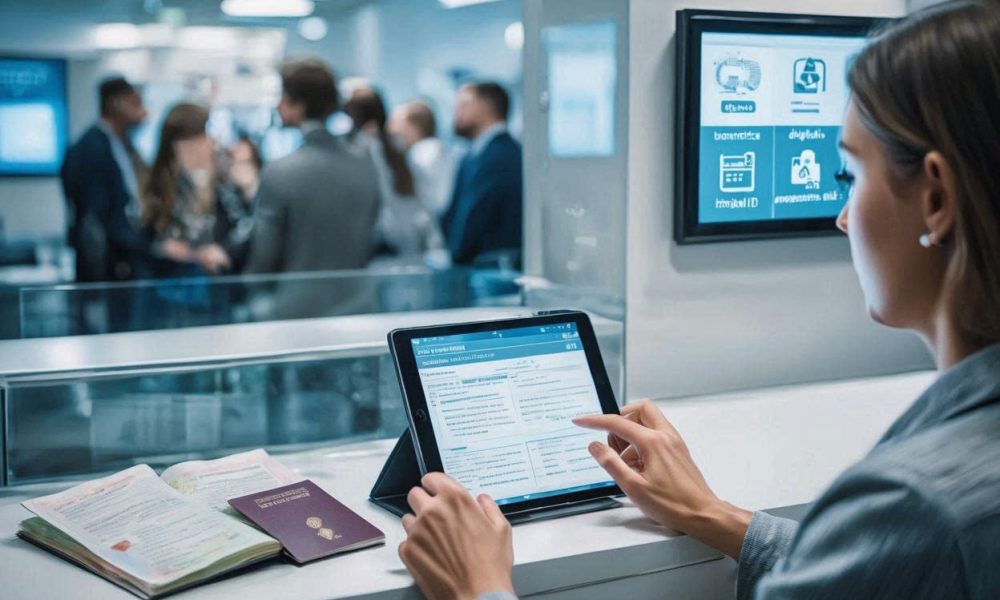
Stricter screening and digital shifts for visa applicants
WASHINGTON, DC, April 27, 2026, applying for a Schengen visa in 2026 still begins with embassies, consulates, visa centers, supporting documents, and biometric appointments, but the system around that familiar process is becoming more digital, standardized, and security-focused.
The European Union’s new visa direction reflects a broader border modernization agenda, in which visa-required applicants, visa-exempt travelers, airlines, border officers, and immigration databases are being integrated into a more connected digital environment.
Applicants still need the classic paperwork, including proof of funds, accommodation details, travel insurance, itinerary details, passport validity, evidence of employment, and reasons for returning home after the permitted stay.
What is changing is the level of verification surrounding those documents, because biometric checks, digital application tools, database screening, and future online visa platforms are reshaping how Schengen travel is assessed.
A recent Reuters report on Europe’s digital border rollout described how the Entry/Exit System, known as EES, replaces passport stamping with biometric records, creating a broader enforcement environment around European travel.
The visa process remains familiar, but the screening environment is different
The basic Schengen visa application still requires a passport, photographs, proof of travel purpose, financial evidence, accommodation confirmation, insurance coverage, and documents showing that the applicant intends to leave before authorization expires.
Applicants from visa-required countries must still book appointments, submit paperwork, provide fingerprints when required, and answer questions about travel plans, employment, family ties, finances, and prior immigration history.
However, the process now operates within a more sophisticated digital border ecosystem, where the visa decision is increasingly linked to biometric identity, prior travel behavior, and broader security databases.
That matters because a weak application can no longer rely only on a paper presentation, since consular officers and border systems are moving toward stronger verification of identity, purpose, and travel history.
The shift does not mean every applicant faces suspicion, but it does mean the application must be cleaner, more consistent, and better documented than many travelers expected a decade ago.
Biometric verification is now central to Schengen trust
Biometric verification has become one of the strongest tools in Schengen visa control because fingerprints and facial images help confirm that the applicant is the same person who later travels.
This reduces the usefulness of forged passports, stolen identity profiles, substitute photographs, fake residence claims, and repeated applications filed under slightly different personal details across multiple jurisdictions.
A visa applicant may present strong documents, but biometric records can still expose previous refusals, overstays, identity conflicts, or suspicious patterns that would be difficult to detect through paperwork alone.
For legitimate applicants, biometric verification can also be protective, as it helps distinguish them from people with similar names, stolen documents, or fraudulent records associated with another person.
The key point is that Schengen identity assessment is increasingly based on the person behind the passport, not only the passport booklet and supporting papers placed inside an application file.
The EU Visa Strategy points toward standardization
The European Union’s first visa strategy marks a major policy shift by harmonizing procedures, supporting digitization, strengthening security, and making travel management more consistent across member states.
For applicants, this means the long-term direction is fewer fragmented national processes, more standardized online procedures, and a future platform where Schengen visa applications can be handled more centrally.
The transition will not eliminate embassies overnight, because biometric appointments, document review, interviews, and country-specific assessments will still remain important during the move toward digital processing.
However, the direction is clear: the European visa system is moving away from paper-heavy procedures toward a digital process that better supports identity verification and security screening.
This matters for travelers because the strongest applications will be those built on consistency, accurate information, complete documentation, and records that match at every digital and physical checkpoint.
A single online platform will change how applicants prepare
The planned single online application platform will eventually allow applicants to complete more steps digitally, track status, submit information, and reduce dependence on fragmented paperwork across different consular systems.
That transition may improve convenience, but it will also reduce the room for inconsistent claims because digital systems are better at comparing fields, dates, documents, and prior application history.
An applicant who changes travel purpose, employment information, financial evidence, or accommodation details between applications may face more questions when previous records are easier to compare.
The platform will also make accuracy more important because mistakes entered into digital systems can persist throughout the application process, whereas errors in a single paper file are more limited.
Applicants should treat every online answer as a formal immigration statement, because digital convenience does not reduce the seriousness of the information provided to visa authorities.
Proof of funds must tell a credible story
Proof of funds remains one of the most important parts of a Schengen visa application because consular officers need confidence that the traveler can support the trip lawfully.
A bank statement alone may not be enough if deposits appear unusual, employment income is unclear, sponsorship documents are weak, or the applicant cannot explain how the trip will be financed.
The strongest financial evidence usually tells a coherent story, linking income, savings, employment, business ownership, sponsorship, itinerary costs, accommodation, and return travel into one credible travel plan.
Applicants should avoid artificial bank balances, last-minute deposits, borrowed funds without explanation, or documents that appear staged because modern screening increasingly focuses on consistency rather than surface appearance.
A clean financial profile does not require wealth, but it must be believable, documented, and aligned with the applicant’s occupation, travel plans, and personal circumstances.
Accommodation and itinerary evidence must match the application purpose
Accommodation evidence still matters because visa officers want to see where the applicant will stay, how long the visit will last, and whether the itinerary matches the declared purpose.
A tourist itinerary should align with hotel bookings, travel dates, insurance coverage, available funds, and transportation plans, rather than appearing randomly assembled for the application.
A business itinerary should include meeting details, invitation letters, company information, conference registration, employer support, and a schedule that explains why Schengen travel is necessary.
A family visit should include evidence of the relationship, host details, accommodation confirmation, and proof that the visit is temporary rather than an undeclared attempt at relocation.
In 2026, mismatched itineraries may raise greater concern because digital systems and stronger screening make inconsistencies easier to identify during application review or border inspection.
Travel insurance remains a non-negotiable requirement
Travel medical insurance remains a standard Schengen requirement because applicants must show coverage for medical emergencies, hospitalization, and repatriation during the authorized period of travel.
The insurance should match the planned travel dates, cover the required minimum for Schengen travel, and remain valid in all participating countries on the itinerary.
Applicants should not treat insurance as a minor formality because weak, expired, incomplete, or geographically limited coverage can undermine an otherwise strong application.
Insurance also bolsters the overall credibility of the trip, because a traveler who plans carefully is more likely to provide consistent documentation for funds, accommodation, flights, and purpose.
The safest approach is to obtain coverage before submission and ensure the policy details match the itinerary exactly, especially when multiple Schengen countries are included.
Applicants should expect deeper checks against prior travel history
Schengen visa screening in 2026 is increasingly connected to prior travel history, including earlier visas, refusals, overstays, border questions, expired permits, and inconsistent entries in previous applications.
The United States State Department’s Europe travel guidance reminds travelers that short stays in the Schengen area are generally limited to 90 days within any rolling 180-day period.
While that guidance is written for American travelers, the rule itself matters broadly because visa-required applicants may face scrutiny when past stays suggest overuse, unclear purpose, or attempted residence.
Applicants should disclose prior refusals honestly, because trying to hide a refusal can create a bigger problem than explaining the circumstances with supporting documents.
The more digital Schengen becomes, the more dangerous it is to assume that old refusals, overstays, or inconsistent applications will remain invisible to future decision-makers.
EES and visa decisions are becoming part of one travel ecosystem
EES and Schengen visa processing serve different functions, but they are increasingly part of a single travel ecosystem that records identity, movement, entry, exit, and compliance with greater precision.
A visa grants permission to enter for a specific purpose and period, while EES records whether the traveler actually entered, exited, overstayed, or was refused entry.
That connection matters because a person with a valid visa can still face questions at the border if the purpose of travel, documents, funds, or answers do not match the application.
It also means future applications may be influenced by how the traveler used prior permissions, especially if departure records, length of stay, or border interactions raise concerns.
The applicant should therefore think beyond approval, as the strongest travel profile spans entry, stay, exit, and any future application filed after the trip.
Digital visa systems may reduce sticker fraud
One major purpose of digital visa reform is to reduce reliance on physical stickers, which can be stolen, altered, counterfeited, damaged, or misused when passports change hands.
A digital visa record can be verified through official systems rather than judged only by the appearance of a sticker placed inside the passport.
This makes fraud harder because criminals must defeat digital records, document data, biometric identity systems, and border systems rather than simply produce a convincing physical label.
For legitimate travelers, digital visas may eventually reduce loss-or-damage issues because the authorization is stored in the system rather than only in the passport booklet.
The challenge will be ensuring travelers understand how to prove status, correct errors, and confirm that the digital visa is properly linked to the passport used for travel.
Visa-required travelers should avoid document shortcuts
The internet is filled with offers of fake bank statements, hotel bookings, employer letters, insurance certificates, invitation letters, and travel documents marketed to people anxious about being refused.
Those shortcuts are dangerous because modern screening is increasingly designed to identify documents that appear impressive but do not reflect the applicant’s actual financial, employment, or travel situation.
A fake bank statement can lead to refusal, future inadmissibility problems, fraud findings, and serious difficulty obtaining visas from other countries later.
A staged itinerary can also backfire if border officers ask basic questions that the traveler cannot answer because the trip was built around paperwork rather than reality.
The safest application is not always the most polished, because it accurately reflects the traveler’s genuine purpose, finances, ties, and planned return.
Business travelers should prepare stronger employer documentation
Business Schengen visa applicants should prepare clear employer letters, invitation documents, conference registrations, meeting schedules, financial responsibility statements, and evidence that the visit remains temporary.
A vague letter stating that the applicant will attend meetings may be weaker than a specific document detailing dates, locations, the host organization, the business purpose, and the expected return.
Companies should also ensure that supporting documents match payroll records, tax documents, job title, travel history, and the applicant’s role inside the organization.
This matters because business travel can sometimes resemble work migration if documents are unclear, especially when repeated visits become frequent or prolonged.
The safest business application shows that the traveler is visiting for permitted short-stay purposes, not quietly relocating, taking local employment, or establishing unauthorized residence.
Students and family visitors need stronger personal ties
Student visitors, short-course attendees, and family visitors should expect closer review of ties to home country, because visa officers often assess whether the applicant is likely to return.
This can include evidence of school enrollment, employment, family responsibility, property, business ownership, financial obligations, or future commitments outside the Schengen Area.
Family visitors should provide evidence of relationship, host documentation, accommodation details, invitation letters, and proof that the visit has a clear beginning and end.
Students attending short programs should provide enrollment confirmation, evidence of payment, accommodation, insurance, funding, and a plan explaining how the program fits their background.
The stronger the return story, the easier it becomes for officers to understand that the trip is temporary rather than a disguised attempt to remain.
Second passport holders must be especially consistent
Travelers with more than one passport should pay close attention, as visa applications, ETIAS authorizations, EES records, and border entries must align with the passport actually used.
People exploring second-passport planning should understand that additional citizenship can expand mobility only when passport use, residence records, banking profiles, and travel histories remain consistent.
A traveler who applies with one passport, books with another, and enters with a third may create avoidable confusion if the legal basis is not carefully documented.
That does not mean dual citizenship is suspicious, because many people lawfully hold multiple nationalities and travel internationally without problems.
It means that document use must be disciplined because digital systems increasingly connect the person, passport, visa, biometric record, and travel history.
Legal identity planning must survive Schengen digitization
Schengen digitization makes lawful identity planning more important because passports, names, visas, residence records, bank files, and border histories are easier to compare than before.
Through legal identity planning, the objective should be a defensible identity structure that can withstand visa screening, biometric checks, consular review, banking due diligence, and future renewal.
A legal name change, second citizenship, or a residence transition should be clearly documented so the applicant can explain any differences between older and newer records.
Problems arise when documents contain mismatched names, unclear dates, inconsistent addresses, unexplained changes in nationality, or prior applications that do not align with current claims.
In 2026, the strongest identity profile is not the most secretive; it is the one that remains consistent when systems compare it.
Applicants should prepare earlier than before
Schengen visa applicants should prepare earlier in 2026 because digitization does not eliminate appointment pressure, document gathering, biometric scheduling, consular review, or unexpected requests for additional information.
The move toward online systems may make parts of the process easier, but it can also create bottlenecks when applicants wait too long or submit incomplete information.
Travelers should create a checklist that covers passport validity, application forms, photographs, funds, accommodation, insurance, flights, evidence of employment, prior visas, refusals, and supporting explanations.
They should also keep copies of every submitted document, because future applications may require consistency with information already provided in earlier files.
A Schengen visa application is no longer just a folder of papers, because it is part of an expanding digital record that may shape future travel.
The future Schengen visa will be more convenient and less forgiving
The long-term promise of Schengen visa reform is convenience, because applicants may eventually benefit from online submission, clearer procedures, digital visas, and fewer fragmented national systems.
The tradeoff is stricter consistency, because digital records make it easier for authorities to compare applications, detect fraud, track travel history, and identify repeated patterns.
For honest travelers, the new model may become smoother when documents are complete, information is accurate, and travel history supports the application.
For applicants relying on shortcuts, fake documents, or inconsistent explanations, the same model becomes much more dangerous because errors can propagate through subsequent systems.
In 2026, applying for a Schengen visa is still about proving a temporary visit, but the proof must now survive a border environment built around data, biometrics, and digital memory.




