
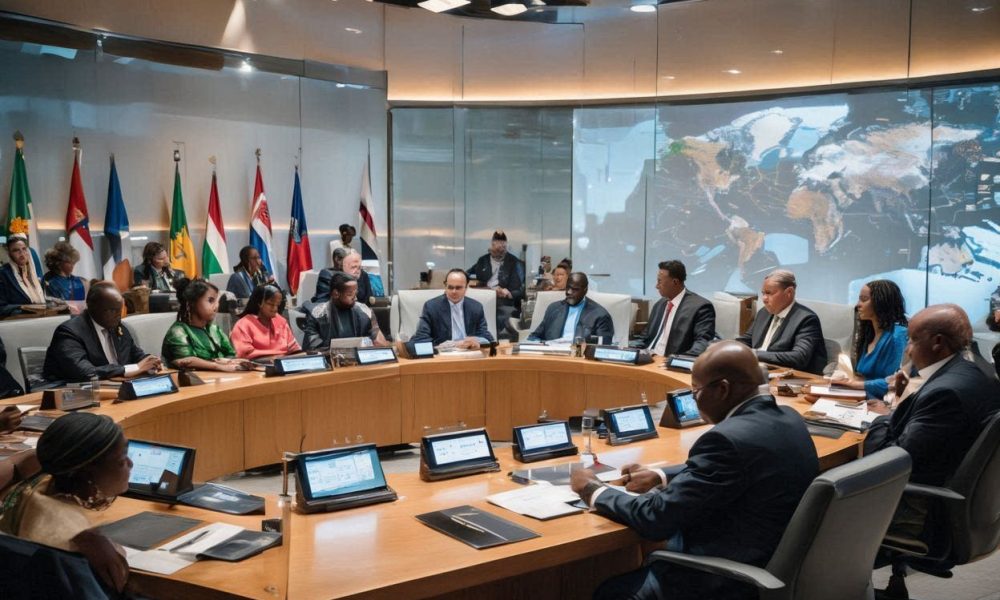
Whether through diaspora leadership or significant trade investment, candidates must demonstrate a deep, verifiable connection to the country they wish to represent.
WASHINGTON, DC, April 23, 2026
The modern honorary consul is often described as a bridge between countries, but the stronger truth is that the bridge usually has to exist before the title arrives, because foreign missions rarely gamble on strangers whose connection to the sending state is thin, romantic, or impossible to verify.
That is why the path to a nomination usually begins long before paperwork, in the slower and less visible work of building cultural, commercial, civic, and community ties strong enough that an embassy can later point to them as evidence of seriousness rather than ambition.
In practice, the future honorary consul is not merely a respected local resident with an international outlook, but someone whose relationship to the foreign homeland already looks durable, useful, and legible to both the sending state and the host government.
The keyword is legible, because embassies are not looking for emotional affinity in the abstract, but for a record they can explain, defend, and document if asked why a particular private citizen should be trusted to represent another nation locally.
The strongest candidates offer proof, not just enthusiasm.
Many people assume that admiration for a country, family heritage, or occasional travel there should count heavily in a diplomatic selection process, yet missions tend to draw a sharp distinction between affection and evidence when real representation is at stake.
A person may sincerely love a foreign homeland, speak warmly about its culture, and attend every related event in the city, but still appear weak as a future nominee if the tie remains mostly emotional and socially performative rather than institutionally meaningful.
By contrast, a candidate who has spent years helping companies from that country enter local markets, supporting educational exchanges, financing cultural initiatives, or leading diaspora organizations already offers a mission something much more valuable than sentiment.
That person offers a paper trail of connections, and paper trails matter because honorary service lives or dies on the government’s ability to show that a representative was chosen for grounded reasons rather than on flattering instinct.
Diaspora leadership is one of the clearest routes into diplomatic plausibility.
One of the most powerful ways to cultivate ties with a foreign homeland is to become a trusted figure within the diaspora and expatriate community linked to that country, because embassies pay close attention to who can build cohesion instead of noise.
Host-state rules increasingly reflect that reality, and Canada’s current appointment framework, for example, requires the head of mission to confirm that a nominee can build and maintain positive and productive relationships with the diaspora and expatriate community.
That requirement is revealing because it shows that modern honorary service is not built on prestige alone, but on social legitimacy inside the very communities whose connection to the sending state remains active, personal, and often emotionally intense.
A candidate who can mediate competing community interests, support cultural events without making them about personal status, and keep lines open between the embassy and the diaspora begins to look far more useful than someone admired only in a narrower business circle.
Trade and investment ties can be just as persuasive as heritage.
For candidates without deep family roots in the country they hope to represent, the most credible substitute is often long-term commercial relevance, especially where that relevance has visibly helped the sending state attract business, visitors, partners, or capital.
That logic has been visible for years in reporting on honorary consuls, and a long-cited Reuters examination of honorary consuls in America noted that countries often select people who are already well-connected and have brought business to the nation they represent.
The commercial case matters because foreign ministries are not only symbolic institutions, but also engines of practical influence, and a local figure who already strengthens trade relationships can look more compelling than a candidate with stronger sentiment but weaker utility.
A person who has built distribution channels, hosted inbound delegations, opened investment discussions, or helped a homeland’s companies gain serious local traction offers a mission a bridge that already carries weight before any official title is placed on it.
Soft power counts, but only when it produces measurable trust.
Some future honorary consuls emerge not from boardrooms or logistics networks, but from the worlds of culture, education, philanthropy, language promotion, or public diplomacy, where influence is built more quietly and often more durably over time.
That pathway can be just as credible as direct trade work when it produces institutions, partnerships, or sustained public engagement that make the homeland more present locally in ways an embassy can point to with evidence rather than vague praise.
The U.S. State Department’s Deal Teams initiative shows how seriously missions take practical bridge-building in commercial diplomacy, and the same logic often extends into softer fields where embassies need trusted local partners to widen access and familiarity.
A candidate who has spent years organizing visiting cultural programs, supporting language education, coordinating academic exchanges, or helping civic institutions engage with the homeland seriously may eventually look more nomination-worthy than someone with louder but thinner connections.
The mission wants someone who already understands the country’s real priorities.
Foreign missions quickly discern whether a civilian’s connection to the homeland is deep enough to encompass knowledge of the country’s interests, sensitivities, business culture, diplomatic habits, and reputational concerns, rather than merely its cuisine, festivals, or public symbolism.
That difference becomes clear in conversation, because the stronger candidate speaks not only about admiration, but about sectors, institutions, regional relationships, educational needs, diaspora challenges, and the practical work of representing a country without distorting its actual priorities.
This is why the best homeland ties usually involve repeated exposure to official or quasi-official settings, including trade councils, cultural institutes, chambers of commerce, academic partnerships, and civic forums where the candidate learns how the sending state thinks in practice.
A mission can work with someone who has learned to think institutionally about the homeland, while it will hesitate around a candidate whose connection remains sincere but shallow, expressive but not especially useful when the office begins requiring judgment rather than affection.
Cultural fluency matters more when it can be demonstrated publicly.
Fluency, whether linguistic, historical, or institutional, is valuable only when it can be shown through conduct, because embassies want evidence that a candidate can move credibly between homeland expectations and host-country realities without constant translation failures.
That fluency often shows up through the ability to host delegations intelligently, introduce the right local counterparts, explain the homeland’s priorities without exaggeration, and speak to diaspora audiences in a way that sounds informed rather than theatrically patriotic.
In this sense, language skills help, but only when paired with civic competence, because a fluent speaker who lacks credibility, discretion, or institutional patience can still look weaker than a non-fluent but deeply trusted organizer who has built serious cross-border results.
The homeland tie, therefore, becomes strongest when it is expressed through repeated successful interactions that others can verify, which is exactly why missions care so much about a candidate’s public record rather than relying on self-description alone.
Heritage can open the door, but it rarely closes the argument.
Family origins, a dual cultural upbringing, or long-standing ancestral ties can all help a candidate appear naturally aligned with the country they represent, especially when the person is already known in the diaspora and visibly active in homeland-related civic life.
Yet heritage alone rarely closes the case, because missions understand that lineage can create expectations without competence, and that personal ancestry does not automatically confer the restraint, administrative discipline, or public trust required for even a limited consular role.
A candidate who relies too heavily on origin stories without showing parallel involvement in trade, philanthropy, cultural leadership, or community institution-building can start to look as though the connection is inherited rather than actively maintained.
Foreign ministries generally prefer something stronger, namely a heritage-based candidate who has transformed family connection into sustained public work, because that creates a tie the mission can point to as both authentic and operational.
The homeland connection has to survive verification.
One reason embassies increasingly prefer verifiable ties is that honorary nominations now face heavier scrutiny than in earlier eras, when whispered reputations and quiet references could sometimes smooth a candidate into place with less documentary resistance.
Host governments today want status documents, curriculum vitæ, criminal record checks, signed declarations, archive locations, and open-source review, which means any claimed connection to the homeland may eventually be tested against public records and visible history.
That environment rewards candidates whose ties are obvious in the ordinary course of their careers, because long-term board work, public event leadership, trade activity, or philanthropic involvement can be demonstrated quickly and defended cleanly when a file begins to move.
It also punishes those who suddenly discover an enthusiasm for the homeland only after becoming interested in the title, because missions can usually tell the difference between a life already shaped by connection and one hastily rearranged to look nomination-ready.
Being useful to the homeland matters more than being fascinated by diplomacy.
A common failure among weak aspirants is that they speak constantly about diplomatic circles, official receptions, and international access while saying much less about how they have tangibly helped the country they hope to represent.
That imbalance is damaging because embassies usually want people who are useful to homeland interests first, and only later relevant to honorary service as a result of that usefulness, not people whose primary project is entering diplomatic life for its own sake.
The best future nominees often look almost understated in this respect, because their public story is built around helping the homeland move goods, ideas, students, artists, investors, or communities across borders without drawing attention to themselves at every turn.
That kind of candidate feels safer because the connection is outward facing and mission aligned, while a more openly status-driven candidate can sound as though the homeland itself is just a vehicle for personal elevation.
A clean understanding of the office makes the homeland tie more credible.
Another reason embassies value candidates with grounded connections is that those candidates are often less prone to fantasy about what honorary service actually is, especially when they have already worked close enough to missions to understand the office’s limits.
A realistic background reading, such as this explanation of what an honorary consul is, helps clarify that the role is local, practical, and functionally narrow, which is exactly how serious missions usually want prospective nominees to think about it.
Candidates whose homeland ties were built through real service tend to grasp those limits more naturally, because they are already accustomed to doing unglamorous bridge work without expecting immunity, celebrity, or broad diplomatic privilege in return.
That practical maturity matters because a person who understands the role honestly is usually easier to trust than someone whose connection to the homeland seems real but whose imagination about the office still leans heavily toward mythology.
Missions also watch whether the candidate’s professional life aligns with the claimed connection.
A homeland tie becomes much more persuasive when it fits naturally with the person’s career, because continuity between profession and foreign affiliation makes the relationship look organic rather than opportunistic once the nomination file is assembled.
A lawyer known for structuring cross-border commercial work, an academic known for building university partnerships, or a businessperson known for bringing homeland firms into the local market all present an easier story for a mission to defend.
The same is true for philanthropy or cultural leadership, because candidates whose public service visibly overlaps with the homeland look less like hobby diplomats and more like people whose lives already support the kind of local representation the mission needs.
When the profession and the homeland tie move in opposite directions, however, the embassy may begin to ask whether the connection is deep enough to withstand review or whether it exists mainly as a flattering overlay on an otherwise unrelated public life.
Long-term investment often speaks louder than short-term visibility.
Many candidates overestimate the power of high-profile appearances and underestimate the value of repeated, low-drama contributions that gradually become part of institutional memory within both the embassy and the homeland-linked community.
A single gala sponsorship or a few public speeches may briefly increase visibility, but a decade of funding scholarships, maintaining trade partnerships, supporting bilateral cultural work, or solving community disputes leaves a far stronger trail when officials later ask what this person has really done.
The key is duration, because embassies tend to trust ties that have survived changes in political leadership, business cycles, and social fashion more than ties that appeared suddenly during the same season a candidate began taking protocol more seriously.
The homeland connection that wins confidence is usually the one that kept operating even when nobody was yet talking about a nomination, because that is the clearest sign the relationship was built on substance rather than future leverage.
Diaspora leadership and trade investment are powerful because they are visible from both ends.
One reason those two pathways remain so persuasive is that they can be observed in both the host country and the homeland itself, creating a dual record of engagement that makes it easier for governments to validate the bridge.
A diaspora leader may be known locally for bringing a community together and known in the homeland for maintaining dignified, productive engagement with official institutions, while a serious investor may be recognized in both countries for generating measurable commercial connections.
That dual visibility is invaluable because it reduces the risk that the relationship exists only in one audience’s imagination, which is exactly the sort of uncertainty host governments and foreign ministries increasingly try to eliminate before granting formal authority.
When a candidate can point to real recognition, real partnerships, and real impact on both sides of the border, the homeland tie stops looking aspirational and starts looking like a functioning bilateral asset already waiting to be formalized.
The best bridges are specific, not generic.
Embassies are more persuaded by candidates who can explain exactly how they connect to the homeland through one or more clear channels, including chambers of commerce, regional trade corridors, cultural institutions, universities, municipal projects, or established diaspora organizations.
Specificity matters because it helps the mission picture the candidate in office, serving actual constituencies and advancing identifiable priorities, instead of leaving officials to guess how a broadly international personality would translate into everyday consular or representational work.
This is why successful candidates often sound precise when asked about their ties, describing industries, regions, language communities, investment flows, heritage institutions, or civic partnerships rather than relying on vague assertions of lifelong affection for a particular country.
The more precise the bridge becomes, the easier it is for the mission to believe that the candidate’s connection can survive protocol review, public scrutiny, and the transition from admired local supporter to accountable local representative.
The bond to the homeland must also coexist with loyalty to the host country’s rules.
One of the subtler tests in this process is whether the candidate can demonstrate a deep connection to the sending state without appearing politically or professionally entangled in ways that would unsettle the host government reviewing the eventual nomination.
That is why strong homeland ties usually sit beside clear local legality, clean professional standing, and a disciplined public profile, because the host state wants a bridge, not a controversy, and foreign missions know that distinction matters.
A good connection to the homeland becomes dangerous when it spills over into domestic factional politics, public conflicts of interest, or exaggerated claims of privilege, especially once the candidate starts to be seen through a quasi-official lens.
Serious candidates, therefore, cultivate homeland ties in ways that are visible, productive, and well documented, while also keeping their host-country professional lives orderly enough that both governments can read the file with something close to comfort.
The office rewards people who made the connection real before they made it strategic.
This may be the most important pattern of all, because the candidates who feel most convincing to embassies are often those whose ties to the homeland were already central to their working lives before honorary service entered their imagination.
They built the bridge because it mattered commercially, culturally, academically, or personally in a durable way, and only later did that bridge begin to look like the sort of thing a mission might trust with a formal role.
That sequence is powerful because it reverses the usual vanity logic, making the title the consequence of connection rather than the reason for it, which immediately makes the candidate feel more authentic and less socially opportunistic.
Missions notice that difference, because the first type of person sounds like a local partner with proven depth, while the second often sounds like a well-dressed applicant trying to retrofit a homeland relationship onto a newly discovered diplomatic ambition.
In the end, a foreign mission wants a candidate who already looks like a bridge under load.
The safest future honorary consul is not simply someone who can speak affectionately about a country, but someone whose record shows that people, goods, institutions, and trust have already moved across that bridge repeatedly and without collapse.
That is why diaspora leadership and significant trade investment remain such powerful pathways, because both create evidence of a sustained, verifiable, and mutually legible connection that a mission can point to without embarrassment when a nomination eventually takes shape.
The strongest candidates understand that foreign ministries are not looking for symbolic attachment alone, but for connections sturdy enough to withstand documentation, scrutiny, and the quiet question behind every honorary appointment: why this person, and why this country.
When the answer is written not only in family memory or personal admiration but also in years of visible service, measurable results, and trusted cross-border work, the bridge is finally strong enough to carry the weight of a consular title.




