
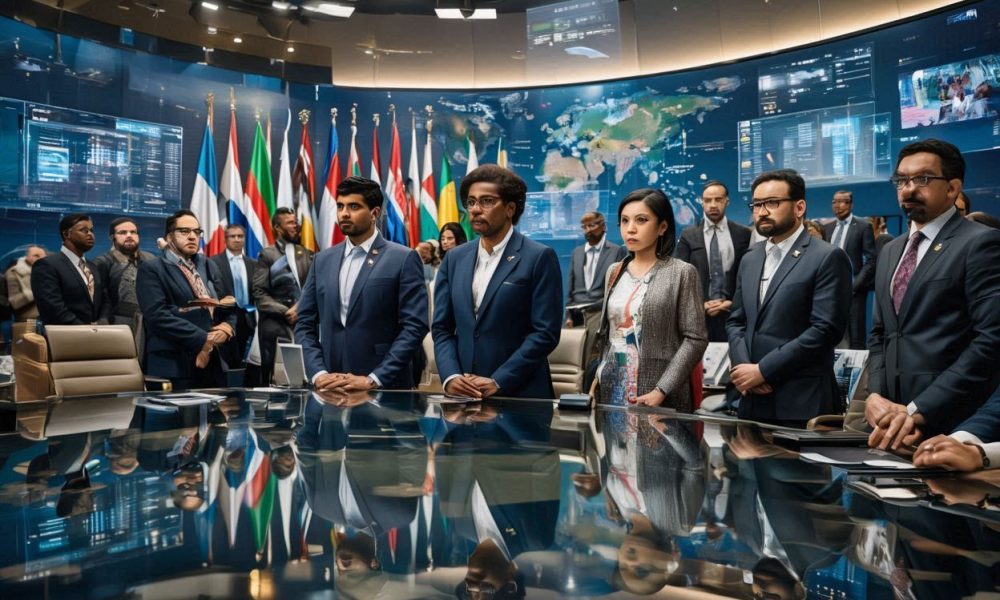
From attending embassy functions to hosting trade delegations, successful candidates know that visibility within the existing diplomatic circle is only the first step toward a nomination, because the real goal is becoming useful enough that a foreign mission already sees you as the safest local choice.
WASHINGTON, DC, April 23, 2026
For ambitious local business leaders, lawyers, philanthropists, and civic organizers who imagine honorary consular work as the natural reward for global sophistication, the first reality check is blunt, because foreign missions almost never choose their representatives from a conventional public application pool.
The path is usually slower, quieter, and far more strategic than outsiders expect, because embassies prefer to watch a potential candidate in ordinary civic life for months or years before deciding whether that person looks stable enough to trust with even a limited diplomatic role.
Visibility matters only when it becomes useful.
That is why networking with the diplomatic corps is not really about collecting invitations, photographs, and handshakes, but about building the kind of public record that allows embassy staff to see you as a practical asset rather than a socially ambitious observer orbiting their events.
The State Department’s guidance on honorary consular officers and posts makes clear that recognition begins with governments and missions rather than private citizens, which means the serious candidate must first become legible inside institutional conversations rather than merely visible in public rooms.
A reception can help introduce a name, but no embassy is likely to support a future nomination simply because someone appeared gracefully at a national day celebration and managed to speak confidently about world affairs over a glass of wine.
Missions remember usefulness more clearly than charm, because usefulness lowers risk, shortens friction, and gives diplomats a reason to believe that a candidate will still matter when the music stops, the guests go home, and actual consular or commercial work has to be handled.
The real audience is the mission, not the room.
This is where many otherwise sophisticated people misread diplomacy, because they imagine networking as a broad social contest, when in fact the meaningful audience is often a very small group of embassy professionals quietly assessing who can help them solve real problems without demanding theatrical recognition.
Those professionals are not looking for a freelance diplomat in search of a title, but for someone rooted enough to understand local institutions, disciplined enough to protect confidentiality, and modest enough not to convert every introduction into a personal branding exercise.
A successful future nominee, therefore, learns how to think like a mission before speaking like one, which means paying close attention to what embassies actually care about in a city, including trade access, diaspora stability, cultural influence, and the ability to reduce confusion in moments of stress.
When a local figure consistently helps visiting officials, business officers, consular staff, or cultural teams reach credible people and workable spaces without generating unnecessary ego friction, that person begins to move from the category of pleasant contact into the category of institutional possibility.
Attending embassy events is useful, but only as a starting point.
Embassy functions can certainly matter, because they are among the few places where civic leaders, commercial operators, protocol professionals, and foreign representatives regularly gather under one roof with a shared expectation of serious conversation and future follow-up.
Yet the person who treats those events as the whole strategy usually stalls quickly, because diplomacy is not impressed for long by repeated attendance alone, especially when attendance never matures into reliable service, thoughtful follow-through, or measurable value to the mission’s local priorities.
The most effective attendees are often the least performative ones, because they use events to understand what the mission is trying to achieve, who around the room is actually shaping that effort, and where a local civilian might help without demanding center stage.
That kind of observation matters because embassies are full of people whose titles vary but whose memories are long, and those memories tend to reward the quiet organizer who delivered a useful introduction far more than the polished networker who tried to sound globally important.
Trade delegations are where the future honorary consul often becomes visible.
One of the clearest ways to engage the diplomatic corps purposefully is by becoming effective in the commercial spaces that missions already care about, especially when foreign officials visit a city looking for local partners, serious investors, trusted intermediaries, or sector-specific expertise that cannot be imported overnight.
A candidate who can host a trade breakfast, assemble a credible roundtable, introduce visitors to decision makers, and keep the entire event focused on substance rather than status immediately looks more useful than someone who simply knows how to circulate elegantly after the speeches end.
This commercial credibility matters because embassies are under constant pressure to demonstrate relevance at the local level, and a civilian who reliably helps convert diplomatic presence into economic access becomes much harder for the mission to forget later.
A widely read Reuters examination of honorary consuls in America captured that logic years ago, noting that countries tend to choose people who are already well-connected locally, especially for roles that are often unpaid and dependent on borrowed civic credibility.
Hosting is not about hospitality alone, but about judgment.
Anyone can rent a room, hire caterers, and print place cards, yet purposeful engagement with the diplomatic corps requires something more subtle, because embassy officials are watching to see whether the host understands which guests genuinely matter and how to keep the room productive without turning it into a vanity exercise.
A strong host curates serious participants, protects diplomatic time, anticipates protocol sensitivities, and knows the difference between an evening that flatters the host and one that actually helps the visiting mission leave with stronger commercial, cultural, or institutional relationships than it had before.
Those small choices become reputational signals, because a candidate who routinely assembles credible people and orderly conversations starts to look like someone who understands representation in the practical diplomatic sense rather than in the glamorous social sense that attracts weaker aspirants.
That is why hosting a trade delegation well can do more for a future nomination than months of casual embassy appearances, because it demonstrates competence under observation and shows that visibility around diplomats is being converted into something the mission can actually use.
Soft power work often counts more than obvious lobbying.
Many successful honorary consul candidates build their reputations not by repeatedly asking about the role, but by becoming valuable in the softer yet equally strategic worlds of education, culture, tourism, philanthropy, and diaspora engagement, where embassies are often eager for trusted local partners.
A person who supports language programming, cultural festivals, educational exchanges, visiting artist programs, university ties, or museum partnerships may look less obviously diplomatic from the outside, yet such work often creates exactly the goodwill and local durability foreign ministries want around a future honorary post.
This is the deeper meaning of the soft-power resume: the strongest candidate is usually not the one who speaks most often about diplomacy, but the one whose public life already helps diplomacy happen in ordinary, grounded, and politically safe ways.
That is also why a grounded explanation of what an honorary consul is matters for serious aspirants, because the role is ultimately local, practical, and relationship based rather than a cinematic ascent into a different class of public life.
Professional independence is part of the strategy, not a side note.
A future nominee who is too deeply entangled in partisan politics, government employment, or highly visible ideological conflict may still be well known locally, yet that same visibility can instantly make the person harder for a foreign mission to defend as a neutral and disciplined representative.
Embassies do not usually want a local figure whose every public action is already filtered through domestic factional conflict, because consular service depends heavily on the appearance of measured independence even when the office itself remains part time and legally limited.
For that reason, the strongest long-term candidates are often influential without being politically radioactive, established without being publicly coercive, and connected without appearing to owe their prominence to a single ideological tribe that would complicate foreign representation later.
A mission that could choose between a respected community builder and a similarly connected partisan operator will usually find the professionally independent candidate far safer, because safety in this context means fewer explanations, fewer conflicts, and fewer headlines that diplomats never wanted to read.
Online behavior is now part of diplomatic behavior.
A generation ago, a candidate’s reputation might have rested mostly on board memberships, business history, and private references, but today the searchable public record often says as much about future suitability as any formal biography sent to an embassy.
That means anyone hoping to engage the diplomatic corps purposefully has to treat social media, public comments, interviews, and online associations as part of the long file being built in the background, whether or not any formal nomination process has begun.
Diplomats notice tone as much as content, because a candidate whose online life is defined by outrage, conspiracy, personal feuds, or careless grandiosity rarely looks like someone who will later handle archives, distressed nationals, or delicate introductions with steady judgment.
The safest candidates often appear almost restrained to the point of boredom online, which is not an accident, because people trusted with even limited public representation are usually those whose visible habits suggest they understand that attention must be managed rather than fed.
Diaspora relationships are a decisive proving ground.
One of the least appreciated parts of diplomatic networking is the way missions monitor local figures’ interactions with the diaspora and expatriate communities tied to the sending state, because a future honorary consul must often operate where identity, memory, pride, and internal community tensions are already active.
A candidate who can help a mission engage those communities with tact, patience, and seriousness immediately looks stronger than one who is admired by local elites yet mistrusted by the very people who care most intensely about the sending country’s image and presence.
This is why some business leaders never become plausible nominees despite obvious resources: embassies need not only hosts for receptions and trade dinners but also intermediaries who can keep real communities productive rather than divided when diplomatic symbolism becomes locally personal.
Purposeful networking, therefore, means listening as much as performing, understanding who within a diaspora carries quiet legitimacy, and avoiding the temptation to treat community engagement as a decorative multicultural backdrop to one’s own international ambitions.
The best candidates make diplomats’ lives easier.
This may be the simplest test of all, because embassies keep long mental lists of local people who create friction and local people who remove it, and those lists often matter far more than any polished self-description a future aspirant may eventually provide.
If you are the person who arrives prepared, respects protocol, follows through discreetly, introduces credible people, anticipates sensitivities, and never tries to hijack official attention for personal theater, you begin to look less like a spectator and more like a safe extension of mission capacity.
That kind of reputation accumulates quietly, yet it is often the true foundation of later nomination because missions rarely need another charismatic personality, while they constantly need stable local hands who make ordinary diplomatic work easier rather than more emotionally expensive.
The most useful future honorary consul is therefore often the person who understands the hidden labor of diplomacy and starts helping with that labor long before anyone mentions a title aloud.
Patience is not passive, but one of the clearest signs of diplomatic maturity.
Because missions control the process and because host governments may later spend weeks or months vetting any nominee, the candidate who wants constant reassurance, constant access, or constant hints about timing usually weakens the case that he or she is mature enough for a controlled diplomatic role.
Purposeful engagement means accepting that useful relationships with the diplomatic corps are built slowly and that missions may notice a person for years before a practical reason to discuss an honorary post ever appears in a serious internal conversation.
The strongest long-term candidates, therefore, remain valuable without becoming visibly needy, because the ability to live comfortably within institutional timing is itself a signal that the person understands how authority actually moves in diplomatic systems.
That patience also protects dignity, since a person who keeps serving, convening, and supporting embassy priorities without openly chasing the title usually looks more substantial than someone who begins treating every reception as a personal audition.
Understanding the limits of the role is one of the best forms of self-protection.
Another way to engage the diplomatic world intelligently is to approach it without fantasy, because aspirants drawn mainly by imagined privilege, personal elevation, or vague notions of immunity often quickly reveal themselves to the people whose judgment matters most.
A sober review of diplomatic passports and immunity is useful precisely because it shows how narrow and conditional these legal realities actually are, especially in relation to honorary service and locally bounded consular functions.
Missions tend to trust people who already sound grounded about those limits, because a candidate who treats diplomacy as administrative service with symbolic weight is much easier to defend than one who sounds hypnotized by the mythology of special treatment.
This is why the quiet, disciplined candidate so often outruns the socially brilliant one, since embassies prefer the person who will not inflate a modest legal role into a larger personal drama once recognition is finally granted.
The path becomes real when the mission starts seeing you as the obvious answer.
No single embassy dinner, trade roundtable, or cultural evening will usually secure a future nomination, because what missions are really watching is the pattern over time, the slow accumulation of proof that a local civilian can stay useful, respectful, and calm in many different settings.
That pattern might include hosting commercial visitors, supporting an educational initiative, helping a mission connect with credible civic institutions, or quietly mediating access to local networks without trying to dominate the relationship or overstate one’s own role.
Eventually, if the pattern is strong enough, the person stops feeling like an outsider trying to approach the diplomatic corps and starts feeling like a known quantity already woven into the mission’s local mental map of trusted and workable people.
That shift is what purposeful networking is really for: the goal is not to become socially adjacent to diplomacy, but to become so institutionally familiar that, when a district needs a representative, your name already feels safe to say inside the embassy.
In the end, networking with diplomats is really about becoming nomination plausible.
The most serious candidates understand that visibility is only the beginning, because missions do not hand sensitive local roles to the best dressed person at a reception or the loudest advocate for international friendship.
They hand them, when they hand them at all, to people whose public lives have already shown local rootedness, professional independence, digital restraint, community usefulness, and the quiet competence that makes diplomats believe a civilian can carry official trust without distorting it.
That is why purposeful engagement with the global diplomatic corps looks less like social climbing than strategic service, because the future honorary consul is usually the person who spent years building value before anyone ever opened the formal file.
What seems from the outside like elegant networking is often something sturdier and less glamorous, namely the patient construction of a life that a foreign mission could finally review and conclude, with unusual comfort, that this is the person who can safely represent us here.




