
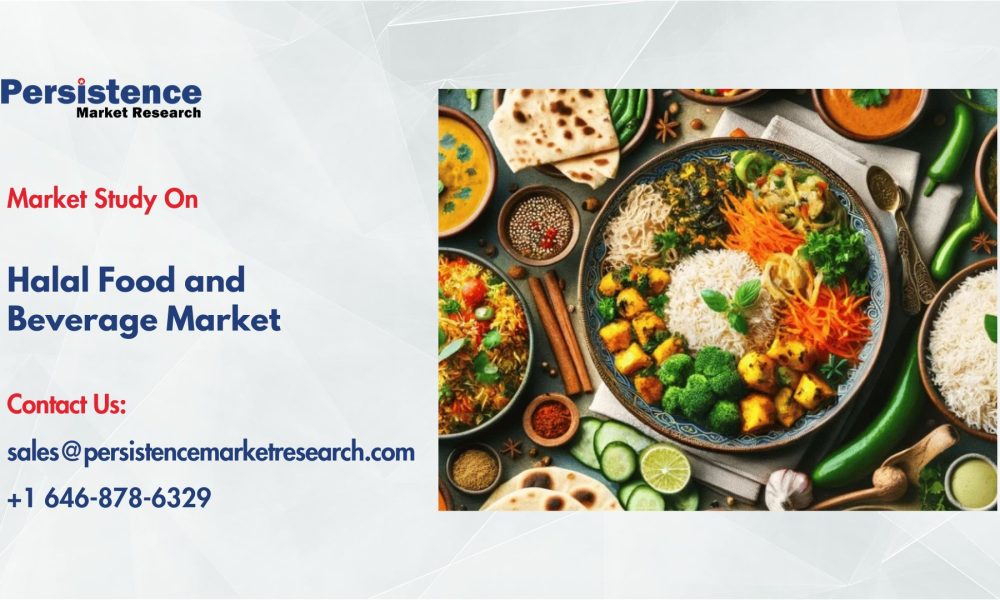
The global halal food and beverage market size is expected to be valued at US$ 1,131.0 billion in 2026 and is projected to reach approximately US$ 1,746.0 billion by 2033, registering a compound annual growth rate (CAGR) of 6.4% during the forecast period from 2026 to 2033.
This growth is largely driven by the rapid expansion of the global Muslim population, which represents one of the fastest-growing consumer demographics worldwide. Rising awareness regarding halal compliance and increasing availability of halal-certified products across retail channels are further boosting demand.
Another significant factor contributing to market growth is the increasing penetration of halal food products into mainstream retail markets. Supermarkets, hypermarkets, and e-commerce platforms are expanding their halal product offerings to cater to a broader consumer base. This trend is particularly evident in regions such as North America and Europe, where halal-certified products are gaining traction beyond traditional ethnic markets.
The expansion of global food supply chains and increasing cross-border trade are also playing an important role in market development. Many multinational food manufacturers are actively seeking halal certification to access lucrative markets in Southeast Asia, the Middle East, and other regions with significant Muslim populations.
Additionally, consumer preferences are shifting toward food products that emphasize transparency, safety, and ethical sourcing. Halal food standards often align with these values, making halal-certified products appealing to health-conscious and ethically minded consumers worldwide.
Get Your FREE Sample Report Instantly – Click Now: https://www.persistencemarketresearch.com/samples/34693
Segmentation Analysis
By Product Type
- Milk & Milk Products
- Meat & Alternatives
- Grain Products
- Fruits & Vegetables
- Others
By Distribution Channel
- Hypermarket & Supermarket
- Departmental Store
- Online
- Others
By Region
- North America
- Europe
- East Asia
- South Asia and Oceania
- Latin America
- Middle East and Africa
Regional Insights
The halal food and beverage market exhibits strong regional diversity, with major markets across Asia Pacific, the Middle East & Africa, Europe, North America, and Latin America.
Asia Pacific currently represents the largest regional market due to its large Muslim population and strong demand for halal-certified food products. Countries such as Indonesia, Malaysia, Pakistan, and India play a significant role in the regional market due to their expanding food processing industries and increasing consumer demand for halal products.
Indonesia and Malaysia, in particular, are recognized as major global hubs for halal certification and halal product manufacturing. These countries have well-established regulatory frameworks and government initiatives that support the development of halal industries.
The Middle East and Africa region also represents a substantial share of the global market. Halal compliance is a fundamental requirement in many Middle Eastern countries, driving consistent demand for halal-certified food products across retail and food service sectors.
Europe has emerged as a significant growth market due to the presence of large Muslim communities and increasing consumer awareness regarding halal products. Many European food manufacturers are seeking halal certification to cater to both domestic and export markets.
The fastest-growing region during the forecast period is expected to be Asia Pacific, supported by rapid population growth, expanding middle-class consumer segments, and increasing investment in halal food infrastructure. Governments in several Asian countries are also promoting halal certification as part of their economic development strategies.
Unique Features and Innovations in the Market
Innovation within the halal food and beverage industry is rapidly evolving as companies adopt advanced technologies to improve product quality, supply chain transparency, and certification processes.
One of the most significant developments is the integration of blockchain technology to enhance traceability in halal supply chains. Blockchain systems allow food manufacturers and certification authorities to track product origins, processing stages, and distribution networks in real time, ensuring compliance with halal standards.
Artificial intelligence (AI) is also being used to optimize food production processes, enhance quality control, and detect potential contamination risks. AI-powered monitoring systems enable manufacturers to maintain strict halal compliance while improving operational efficiency.
Additionally, Internet of Things (IoT) technologies are being implemented to monitor storage conditions, transportation environments, and supply chain logistics. These systems help maintain product integrity and ensure that halal-certified products remain compliant throughout the distribution process.
Another major innovation trend involves the development of plant-based halal food products. As consumer interest in sustainable and plant-based diets continues to grow, food manufacturers are launching halal-certified plant-based alternatives to meat, dairy, and processed foods.
These innovations are expanding the scope of halal food offerings and helping companies cater to a wider range of consumer preferences.
Need Tailored Insights? Request Customization Now: https://www.persistencemarketresearch.com/request-customization/34693
Market Highlights
The halal food and beverage market is gaining strong traction across global markets due to several important factors. One of the primary drivers is the increasing demand for food safety, transparency, and ethical production practices. Halal certification ensures strict compliance with hygiene and quality standards, making these products appealing to a broad consumer base.
Another key highlight is the growing recognition of halal certification as a global quality standard rather than solely a religious requirement. Many non-Muslim consumers perceive halal-certified products as safer and more ethically produced.
The increasing globalization of halal supply chains is also creating new opportunities for food exporters. Countries with strong agricultural sectors are expanding their halal-certified production capabilities to access high-growth international markets.
Government support is another important factor shaping market growth. Several countries are implementing policies and certification frameworks to strengthen their halal industries and promote exports of halal food products.
Key Players and Competitive Landscape
- Nestlé S.A
- Cargill
- Incorporated
- Unilever
- American Halal Company, Inc
- Al-Falah Halal Foods
- Prima Agri-Products
- One World Foods Inc.
- Midamar Corporation
- QL Foods
- Rosen’s Diversified Inc.
- Others
Future Opportunities and Growth Prospects
Looking ahead, the halal food and beverage market is expected to witness significant opportunities driven by demographic growth, technological advancements, and expanding international trade.
Emerging markets in Asia, Africa, and the Middle East will continue to play a critical role in driving global demand. At the same time, increasing awareness of halal certification in Western markets will create new opportunities for product diversification and export expansion.
Technological innovations such as blockchain-based certification systems, AI-driven quality monitoring, and digital supply chain platforms will further strengthen market transparency and efficiency.
In addition, regulatory frameworks governing halal certification and food safety standards are expected to evolve, encouraging companies to invest in improved compliance systems and advanced production technologies.
As global consumer demand for safe, ethical, and high-quality food products continues to grow, the halal food and beverage industry is poised to remain one of the most dynamic segments of the global food market.
Explore the Latest Trending Research Reports:




