
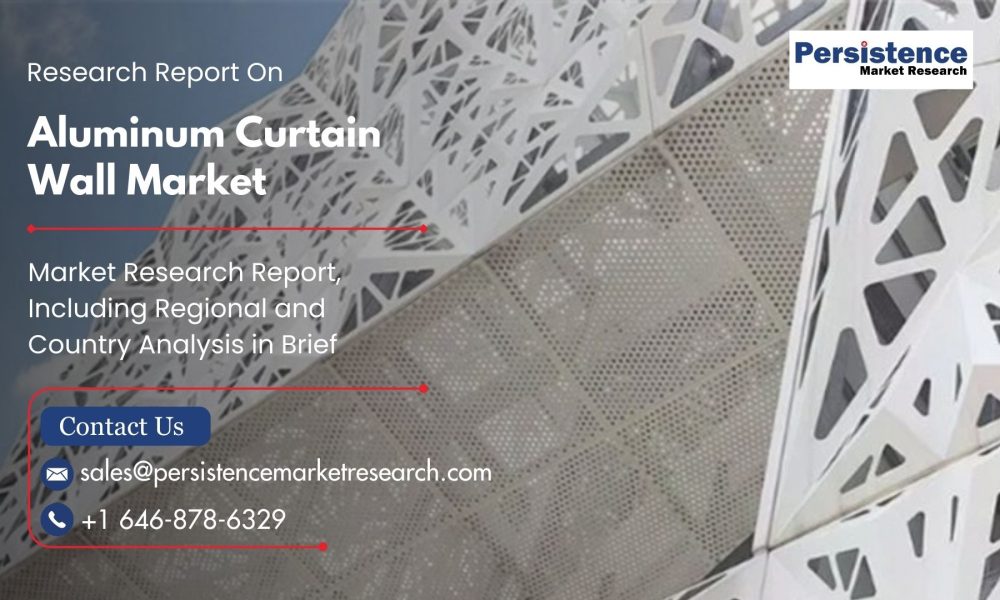
In the realm of contemporary architecture and commercial construction, aluminum curtain wall systems have emerged as a fundamental building envelope solution. More than just sleek exterior facades, these systems play a crucial role in energy efficiency, structural performance, and aesthetic appeal — all while catering to rapid urbanization and escalating construction activities worldwide. As the global building industry pivots toward sustainability, high-performance structures, and smart design, the aluminum curtain wall market is projected to witness robust growth through the next decade.
What Are Aluminum Curtain Walls?
Aluminum curtain walls are non-load-bearing exterior cladding systems made primarily of aluminum framing and infill materials such as glass, metal panels, or stone veneer. Unlike traditional load-bearing walls, curtain walls are suspended from the structural frame of a building, effectively serving as external “skins” that resist environmental forces — such as wind, rain, and thermal changes — while allowing abundant natural light. Their lightweight nature, durability, recyclability, and adaptability to complex designs have made them the preferred choice for high-rise commercial, institutional, and mixed-use developments.
Get Your FREE Sample Report Instantly – Click Now: https://www.persistencemarketresearch.com/samples/33571
Market Size and Growth Forecast
According to Persistence Market Research, the global aluminum curtain wall market is projected to grow significantly from an estimated US$51.2 billion in 2026 to around US$94.1 billion by 2033, at a strong compound annual growth rate (CAGR) of 9.1% during this period. This reflects sustained demand for advanced building envelopes — particularly in fast-developing economies and urban centers with intensive construction activity.
Growth is being propelled by multiple macro trends including urbanization, architectural modernization, stringent energy standards, and demand for premium façades in both new construction and retrofit markets. Additionally, the rapid adoption of prefabricated and unitized curtain wall systems — which reduce on-site labor and construction time — further supports market expansion.
Key Market Drivers
- Urbanization and Commercialization
Rapid urbanization globally, especially in Asia Pacific, has led to a boom in commercial real estate development. Large office towers, hotels, shopping centers and institutional buildings have become symbols of economic progress, and curtain wall systems are quintessential to these structures due to their modern aesthetics and performance characteristics. Asia Pacific, in particular, is expected to contribute over 45% of global market revenue — led by strong construction pipelines in China and India.
The rising population in urban corridors fuels demand for vertical construction solutions, where aluminum curtain walls are preferred for their lightweight design and ability to span large surface areas without adding structural load. Advanced façade systems also support daylighting and occupant comfort — attributes highly valued in commercial real estate.
- Energy Efficiency and Sustainability Standards
Global sustainability initiatives and the enforcement of stricter energy codes are major catalysts for the adoption of aluminum curtain walls. Modern systems with thermally broken frames, double- or triple-glazed glass, and enhanced insulation help buildings reduce energy consumption for heating and cooling — sometimes by up to 25% or more.
Green building certifications such as LEED (Leadership in Energy and Environmental Design) and local energy performance standards are increasingly influencing building design. In many regions, developers are incentivized — through tax credits, expedited permits, or higher rental values — to adopt façade solutions that meet or exceed environmental benchmarks. Aluminum curtain walls align closely with these mandates due to their high recyclability and performance characteristics, making them an essential component of sustainable architecture.
- Technological Advancements in Façade Engineering
The curtain wall market is evolving with innovations in materials and design technologies. From smart façades that adjust to environmental conditions to integrated photovoltaic (BIPV) solutions that generate renewable energy, manufacturers are expanding the functional potential of curtain wall systems. Advanced building information modeling (BIM) tools and digital fabrication techniques are enabling highly precise designs and faster installation.
Additionally, unitized curtain wall systems — where panels are pre-assembled in factory settings — are increasingly preferred for their superior quality control, reduced on-site complexity, and accelerated project timelines. This trend is especially prevalent in high-rise and large commercial projects, further boosting unitized systems’ market dominance.
Market Segmentation
By Product Type
The market is typically segmented into:
- Unitized Curtain Wall Systems — Prefabricated units assembled off-site and installed quickly, offering high precision and efficiency.
- Stick-Built Curtain Wall Systems — Panels assembled on-site, allowing greater flexibility for customized and complex architectural designs.
- Semi-Unitized Systems — A hybrid approach with some elements prefabricated and others assembled on site.
Unitized systems currently hold a majority revenue share — over 60% — due to their time and cost efficiencies in large projects. However, stick-built systems are expanding rapidly as architects and builders demand more bespoke façade solutions.
By Application
Commercial Buildings — including offices, hotels, malls, and institutional facilities — represent the largest application segment, contributing over 70% of market revenue due to high volumes of development worldwide. Public infrastructure and institutional building projects are also gaining traction, supported by government investments in sustainable facilities and educational campuses.
Residential applications — especially high-rise apartments and luxury residential towers — are also growing steadily, albeit at a smaller share compared to commercial demand. Retrofit and renovation projects in older building stock present additional opportunities as energy performance standards tighten.
Regional Outlook
Asia Pacific: A Dominant Force
Asia Pacific is the fastest growing and largest regional market for aluminum curtain walls, driven by rapid urban expansion, infrastructural investments, and increasing adoption of green building practices. Countries like China and India are major contributors to this growth, with massive commercial and mixed-use developments under construction.
The region’s disproportionate share in the market also reflects the aggressive pursuit of modern building aesthetics, competitive cost structures, and expanding manufacturing bases that supply both domestic and export markets.
North America and Europe: Mature and Evolving
In North America, especially in the United States, the aluminum curtain wall market is expanding through both new construction and extensive retrofit programs aimed at energy efficiency compliance. Stringent building codes, premium construction standards, and the prevalence of sustainability certifications support market growth in major cities.
Europe also presents steady demand, driven by renovation of aging infrastructure, high performance façade requirements, and strong environmental regulations that encourage advanced building envelopes.
Challenges and Restraints
Despite strong growth prospects, challenges remain:
- Technical Complexity and Skilled Labor — Installing curtain wall systems requires certified expertise and precision, which can limit adoption in regions with shortages of skilled labor.
- Regulatory Fragmentation — Variations in building codes and energy standards across jurisdictions can complicate compliance and design strategies for global manufacturers and contractors.
- Cost Pressures — While curtain walls offer long-term energy savings, their initial investment — especially for high-end systems — can be a barrier in cost-sensitive projects.
Get a Customized Market View in One Click: https://www.persistencemarketresearch.com/request-customization/33571
Competitive Landscape and Industry Players
The aluminum curtain wall market is moderately consolidated, featuring global leaders alongside strong regional fabricators. Leading companies include Alumil, Kawneer Company Inc., Schüco India, Reynaers Aluminium, EFCO LLC, HansenGroup, GUTMANN Group, and Josef Gartner GmbH — among others that contribute to both technological innovation and regional market penetration.
Manufacturers are pursuing sustainability initiatives, partnerships, and product diversification strategies to meet evolving architectural demands and stringent performance standards, positioning themselves for long-term competitiveness.
Future Outlook
The aluminum curtain wall market is projected to sustain its growth trajectory well into the 2030s, supported by:
- Rising demand for sustainable and energy-efficient building solutions
- Evolution of smart façades and integration with building technologies
- Expansion of retrofit and modernization projects
- Urbanization and infrastructure developments across emerging economies
As construction trends continue to prioritize performance, aesthetics, and environmental compliance, aluminum curtain walls will remain a key element of modern architecture — serving both form and function across the global building industry.
About Persistence Market Research:
Persistence Market Research delivers strategic research solutions that drive business growth. Founded in 2012 and registered in England and Wales in 2023 as Persistence Research & Consultancy Services Ltd., we have completed 3,600+ custom and syndicated studies and supported 2,700+ projects for leading research firms. Combining traditional methodologies with modern tools, we provide actionable insights to multinational corporations, consultants, investors, and government bodies, earning strong trust through long-term client relationships.
Contact Us:
Persistence Market Research
Second Floor, 150 Fleet Street,
London, EC4A 2DQ, United Kingdom
USA Phone: +1 646-878-6329
UK Phone: +44 203-837-5656
Email: [email protected]
Web: https://www.persistencemarketresearch.com




