
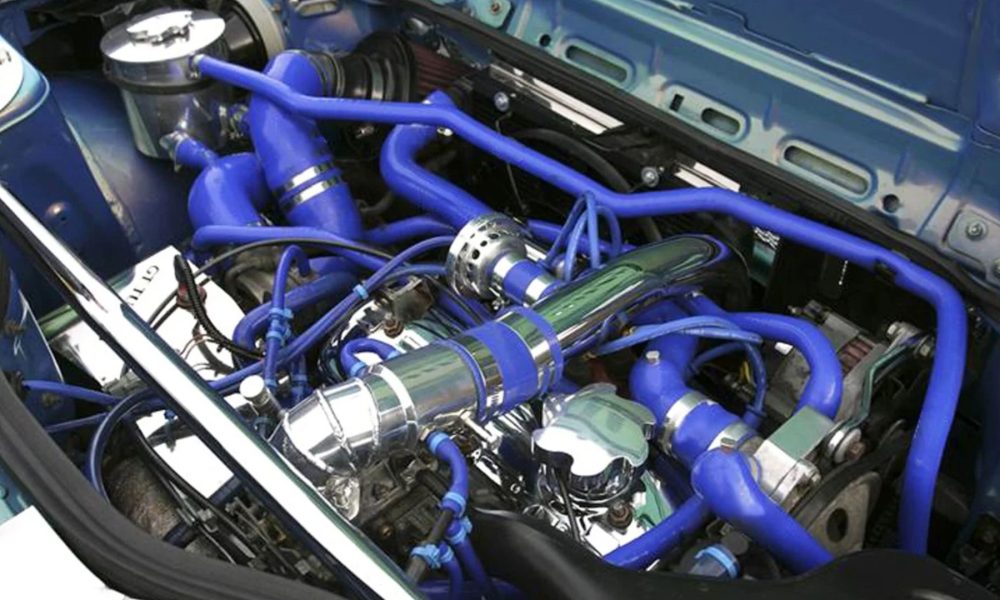
The global Automotive Silicone Market is poised for significant expansion over the next decade, driven by technological shifts in the automotive industry, electrification trends, stringent emissions standards, and rising demand for advanced materials that enhance safety, performance, and sustainability. Valued at approximately US $10.9 billion in 2025, the market is projected to nearly double to around US $19.7 billion by 2032, reflecting a compound annual growth rate (CAGR) of 8.8% between 2025 and 2032.
This growth trajectory underscores silicone’s increasingly vital role across automotive components, particularly as manufacturers transition to electric and hybrid platforms, adopt lightweight designs, and pursue material innovations that bolster performance in demanding conditions. As global vehicle production evolves, so too does the integration of high-performance silicone materials in both OEM production and aftermarket segments.
Get Your FREE Sample Report Instantly – Click Now: https://www.persistencemarketresearch.com/samples/33616
Market Drivers: Electrification and Thermal Management Needs
The accelerating shift towards electric mobility stands out as a critical growth driver. Electric vehicles (EVs) and plug-in hybrid electric vehicles (PHEVs) require advanced thermal management systems to maintain optimal battery operation, prevent thermal runaway, and extend service life. Silicone materials with high thermal conductivity are extensively deployed as thermal interface materials, gap fillers between battery modules and cooling systems, and encapsulants that ensure consistent heat dissipation.
Global electric car sales surpassed 17 million units in 2024, with EVs accounting for more than 20% of new car sales worldwide, further reinforcing demand for silicone applications in evolving powertrain architectures. These trends directly support silicone’s role in enabling effective temperature control and electrical insulation in EV battery systems—capabilities that traditional materials often struggle to match.
In the context of internal combustion engines (ICE), silicone contributes to gasket sealing, vibration damping, and under-hood resilience. However, it is the electrification wave that is fundamentally reshaping the market’s growth path, expanding silicon’s use into next-generation automotive ecosystems.
Lightweighting Imperatives and Regulatory Pressures
Governments worldwide continue to impose stringent fuel-efficiency and emissions requirements, prompting automakers to explore lightweight materials and advanced joining technologies to reduce vehicle mass. Silicone-based structural adhesives and sealants support lightweighting strategies by enabling strong bonding of mixed materials, such as steel and aluminum, without heavy mechanical fasteners. This capability reduces vehicle mass by significant margins while maintaining structural rigidity and safety performance.
For instance, structural silicone adhesives allow manufacturers to replace traditional joining methods, improving torsional rigidity by distributing loads more efficiently across bonded surfaces. This aligns with regulations like the U.S. Corporate Average Fuel Economy (CAFE) standards and Europe’s CO2 emissions targets, which require manufacturers to innovate across materials and assembly approaches to meet evolving compliance benchmarks.
Get a Customized Market View in One Click: https://www.persistencemarketresearch.com/request-customization/33616
Product Segments: Silicone Rubber Leads, Adhesives Gain Momentum
Silicone Rubber Dominance
Within the automotive silicone market, silicone rubber remains the dominant product type, capturing more than 60% of revenue in 2025. Its extensive use in gaskets, seals, hoses, vibration-dampening components, and weatherstripping stems from its ability to withstand extreme temperatures (ranging from approximately –60 °C up to +300 °C), excellent aging resistance, and stability in harsh automotive environments.
For high-temperature zones like turbocharger seals, engine gaskets, and emission system parts, silicone rubber is often preferred over conventional elastomers due to its thermal resilience and chemical resistance. The expanded use of liquid silicone rubber (LSR) in high-precision applications also contributes to improved manufacturing efficiencies and design flexibility.
Adhesives & Sealants on the Rise
While silicone rubber leads the market in absolute revenue, silicone adhesives and sealants are emerging as the fastest-growing subsegment. These materials support multi-material constructions used in modern vehicle bodies, where bonding rather than welding enables lightweighting, enhanced structural integrity, and improved NVH (noise, vibration, and harshness) performance. Fast-curing two-component silicone adhesives further streamline high-volume production, reinforcing their appeal across OEM platforms.
Application Insights: Interior/Exterior and Powertrain Use Cases
Automotive silicone materials serve diverse application areas across vehicle systems. Among them, interior and exterior parts represent the largest segment, accounting for more than 35% of total market revenue in 2025. Silicone’s sealing, insulation, and aesthetic properties make it ideal for weatherstrips, window gaskets, surface coatings, and soft-touch interior components, enhancing both performance and luxury experiences for end users.
Beyond conventional sealing roles, silicone is increasingly integrated into exterior features like adaptive lighting systems and advanced headlamp optics, capitalizing on its optical clarity, UV resistance, and long-term stability. As consumer expectations around comfort, efficiency, and vehicle personalization grow, silicone-based materials play a key role in interior and exterior design evolution.
In parallel, engine and drivetrain (EDT) systems represent the fastest-growing application area. Silicone’s capacity to endure high thermal loads is indispensable in turbocharged engines, EV inverters, and thermal interface components for advanced power electronics. Additionally, silicone’s electrical insulation performance supports the increasing complexity of vehicle electronic systems, including high-voltage cable insulation and sensor housings.
End-User Dynamics: OEMs and Aftermarkets
Original Equipment Manufacturers (OEMs) dominate market consumption, comprising over 70% of total automotive silicone demand. Long-term supply contracts between OEMs and silicone producers support high-volume, platform-wide integration of silicone components. These collaborations often encompass joint material development to satisfy stringent performance parameters and durability expectations.
Simultaneously, the aftermarket segment is emerging as a high-growth area due to the global increase in vehicle age, rising consumer interest in maintenance and upgrades, and expanding e-commerce distribution channels. Silicone’s extended service life relative to traditional materials further enhances its attractiveness for replacement parts, driving aftermarket penetration worldwide.
Regional Landscape: Asia Pacific Leads, Europe Accelerates
Asia Pacific accounts for the largest share of the global automotive silicone market, with more than 42% market revenue in 2025. This leadership reflects the region’s status as the world’s foremost automotive production hub, particularly in China, which alone represents more than 60% of regional demand. Rapid EV adoption, robust manufacturing infrastructure, and expanding production capacity in countries like India and ASEAN nations underlie sustained regional growth.
Europe is emerging as the fastest-growing developed market, supported by rigorous emissions standards, a strong sustainability agenda, and accelerated electrification initiatives. Countries like Germany, the UK, and France are key contributors, buoyed by premium automotive brands and expanding EV ecosystems. European regulatory frameworks emphasizing circular economy principles and material recyclability further incentivize innovation in advanced silicone technologies.
For In-Depth Competitive Analysis, Buy Now: https://www.persistencemarketresearch.com/checkout/33616
Competitive Landscape and Future Growth Opportunities
The automotive silicone market remains moderately consolidated, with leading players such as Dow, Wacker Chemie AG, Shin-Etsu Chemical, and Momentive Performance Materials collectively holding a substantial market share. These companies maintain global production footprints, diversified portfolios, and strong technical support networks that enhance customer engagement and product adoption.
Market innovation continues to focus on tailored silicone materials optimized for EV thermal management, electrical insulation, structural bonding, and sustainability performance. Strategic activities such as acquisitions, joint ventures, and product launches further stimulate industry evolution and competitive positioning.
As electrification accelerates and regulatory landscapes evolve, the automotive silicone market is expected to play an increasingly strategic role in shaping the future of mobility—reinforcing its position as a cornerstone material in next-generation vehicle design.
About Persistence Market Research:
Persistence Market Research delivers strategic research solutions that drive business growth. Founded in 2012 and registered in England and Wales in 2023 as Persistence Research & Consultancy Services Ltd., we have completed 3,600+ custom and syndicated studies and supported 2,700+ projects for leading research firms. Combining traditional methodologies with modern tools, we provide actionable insights to multinational corporations, consultants, investors, and government bodies, earning strong trust through long-term client relationships.
Contact Us:
Persistence Market Research
Second Floor, 150 Fleet Street,
London, EC4A 2DQ, United Kingdom
USA Phone: +1 646-878-6329
UK Phone: +44 203-837-5656
Email: [email protected]
Web: https://www.persistencemarketresearch.com




