
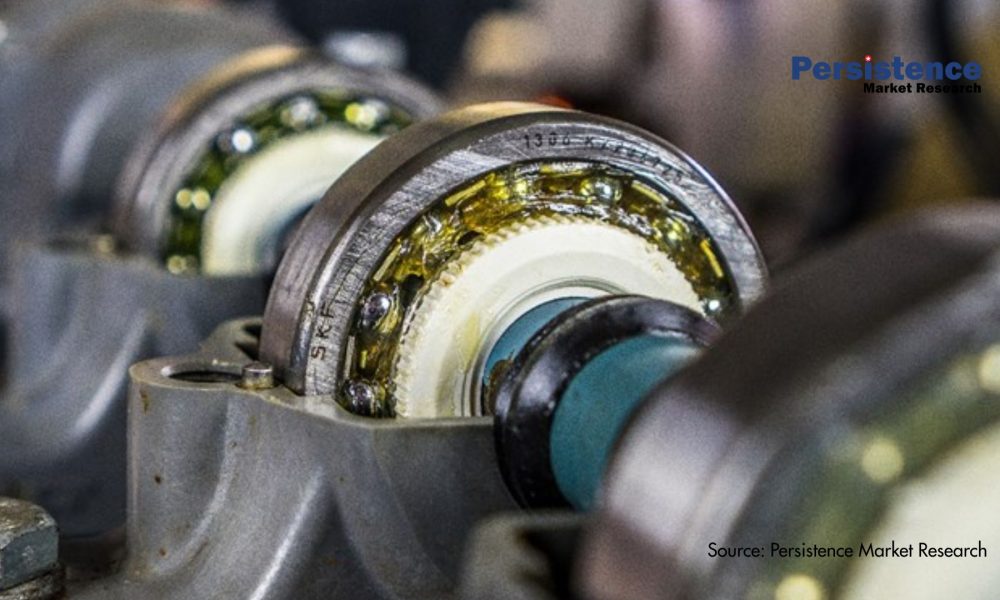
According to the latest study by Persistence Market Research, the market is forecast to grow from an estimated US$15.1 billion in 2025 to approximately US$22.17 billion by 2032, exhibiting a solid compound annual growth rate (CAGR) of 5.6% over the forecast period. This growth reflects intensifying industrialization, increasing precision metal processing needs, and greater application of rolling lubricants in high-performance environments worldwide. The global Rolling Lubricants Market is on a robust growth trajectory, propelled by rising demand for advanced lubrication solutions in metalworking industries, especially automotive and construction.
Market Growth Drivers: Industrial Demand and Automotive Expansion
One of the most significant factors driving the rolling lubricants market is the surge in automotive production combined with global initiatives towards lightweight vehicle manufacturing. With vehicle manufacturers increasingly incorporating lightweight metals such as aluminum and high-strength steel to meet stringent fuel efficiency and emission standards, the demand for high-performance rolling lubricants has risen sharply. These products play a central role in reducing friction, ensuring surface quality, and enhancing productivity in metal rolling processes.
Moreover, global infrastructure projects and industrial development — particularly in Asia Pacific — have intensified the need for rolled steel and aluminum components across construction and heavy industries. As a result, rolling mills and metal processing facilities are integrating advanced lubricants to ensure smoother operations, minimize heat generation, and extend equipment life. The adoption of precision cold rolling and hot rolling techniques is particularly influential in maintaining surface quality standards in finished products.
Get Your FREE Sample Report Instantly – Click Now: https://www.persistencemarketresearch.com/samples/31090
Regional Insights: Asia Pacific Leads the Market
Geographically, the Asia Pacific region holds the largest share in the rolling lubricants market, accounting for an estimated 36.5% of global demand. This dominance is attributed to rapid industrialization, expansion of steel production capacity, and strong growth in automotive manufacturing in key economies such as China and India. In 2024, global crude steel production reached approximately 1,882.6 million tonnes, with China and India contributing significant year-on-year increases in output, further stimulating lubricant consumption for both hot and cold rolling operations.
North America, while smaller than Asia Pacific in absolute market size, is one of the fastest growing regions due to mature manufacturing infrastructure, technological innovation, and supportive regulatory environments. Manufacturers in the United States are increasingly investing in eco-friendly and high-performance rolling fluids aligned with sustainable production practices. European markets, by contrast, advance cautiously under strict environmental regulations such as REACH, which are reshaping additive use and promoting low-toxicity lubricant alternatives.
Segment Dynamics: Product Types and Applications
Source and Formulation Trends
Among different lubricant types, synthetic rolling lubricants hold the leading position with the highest market share. Their superior thermal stability, oxidation resistance, and performance at elevated rolling speeds make them ideal for precision steel and aluminum processing. These advanced formulations reduce residue formation, enhance roll life, and support high-speed tandem rolling operations essential in modern manufacturing facilities.
As performance demands rise across industries, semi-synthetic and mineral-based oils continue to serve traditional applications, but face competitive pressure from synthetic alternatives, especially in markets where efficiency and environmental compliance are prioritized.
Rolling Process Segmentation
The cold rolling segment remains dominant among processing applications, representing the largest portion of market demand. Cold rolling is widely used in automotive, construction, and consumer goods manufacturing due to its ability to produce smooth surface finishes and precise dimensional tolerances. Lubricants tailored to cold rolling environments are engineered to lower friction at ambient temperatures, prevent surface defects, and improve heat dissipation during deformation.
By comparison, hot rolling applications — which operate at elevated temperatures — also contribute significantly to market volume, especially in heavy industries where thicker metal sections are required. Both cold and hot rolling processes benefit from innovations in lubricant chemistry, enhancing operational efficiency and reducing energy consumption.
Metal Type and Industry Applications
In terms of metal types, steel dominates the rolling lubricants market, accounting for around half of total consumption. Steel’s diverse use in construction, machinery, automotive components, and appliances fuels high lubricant demand, particularly in applications requiring specialized formulations to handle diverse grades, including advanced high-strength steels.
The automotive industry is the largest end-use sector for rolling lubricants, leveraging approximately 40% of the market due to the heavy use of rolled sheets in vehicle body panels and structural components. As global vehicle production continues to increase — and as electric vehicle (EV) manufacturing progresses — opportunities grow for specialized lubricants designed for EV metals and battery enclosure components.
Get a Customized Market View in One Click: https://www.persistencemarketresearch.com/request-customization/31090
Market Challenges and Restraints
Despite positive growth prospects, the rolling lubricants market faces several constraints. Volatility in crude oil prices significantly impacts production costs since most lubricant bases are petroleum-derived. Price fluctuations influence profitability, particularly for smaller producers with limited flexibility to absorb cost shifts without raising prices.
Another key challenge is compliance with stringent environmental regulations, such as those enforced in Europe under the REACH framework. These regulations restrict the use of hazardous additives, driving reformulation costs upwards and slowing adoption of traditional lubricant products. Manufacturers must balance performance requirements with sustainability goals and regulatory compliance, often at increased expense.
Future Opportunities: Sustainability and Innovation
As global emphasis on sustainability strengthens, the transition to bio-based and eco-friendly lubricants presents significant growth opportunities. Countries in Europe and other regulated markets increasingly mandate the use of biodegradable lubricants, especially in environmentally sensitive applications. Leading chemical companies and specialty lubricant producers are responding with plant-based alternatives that align with circular economy principles while maintaining high performance.
Additionally, the expansion of automotive lightweighting initiatives and the rapid adoption of electric vehicles create new avenues for lubricant innovation. Formulations designed for battery-grade metals and advanced alloys are expected to gain traction in rolling operations tied to EV production, enhancing the role of rolling lubricants in next-generation manufacturing ecosystems.
Competitive Landscape and Strategic Developments
The global rolling lubricants market is relatively consolidated, with several multinational companies holding the majority of market share through extensive R&D, global distribution networks, and ongoing innovation. Leading firms are pursuing strategic growth through partnerships, acquisitions, and the development of sustainable product portfolios.
Notable developments include the launch of advanced synthetic emulsions for high-speed steel rolling — which enhance lubrication efficiency — and significant corporate acquisitions to broaden regional footprints and technical capabilities. These strategic efforts reflect the industry’s commitment to technological excellence while expanding into high-growth markets across Asia, North America, and Europe.
For In-Depth Competitive Analysis, Buy Now: https://www.persistencemarketresearch.com/checkout/31090
Concluding Outlook
With strong drivers rooted in industrial expansion, automotive growth, and technological innovation, the Rolling Lubricants Market is poised for considerable advancement through 2032. While challenges related to raw material costs and regulatory compliance remain, opportunities in sustainable formulations and specialized applications are emerging as key catalysts for future growth. As manufacturers adapt to evolving market needs, rolling lubricants will continue to play a crucial role in enhancing metal processing performance, operational efficiency, and environmental stewardship worldwide.
About Persistence Market Research:
Persistence Market Research delivers strategic research solutions that drive business growth. Founded in 2012 and registered in England and Wales in 2023 as Persistence Research & Consultancy Services Ltd., we have completed 3,600+ custom and syndicated studies and supported 2,700+ projects for leading research firms. Combining traditional methodologies with modern tools, we provide actionable insights to multinational corporations, consultants, investors, and government bodies, earning strong trust through long-term client relationships.
Contact Us:
Persistence Market Research
Second Floor, 150 Fleet Street,
London, EC4A 2DQ, United Kingdom
USA Phone: +1 646-878-6329
UK Phone: +44 203-837-5656
Email: [email protected]
Web: https://www.persistencemarketresearch.com




