
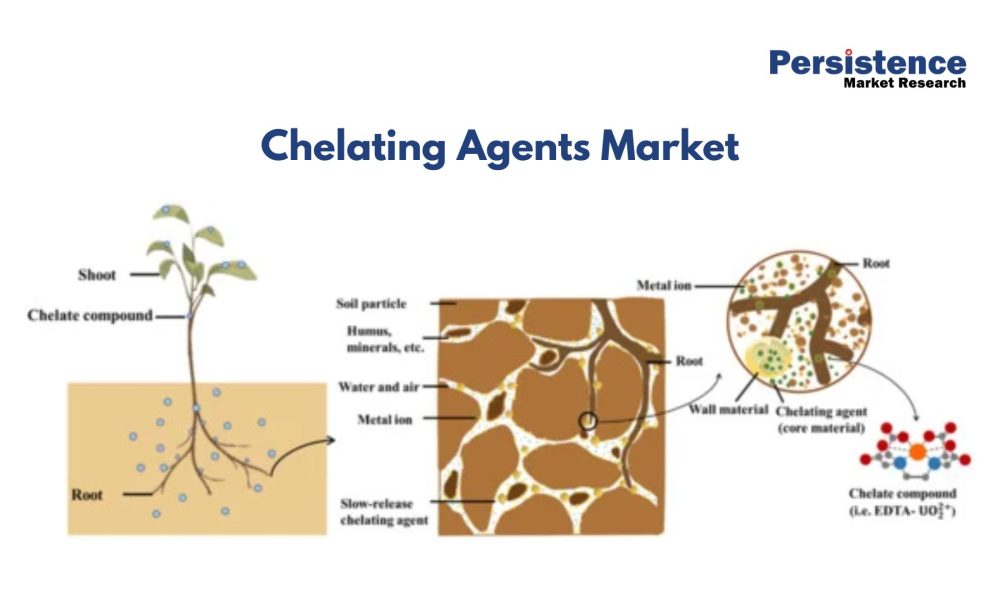
Chelating Agents Market: A Comprehensive Overview
The global chelating agents market is poised for strong growth over the coming decade as industries increasingly leverage these specialized chemicals to manage metal ions in water, manufacturing processes, agriculture, and consumer products. By 2025, the market is projected to be worth approximately US$ 7.7 billion, and it’s expected to climb to about US$ 11.7 billion by 2032, expanding at a compound annual growth rate (CAGR) of around 6.1% between 2025 and 2032. This growth reflects both mature industrial demand and emerging opportunities driven by environmental concerns, regulatory mandates, and sustainability trends.
Chelating agents are chemical compounds that bind strongly with metal ions to form stable, water-soluble complexes. This property makes them crucial across a wide array of applications—from industrial water treatment and pulp and paper processing to detergents and agricultural micronutrient delivery. Their ability to improve process efficiency, mitigate scale formation, enhance cleaning performance, and enable better nutrient uptake in plants has positioned them as essential ingredients in many industrial and consumer formulations.
Get Your FREE Sample Report Instantly – Click Now: https://www.persistencemarketresearch.com/samples/33578
Understanding Chelating Agents and Their Function
At their core, chelating agents are designed to sequester metal ions so that these ions remain in solution and do not interfere with chemical reactions or processes. Metals like iron, calcium, copper, and magnesium can cause unwanted precipitation or catalyze oxidation reactions if left unmanaged. By forming chelate complexes, these metals are neutralized structurally, reducing their reactivity.
The most widely recognized chelating compound is EDTA (ethylenediaminetetraacetic acid), known for its strong metal-binding capacity and stability across a broad range of pH levels and temperatures. EDTA remains dominant in the market due to its versatility across industries such as water treatment, detergents, pulp and paper, agriculture, pharmaceuticals, and cosmetics. However, concerns related to its persistence in the environment are driving demand for biodegradable alternatives such as MGDA (methylglycinediacetic acid), GLDA (glutamic acid diacetic acid), and EDDS (ethylenediaminedisuccinic acid).
Market Segmentation: Product and Chemistry Trends
The chelating agents market is segmented by chemistry type, product category, form, application, and geography. CElling chemistry segments include aminopolycarboxylates (like EDTA, DTPA, and HEDTA), phosphonates, polyphosphates, succinates, sodium gluconate, citric acid, and catechol derivatives. Organic chelating agents—especially biodegradable ones—now account for the majority of global volume and are the fastest-growing category, thanks to rising regulatory pressure and eco-friendly product demands.
Biodegradable chelating agents are increasingly preferred in consumer and industrial products because they meet stringent environmental standards—with certain agents achieving over 60% biodegradation within a 28-day period under OECD test conditions. Regulators in Europe and North America, like the EU REACH program and Nordic Ecolabel standards, are actively encouraging such alternatives in detergents and personal care products.
Key Market Drivers
Regulatory Pressure and Environmental Standards
One of the most significant growth drivers for the chelating agents market is the tightening of environmental regulations related to water and wastewater treatment. Agencies in major economies, including the U.S. Environmental Protection Agency (EPA) and China’s Ministry of Ecology and Environment (MEE), have implemented stricter effluent discharge limits for heavy metals such as lead, cadmium, copper, and mercury. Compliance requires advanced treatment chemicals, including chelating agents, to capture and remove metal ions effectively before discharge.
In addition, sustainability initiatives have sparked a shift toward eco-friendly, phosphate-free, and biodegradable formulations in household and industrial cleaning products. Many detergent manufacturers are reformulating their products to remove traditional phosphate builders—known to contribute to eutrophication in water bodies—while incorporating biodegradable chelating agents that support performance in hard water conditions.
Get a Customized Market View in One Click: https://www.persistencemarketresearch.com/request-customization/33578
Industrial and Water Treatment Applications
Chelating agents are essential chemicals in water treatment plants, where they help control hardness and prevent scaling, optimizing membrane processes and extending equipment lifespan. Aging urban infrastructure and expanding industrial water management needs are significant factors driving demand in this segment.
In heavy manufacturing sectors such as metal finishing, textiles, and electroplating, chelating agents play a crucial role in stabilizing processes and preventing undesirable metal deposits. Additionally, in desalination plants, chelating agents help maintain membrane efficiency and reduce fouling, which is critical for potable water production in arid regions.
Agriculture: A Major Growth Opportunity
Agricultural applications represent a growing opportunity for chelating agents, particularly in micronutrient fertilizers. Many essential metals are present in soil but remain unavailable to plants because they form insoluble compounds. Chelated micronutrients such as Fe-EDDHA, Zn-EDTA, and IDHA ensure that nutrients remain soluble and bioavailable, improving crop yields—especially in alkaline or calcareous soils where nutrient deficiencies are common.
With global food demand rising and agricultural practices increasingly focusing on precision nutrition and sustainability, chelated micronutrient fertilizers are becoming integral to modern agronomy. Government programs in countries like India and China promoting balanced fertilization further support this trend.
Regional Insights
The Asia-Pacific region leads the global chelating agents market, accounting for approximately 46% of total consumption in 2025. This leadership is attributed to rapid industrialization, growing agricultural activities, extensive infrastructure development, and increasing investments in water treatment systems in countries like China, India, and Southeast Asian nations.
North America and Europe remain important mature markets with strong demand driven by industrial applications, regulatory oversight, and consumer preference for sustainable products. The U.S. water treatment sector and European pulp and paper and chemical industries continue to drive stable consumption of advanced chelating formulations.
Emerging markets in the Middle East & Africa are also gaining traction due to investments in desalination infrastructure, industrialization, and localized production of detergents and cleaning chemicals.
Challenges and Market Restraints
Despite positive growth outlooks, the chelating agents market faces some challenges. Traditional chelating compounds like EDTA are persistent in the environment and can contribute to heavy metal remobilization in aquatic ecosystems, leading to increased regulatory scrutiny and consumer reluctance. Developing biodegradable alternatives that offer similar performance at competitive prices remains complex and costly for manufacturers.
Additionally, the decline in conventional phosphate-based builders in detergents affects traditional chelating agent formulations, pushing R&D teams to innovate and reformulate products while balancing performance with environmental compliance.
For In-Depth Competitive Analysis, Buy Now: https://www.persistencemarketresearch.com/checkout/33578
Competitive Landscape
The global market is moderately consolidated with several key multinational players dominating product portfolios, including BASF SE, Dow Inc., Kemira Oyj, Mitsubishi Chemical, Nippon Shokubai, Nouryon, Lanxess AG, and Akzo Nobel, among others. These companies are investing in research and development, capacity expansion, strategic partnerships, and product diversification—especially in biodegradable and sustainable chelating agents—to maintain competitive edge and meet evolving regulatory and customer demands.
Conclusion
The chelating agents market stands at a pivotal point of transformation, where environmental sustainability, industrial efficiency, and regulatory compliance intersect. With strong projected growth through 2032, driven by water treatment needs, biodegradable product demand, agricultural innovation, and industrial applications, this market presents compelling opportunities for chemical manufacturers, technology innovators, and downstream users alike. As the industry evolves, the transition toward greener, high-performance chelating solutions will likely define future market dynamics and competitive advantage.




