
Global Aerosol Can Market Projected to Reach USD 22.5 Billion by 2035; Sustainable Packaging Solutions Drive 2026-2036 Forecast Period
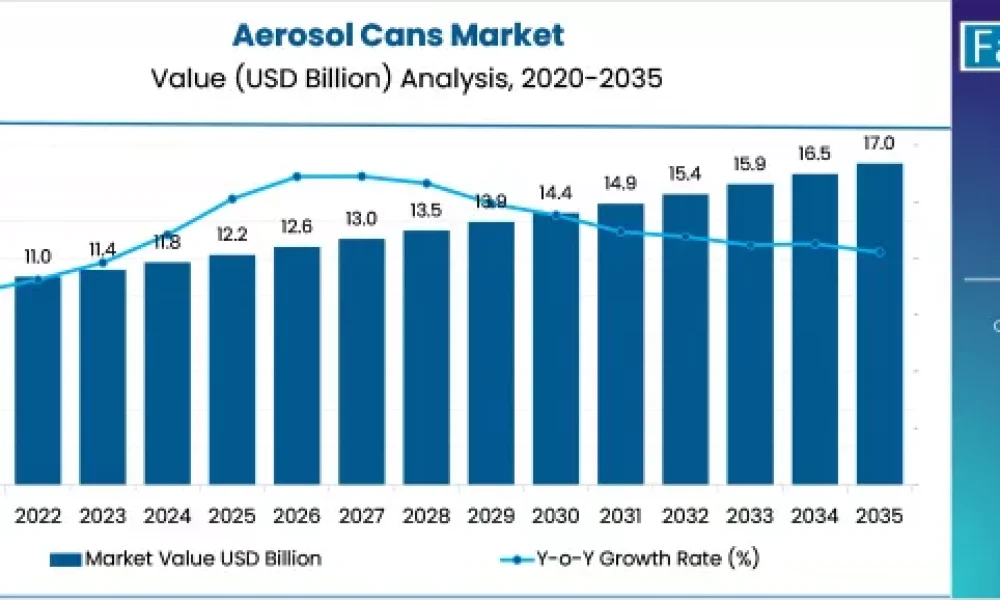
The global aerosol can market is entering a decade of transformative growth, fueled by a dual mandate for consumer convenience and environmental responsibility. According to latest industry data, the market is projected to expand from an estimated USD 13.4 billion in 2026 to USD 22.5 billion by 2035, registering a steady compound annual growth rate (CAGR) of 5.8%.
As industry leaders and investors look toward the 2026-2036 forecast horizon, the sector is increasingly defined by the integration of Green Chemistry, lightweight aluminum architectures, and the rapid expansion of personal care sectors in emerging economies.
Request for Sample Report | Customize Report |purchase Full Report – https://www.factmr.com/connectus/sample?flag=S&rep_id=4179
Executive Summary: The Who, What, and Why of Market Growth
Who: Key stakeholders including Ball Corporation, Crown Holdings Inc., CCL Container Inc., and Mauser Packaging Solutions are leading the transition toward circular economy models.
What: The market encompasses pressurized containers made of aluminum, steel, and plastic, primarily used for personal care, household, automotive, and medical applications.
When: The current transition period (2025–2026) marks a pivot toward low-VOC (Volatile Organic Compound) propellants and high-recycled-content materials.
Where: While Europe currently maintains a significant market share (37.6%), the Asia-Pacific region is emerging as the primary growth engine, expected to hold over 35% of the market share by 2035.
Why: Growth is driven by the rising demand for hygienic, contactless application methods and the premiumization of male grooming and skincare products.
Strategic Market Context: Sustainability as a Growth Catalyst
The aerosol industry is navigating a critical regulatory landscape. With the enforcement of the EU Packaging and Packaging Waste Regulation (PPWR) and similar mandates in North America, manufacturers are moving away from traditional tinplate toward 100% recyclable aluminum.
Aluminum now accounts for approximately 45.6% of the market share. Its lightweight properties not only reduce transportation-related carbon emissions but also align with consumer preferences for durable, aesthetically pleasing packaging. Furthermore, the adoption of Bag-on-Valve (BoV) technology is revolutionizing the Green aerosol space by allowing products to be dispensed using compressed air or nitrogen, eliminating the need for flammable or ozone-depleting propellants.
Sector Insights: Personal Care and Healthcare Leadership
The personal care segment remains the dominant end-user, accounting for over 52% of global aerosol can consumption.
Personal Grooming: The surge in dry shampoos, sunscreens, and deodorants—valued for their on-the-go convenience—continues to pull volume.
Medical Advancements: A significant secondary driver is the healthcare sector, where aerosol delivery systems are increasingly utilized for respiratory therapies (COPD and Asthma) and topical drug delivery, ensuring sterile and precise dosage.
Regional Outlook and Emerging Opportunities
The 2026-2036 forecast highlights a significant shift in geographic demand:
Asia-Pacific (APAC): Driven by China and India, the region benefits from a burgeoning middle class and increased disposable income. Urbanization in these nations has led to a 10-15% uptick in household spending on hygiene products.
North America: Projected to reach a valuation of USD 2.58 billion by 2032, the U.S. market is focused on high-tech manufacturing and the integration of smart packaging features, such as QR codes for product traceability.
Europe: Remains the innovation hub for sustainable materials, with Germany and the UK leading in the development of carbon-neutral production facilities.
Industry Challenges: Managing Cost Volatility
Despite optimistic projections, the industry faces headwinds from fluctuating raw material costs. The price of primary aluminum and steel is subject to geopolitical instability and energy costs. To mitigate this, market leaders are investing in Post-Consumer Recycled (PCR) aluminum streams and localized lean manufacturing footprints to shorten supply chains and insulate against global price shocks.
The next decade of the aerosol industry will be won by those who can harmonize high-performance dispensing with a low-carbon footprint, states a lead industry analyst. We are seeing a permanent shift from a ‘disposable’ mindset to a ‘circular’ one.
Forward-Looking Financial Implications
For investors, the 2026-2036 period presents a compelling narrative of resilience. The market’s ability to pivot toward sustainable propellants and recycled metals suggests a long-term hedge against environmental regulations. With a projected global market value exceeding USD 22 billion, the aerosol can remains a cornerstone of the modern FMCG (Fast-Moving Consumer Goods) landscape.
Related Reports
Bag & Bag Aerosol Can Market
Combi Cans Market
Beverage Cans Market
“



