
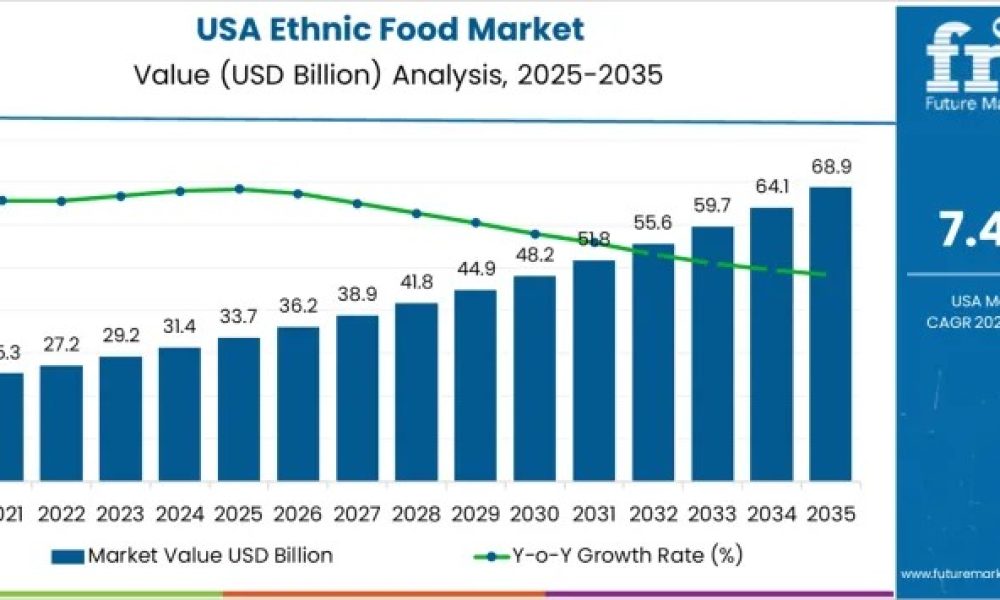
The demand for ethnic food in the USA is projected to nearly double over the next decade, growing from USD 33.7 billion in 2025 to USD 68.9 billion by 2035, according to the latest analysis by Future Market Insights (FMI). This growth, representing a compound annual growth rate (CAGR) of 7.4%, is driven by increasing cultural diversity, rising consumer interest in global flavors, and the mainstream adoption of ready-to-eat ethnic meals.
From 2025 to 2027, the U.S. ethnic food market experiences steady expansion, rising from USD 6.9 billion to USD 23.6 billion. This period marks the early phase of adoption, characterized by the growing popularity of cuisines from Latin America, Asia, and the Middle East. Urban centers and multicultural communities are at the forefront of this trend, where consumers increasingly explore diverse culinary experiences.
Explore trends before investing – request a sample report today!
The market’s growth trajectory reflects broad accessibility, with supermarkets, fast-casual dining chains, and meal kits introducing a wider range of ethnic food options. Social media influence and cultural integration have also played key roles, encouraging consumers to experiment with international flavors. From 2027 to 2030, demand continues to rise, reaching USD 31.4 billion, although the growth rate moderates slightly as ethnic cuisine moves toward mainstream adoption.
Between 2030 and 2035, demand accelerates once more, fueled by globalization, evolving dietary preferences, and innovations in food production and distribution. Health-conscious and plant-based ethnic offerings are becoming increasingly popular, as Americans seek diverse and nutritious options that reflect global culinary trends.
Key Market Insights
- 2025 Market Value: USD 33.7 billion
- 2035 Forecast Value: USD 68.9 billion
- CAGR (2025–2035): 7.4%
- Leading Product Type: Ready-to-eat meals (66% market share)
- Leading Distribution Channel: Hypermarkets & supermarkets (35% share)
- Top Region: West USA (8.5% CAGR)
- Major Players: Ajinomoto Co. Inc., General Mills, Inc., Associated British Foods PLC, McCormick & Company Inc., Orkla ASA
Drivers of Growth
The U.S. ethnic food market is benefiting from rising multicultural populations and an increasing appetite for authentic international cuisines. Ready-to-eat meals dominate the sector, providing convenience to busy consumers seeking quick yet flavorful options. Health-conscious eating patterns and interest in globally inspired diets further support this trend.
Retail and online distribution have also expanded access to ethnic foods. Hypermarkets and supermarkets remain the leading channels, offering extensive selections of international ingredients, prepared meals, and snacks. Online grocery platforms and meal-kit subscriptions further enhance accessibility, particularly in regions with limited ethnic food availability.
Regional Market Outlook
- West USA: Leading the market with an 8.5% CAGR, fueled by diverse communities in California and major cities like Los Angeles and San Francisco.
- South USA: Growing at a 7.6% CAGR, with Hispanic, Caribbean, and international populations driving demand in Texas, Florida, and Georgia.
- Northeast USA: Expanding at 6.8% CAGR, supported by established multicultural cities including New York, Boston, and Philadelphia.
- Midwest USA: Steady growth at 5.9% CAGR, reflecting increasing ethnic diversity in urban centers such as Chicago, Minneapolis, and Detroit.
Market Segmentation
By product type, ready-to-eat meals lead, followed by ethnic snacks. Consumers are drawn to pre-packaged meals that offer authenticity and convenience. By distribution channel, hypermarkets and supermarkets dominate, with growing contributions from online platforms, grocery stores, and convenience outlets. Regionally, demand varies according to demographic diversity, with the West and South USA showing the highest adoption rates.
Challenges and Restraints
While demand is rising, certain barriers remain. Some consumers remain hesitant toward unfamiliar flavors or spices, and maintaining authenticity while appealing to American taste preferences can be challenging. Supply chain complexities, higher costs for imported ingredients, and dietary restrictions also limit wider adoption. Despite these factors, the overall trend toward multicultural and health-conscious dining continues to support market growth.
Access the full report for detailed market trends.
Competitive Landscape
The U.S. ethnic food market is led by Ajinomoto Co. Inc., commanding a 28% market share with its portfolio of Japanese and Asian cuisines. Other key players—General Mills, Inc., Associated British Foods PLC, McCormick & Company Inc., and Orkla ASA—contribute through a range of spices, ready-to-eat meals, and other ethnic offerings. Innovations in packaging, convenience, and distribution are enabling companies to capture growing demand among time-sensitive and globally curious consumers.
As U.S. consumers increasingly integrate global flavors into daily diets, the ethnic food market is set for continued expansion, offering opportunities for investors, retailers, and foodservice providers to capitalize on evolving tastes and cultural trends.
Key Players in USA Ethnic Food Demand
- Ajinomoto Co. Inc.
- General Mills, Inc.
- Associated British Foods PLC
- McCormick & Company Inc.
- Orkla ASA
About Future Market Insights (FMI)
Future Market Insights, Inc. (FMI) is an ESOMAR-certified, ISO 9001:2015 market research and consulting organization, trusted by Fortune 500 clients and global enterprises. With operations in the U.S., UK, India, and Dubai, FMI provides data-backed insights and strategic intelligence across 30+ industries and 1,200 markets worldwide.



