
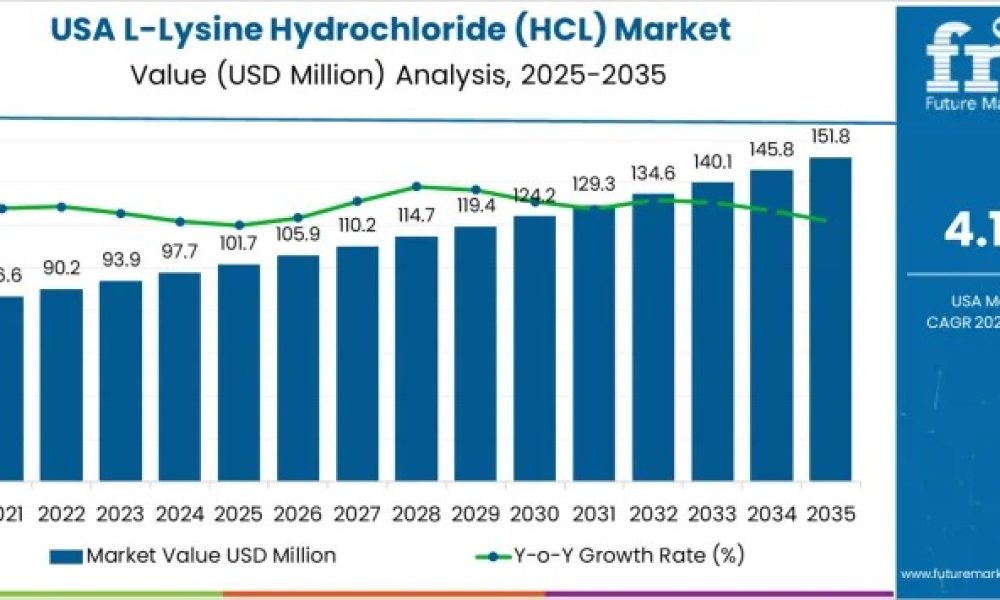
The USA L-lysine hydrochloride (HCL) market, valued at USD 101.7 million in 2025, is projected to reach USD 151.8 million by 2035, growing at a CAGR of 4.1%. Growth is primarily driven by its role in animal nutrition to enhance feed efficiency, alongside expanding use in pharmaceuticals and dietary supplements supporting protein synthesis and metabolic health. Increasing livestock production and high-quality feed formulations are key factors sustaining demand.
Explore trends before investing – request a sample report today!
Fruit-derived L-lysine HCL dominates the market due to natural sourcing and high purity, aligning with clean-label preferences and superior amino acid bioavailability in poultry and swine operations. Manufacturers increasingly rely on fermentation-based production for consistent yields and reduced synthetic dependence. Major demand regions include the West, South, and Northeast USA, supported by large livestock clusters, bioprocessing infrastructure, and established nutraceutical distribution networks.
Market Context and Key Drivers
The USA L-Lysine HCL market is underpinned by robust demand from the livestock and poultry nutrition sectors. Supplementing feed with lysine enhances protein utilization, improves growth performance, and reduces dependence on soybean meal. The consistent uptake of lysine across feed mills is further reinforced by rising demand for high-quality meat proteins, supporting steady revenue gains.
Secondary contributions stem from food fortification and pharmaceutical-grade lysine used in therapeutic formulations. While these segments grow gradually due to health-conscious consumer trends, the primary market impact remains centered on animal feed applications. Human nutrition applications, including sports nutrition, wellness supplements, and fortified foods, further diversify the market but exert a comparatively modest effect on overall growth.
Leading Sources and Applications
Fruit-derived lysine accounts for approximately 43% of the U.S. market, aligning with clean-label preferences and consumer trust in natural sourcing. Vegetable sources hold 22%, catering to plant-based product development and nutritional enrichment, while meat-derived lysine comprises 15% for clinical and performance nutrition. Dairy-based lysine (13%) is used in infant formula and functional food formats requiring high-purity amino acids. Other niche sources contribute the remaining 7%, emphasizing cost flexibility and specialized processing needs.
By application, processed foods dominate with a 34.4% share, reflecting widespread use in protein-fortified snacks, bakery items, and ready-to-eat meals. Animal feed represents 23%, with supplementation critical for amino acid balance and feed cost optimization. Beverages account for 21.6%, driven by energy drinks, meal replacements, and sports hydration products. Pharmaceuticals and other nutraceuticals constitute 11% and 10%, respectively.
Market Insights by Application and Source
Processed foods lead consumption at 34.4%, followed by animal feed (23.0%) and beverages (21.6%), while pharmaceuticals account for 11.0%. Fruit-sourced lysine represents 43.0% of supply, followed by vegetable (22.0%), meat (15.0%), and dairy (13.0%), reflecting clean-label and traceability priorities.
Regional Market Dynamics
The West USA shows the highest growth (4.7% CAGR), driven by poultry and dairy operations in California and Washington. The South (4.2%) benefits from large-scale poultry and swine industries, while the Northeast (3.8%) and Midwest (3.3%) maintain steady demand through diversified food-processing and feed-production hubs.
Industry Drivers and Trends
Rising animal-protein production, focus on feed efficiency, and amino acid-balanced diets are key growth drivers. Human-nutrition applications in sports supplements, fortified foods, and wellness products further support market expansion. Adoption of precision feeding systems and sustainability initiatives enhances lysine utilization in livestock nutrition.
Access the full report for detailed market trends.
Competitive Landscape
Key players in the USA market include Ajinomoto Co., Inc., CJ CheilJedang Corporation, Kyowa Hakko Bio Co., Ltd., Evonik Industries AG, and Meihua Holdings Group Co., Ltd. Competitive advantage depends on consistent quality, supply reliability, and regulatory compliance. Firms offering flexible volumes and global logistics support maintain a strong market presence.
Key Players in USA L-Lysine Hydrochloride (HCL) Demand
- Ajinomoto Co., Inc.
- CJ CheilJedang Corporation
- Kyowa Hakko Bio Co., Ltd.
- Evonik Industries AG
- Meihua Holdings Group Co., Ltd.
About Future Market Insights (FMI)
Future Market Insights, Inc. (ESOMAR certified, recipient of the Stevie Award, and a member of the Greater New York Chamber of Commerce) offers profound insights into the driving factors that are boosting demand in the market. FMI stands as the leading global provider of market intelligence, advisory services, consulting, and events for the Packaging, Food and Beverage, Consumer Technology, Healthcare, Industrial, and Chemicals markets. With a vast team of over 400 analysts worldwide, FMI provides global, regional, and local expertise on diverse domains and industry trends across more than 110 countries.



