
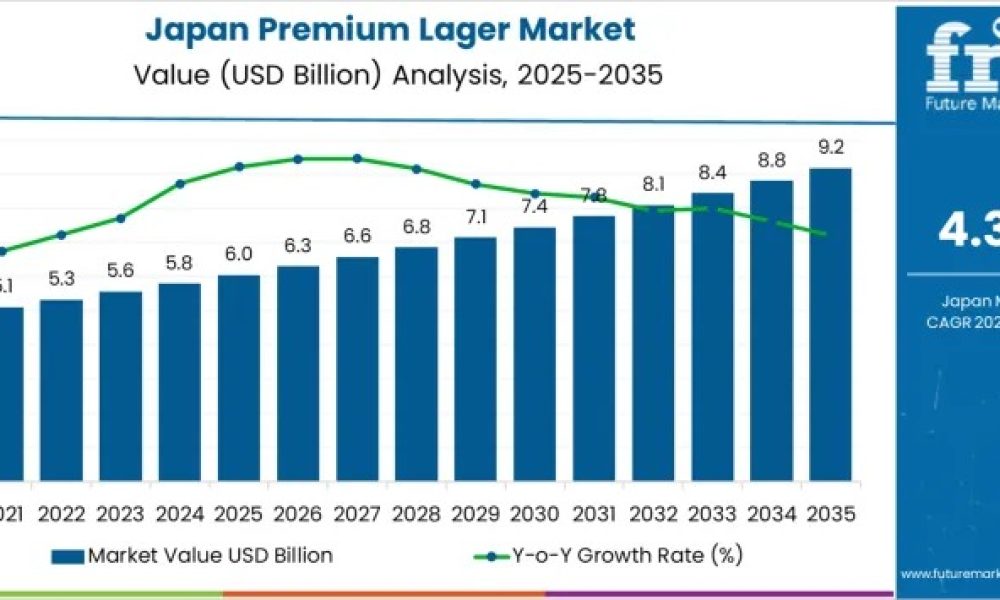
The demand for premium lager in Japan is entering a steady growth phase, supported by shifting consumer preferences toward higher-quality beer, expanding craft offerings, and the cultural strength of on-trade consumption. According to updated industry analysis, Japan’s premium lager demand is projected to grow from USD 6.0 billion in 2025 to USD 9.2 billion by 2035, registering a compound annual growth rate (CAGR) of 4.3% over the forecast period.
This growth reflects a broader premiumization trend within Japan’s beverage sector, where consumers increasingly prioritize taste, craftsmanship, and drinking experience over volume. Premium lagers are emerging as an accessible luxury—positioned between mass-market beer and higher-priced wine or spirits—making them particularly attractive in urban and dining-centric consumption settings.
To Explore Detailed Market Data, Segment-Wise Forecasts, and Competitive Insights, Request Sample Report!
Craft Lager Shapes the Core of Market Expansion
Craft lager remains the dominant product type, accounting for 66% of total premium lager demand in Japan. Japanese consumers are showing a clear preference for artisanal beers made with refined brewing techniques, small-batch production, and locally inspired flavor profiles. This shift aligns with the country’s broader culinary culture, which emphasizes balance, authenticity, and quality ingredients.
Conventional premium lager continues to play a meaningful role, contributing 34% of demand, particularly among consumers seeking familiar flavor profiles with upgraded quality standards. Together, both segments are supporting sustained market expansion as breweries diversify offerings to meet evolving tastes.
On-Trade Consumption Reinforces Premium Positioning
Distribution trends highlight the importance of Japan’s hospitality and dining culture. On-trade channels account for 58% of premium lager demand, driven by consumption in bars, restaurants, pubs, and craft beer establishments. Social drinking remains deeply embedded in Japanese business and leisure culture, with premium lagers increasingly paired with food to enhance dining experiences.
Off-trade channels—including supermarkets and convenience stores—continue to expand access, supported by improved packaging innovations and wider brand availability. However, premium lager’s experiential value remains strongest in on-trade environments where consumers are more willing to trade up.
Market Size Snapshot: Japan Premium Lager Demand
- Market Value (2025): USD 6.0 billion
- Forecast Value (2035): USD 9.2 billion
- Forecast CAGR (2025–2035): 4.3%
- Leading Product Type: Craft Lager
- Primary Channel: On-trade
Why Premium Lager Demand Is Rising
The growth of premium lager in Japan is closely tied to changing consumption behavior. Consumers are increasingly choosing fewer but better drinks, driven by smaller household sizes, evolving lifestyles, and heightened quality awareness. Premium lagers, known for smooth taste, superior ingredients, and brewing craftsmanship, align well with these preferences.
International premium brands and global beer styles are also gaining visibility, expanding consumer exposure beyond traditional domestic options. As appreciation for beer styles deepens, premium lagers are benefiting from both experimentation and repeat consumption.
Regional Growth Patterns Highlight Urban Strength
Demand growth is visible across all regions, with clear momentum in urban and tourism-driven areas:
- Kyushu & Okinawa: 5.3% CAGR, led by tourism and premium dining growth
- Kanto: 4.9% CAGR, supported by Tokyo’s urban lifestyle and food culture
- Kansai: 4.3% CAGR, driven by strong culinary traditions
- Chubu: 3.8% CAGR, reflecting rising urbanization and retail availability
- Tohoku: 3.3% CAGR
- Rest of Japan: 3.2% CAGR
Kyushu & Okinawa leads regional growth as both local consumers and international visitors increasingly seek premium beverage experiences.
Innovation, Pricing, and Competitive Pressures
Advancements in brewing technology, fermentation control, and packaging—such as improved sealing and freshness preservation—are enhancing product consistency and shelf life. These innovations support wider distribution while maintaining premium quality.
However, premium pricing remains a constraint for price-sensitive consumers, particularly amid rising interest in low-alcohol and alternative beverages. Competition from ready-to-drink cocktails and spirits continues to challenge beer consumption, especially among younger demographics.
Unlock the complete analysis—Get the full report now.
Competitive Landscape and Industry Outlook
The premium lager segment in Japan is shaped by a mix of global and regional players focused on brand strength, innovation, and distribution reach. Key companies active in the market include:
- Heineken N.V.
- China Resources Snow Breweries
- Molson Coors Brewing
- Tsingtao Brewery Group
- Anheuser-Busch InBev
These companies are expanding premium portfolios and leveraging international brand equity to capture demand from quality-conscious consumers. As premiumization continues to influence purchasing decisions, premium lager is expected to remain a resilient and growing segment within Japan’s evolving beer industry.
About Future Market Insights (FMI)
Future Market Insights, Inc. (FMI) is an ESOMAR-certified, ISO 9001:2015 market research and consulting organization, trusted by Fortune 500 clients and global enterprises. With operations in the U.S., UK, India, and Dubai, FMI provides data-backed insights and strategic intelligence across 30+ industries and 1,200 markets worldwide.



