
The global vaccine delivery devices market is entering a decisive phase of transformation, projected to grow from USD 5.6 billion in 2025 to USD 8.6 billion by 2035, according to a new comprehensive industry analysis by Fact.MR. This expansion, representing a compound annual growth rate (CAGR) of 4.4%, is underpinned by a systemic shift toward safety-engineered injection systems and the integration of digital tracking technologies within public health infrastructures.
Bridging the Gap: Who, What, and Why
As global health organizations prioritize pandemic preparedness and routine immunization, the what of this market—specialized tools ranging from conventional syringes to needle-free injectors—is becoming as critical as the vaccines themselves. The primary who driving this demand includes government-led public programs, which currently command approximately 58.0% of the market share.
The why is rooted in two critical factors: the rising prevalence of infectious diseases and a global mandate to eliminate needlestick injuries (NSIs). With the U.S. Centers for Disease Control and Prevention (CDC) reporting nearly 385,000 sharps injuries annually in hospital settings alone, healthcare providers are rapidly transitioning toward safety/auto-disable syringes to protect frontline workers and ensure dose-sparing efficiency.
Request for Sample Report | Customize Report |purchase Full Report – https://www.factmr.com/connectus/sample?flag=S&rep_id=178
Quick Stats for Vaccine Delivery Devices Market
- Vaccine Delivery Devices Market Value (2025): USD 5.6 billion
- Vaccine Delivery Devices Market Forecast Value (2035): USD 8.6 billion
- Vaccine Delivery Devices Market Forecast CAGR: 4.4%
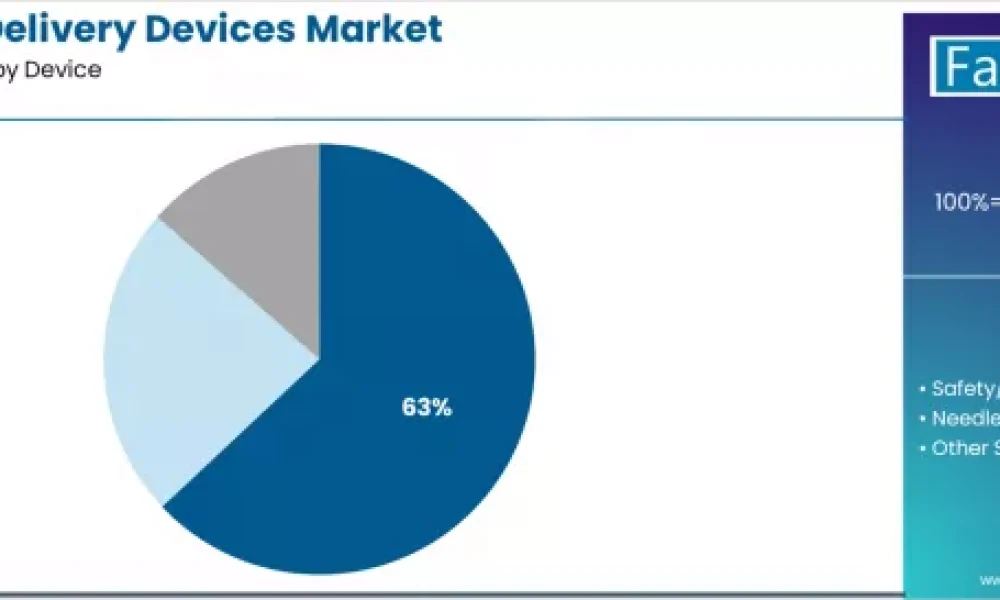
- Leading Device in Vaccine Delivery Devices Market: Conventional syringes/needles (63.0%)
- Key Growth Regions in Vaccine Delivery Devices Market: North America, Europe, and Asia Pacific
- Key Players in Vaccine Delivery Devices Market: BD, Terumo, Nipro, West, Gerresheimer, Schott Pharma
Market Segmentation and Key Growth Drivers
The industry’s evolution is characterized by several distinct segments that are redefining vaccine administration:
Device Dominance: Conventional syringes and needles remain the primary delivery method, holding a 63.0% market share. However, needle-free and microarray platforms are identified as the fastest-growing categories, spurred by patient-centric campaigns and the need to improve compliance in needle-phobic populations.
Public Program Leadership: Massive vaccination drives—targeting pediatric EPI (Expanded Program on Immunization), adult flu, and COVID-19—position public programs as the largest end-user segment.
Technological Integration: Between 2030 and 2035, the market is expected to add USD 1.7 billion in value, driven specifically by the commercialization of microneedle patches and intranasal delivery systems that reduce reliance on complex cold-chain logistics.
Geographic Trends and Regional Outlook
North America continues to lead the global landscape, captured by a robust healthcare infrastructure and high public awareness. In the United States, government initiatives and advanced R&D capabilities have solidified its position as a primary revenue hub.
In contrast, Asia-Pacific is poised for the most rapid expansion through 2030. Large-scale infrastructure investments, such as the Asian Development Bank’s APVAX facility, are accelerating the adoption of safe injection technologies across emerging economies. Meanwhile, Europe maintains a significant presence, with recent state-level support in countries like France signaling a move toward safer outpatient vaccination tools.
Industry Relevance and Future Prospects
For investors and analysts, the vaccine delivery devices market represents more than just medical hardware; it is a strategic component of global health security. The transition from 2025 to 2035 will be defined by dose-sparing strategies—where devices like intradermal injectors allow for stronger immune responses at lower antigen doses—a critical advantage during global supply shortages.
As the industry moves toward 2035, the focus will intensify on eco-friendly, single-use designs and digital connectivity, allowing for real-time tracking of vaccination status and inventory management. This shift ensures that the delivery mechanism is no longer a bottleneck but an accelerator for global health equity.
To View Related Report :
Veterinary Respiratory Ventilators Market
https://www.factmr.com/report/1223/veterinary-respiratory-ventilators-market
Veterinary Tables Market
https://www.factmr.com/report/1275/veterinary-tables-market
Veterinary Wellness Market
https://www.factmr.com/report/1283/veterinary-wellness-market
Veterinary Radiography Flat Panel Detectors Market
https://www.factmr.com/report/1766/veterinary-radiography-flat-panel-detectors-market
About Fact.MR:
We are a trusted research partner of 80% of fortune 1000 companies across the globe. We are consistently growing in the field of market research with more than 1000 reports published every year. The dedicated team of 400-plus analysts and consultants is committed to achieving the utmost level of our client’s satisfaction.



