
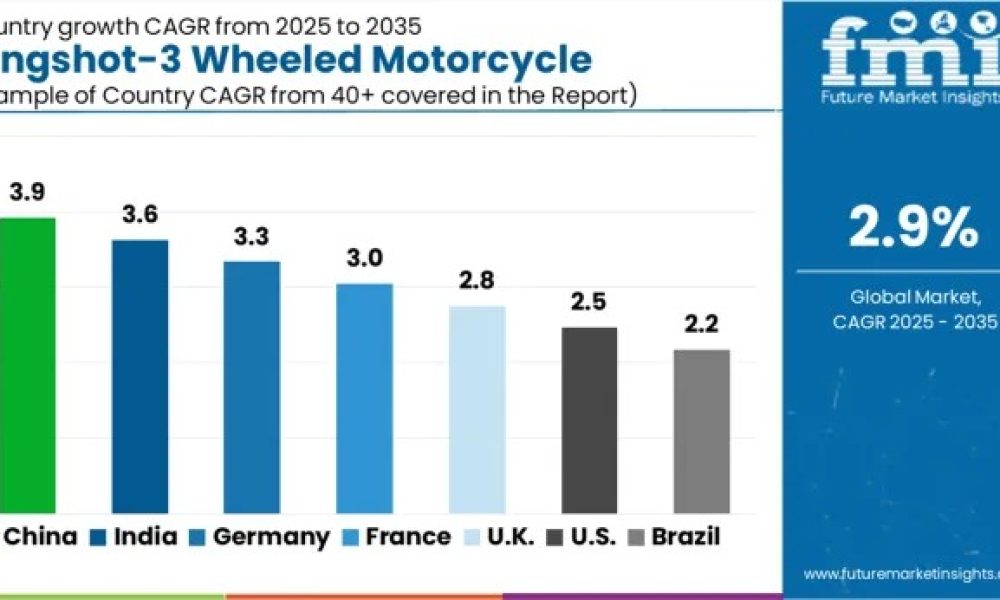
The global slingshot and three-wheeled motorcycle market is witnessing consistent, moderate growth as consumers increasingly explore alternative personal transportation and recreational mobility options. Valued at USD 1.3 billion in 2025, the market is projected to reach USD 1.8 billion by 2035, expanding at a compound annual growth rate (CAGR) of 2.9% during the forecast period.
Slingshots and three-wheeled motorcycles occupy a distinctive niche between conventional motorcycles and compact automobiles. By combining open-air riding excitement with enhanced stability and bold styling, these vehicles appeal to riders seeking a unique blend of performance, comfort, and visual impact. While growth remains measured compared to mass-market two-wheelers or passenger vehicles, the segment continues to gain relevance as a lifestyle-oriented and experiential mobility category.
Market Growth Pattern Reflects Stable and Incremental Adoption
From 2021 to 2025, the market demonstrated gradual expansion, growing from USD 1.2 billion to USD 1.3 billion, reflecting steady annual gains. This early growth phase was characterized by rising consumer awareness and acceptance of three-wheeled configurations, particularly in developed markets where discretionary spending on recreational vehicles is higher.
Between 2026 and 2030, the market is expected to strengthen further, reaching approximately USD 1.6 billion, supported by intermediate gains driven by improved product offerings and broader consumer reach. The later forecast period, from 2031 to 2035, is projected to see the market expand to USD 1.8 billion, reflecting continued but moderate growth as innovation and niche appeal sustain demand.
Get access to comprehensive data tables and detailed market insights — request your sample report today!
https://www.futuremarketinsights.com/reports/sample/rep-gb-26318
Lifestyle Shifts and Recreational Demand Drive Market Expansion
One of the primary drivers of growth in the slingshot and three-wheeled motorcycle market is the shift in consumer lifestyles toward experience-driven mobility. These vehicles are increasingly viewed not just as transportation solutions, but as recreational assets associated with leisure riding, weekend touring, and adventure tourism.
In regions such as North America and parts of Europe, demand is fueled by consumers seeking alternatives to traditional motorcycles that offer greater stability without sacrificing excitement. Three-wheeled motorcycles appeal to both seasoned riders and new entrants, including older demographics and individuals who may be hesitant to adopt two-wheelers due to balance or safety concerns.
Regulatory frameworks in several markets further support adoption, as three-wheeled motorcycles are often classified closer to motorcycles than cars. This classification can ease licensing, registration, and insurance requirements, lowering barriers to entry and expanding the potential customer base.
Open-Air Slingshots Lead by Vehicle Type
By vehicle configuration, open-air slingshots dominate the market, accounting for 51.2% of total revenue in 2025. Their leadership is driven by aggressive styling, low-slung chassis designs, and immersive open-cockpit experiences that resonate strongly with thrill-seekers and automotive enthusiasts.
Manufacturers continue to enhance the appeal of open-air slingshots through customization options, including performance upgrades, infotainment systems, aesthetic packages, and comfort-focused accessories. This emphasis on personalization strengthens brand loyalty and positions open-air slingshots as lifestyle vehicles rather than purely functional transport.
Gasoline Powertrains Remain Dominant Amid Gradual Electrification
From an engine perspective, gasoline-powered models hold a dominant 62.7% market share, reflecting their established performance credentials, extended range, and widespread fueling infrastructure. High torque delivery and responsive acceleration make gasoline engines particularly attractive to enthusiasts who prioritize driving dynamics.
However, the market is gradually witnessing the introduction of electric three-wheeled motorcycles, driven by global emission regulations and rising environmental awareness. While electric variants currently represent a smaller share, they are gaining attention in urban mobility and short-distance use cases due to lower operating costs and quieter operation. Over the long term, electrification is expected to act as a supplementary growth driver rather than a disruptive force in this niche segment.
Manual Transmission Preferred by Enthusiasts
By transmission type, manual transmission models account for 44.9% of the market, reflecting strong demand from riders who value control, engagement, and performance tuning. Manual gearboxes remain popular in high-performance and enthusiast-oriented models, reinforcing their relevance despite the growing availability of automatic and continuously variable transmissions (CVTs).
Automatic and CVT options are increasingly adopted by new riders and urban commuters seeking ease of use, contributing to a more diversified transmission landscape. This balance allows manufacturers to cater to both purists and accessibility-focused buyers.
Drive Your Business Growth Strategy: Checkout the Report for Key Insights
https://www.futuremarketinsights.com/checkout/26318
Regional Outlook Highlights Emerging Opportunities
North America remains the most prominent market, driven by a strong culture of recreational riding and established brands such as Polaris and BRP. The United States continues to show steady growth, supported by demand for lifestyle vehicles and growing interest in electric alternatives.
In Asia-Pacific, countries such as China and India are emerging as faster-growing markets, with CAGRs of 3.9% and 3.6%, respectively. Rapid urbanization, a growing middle class, and increasing interest in alternative mobility solutions are supporting adoption. Three-wheeled motorcycles are also finding use in last-mile delivery and shared mobility applications in dense urban environments.
Europe, led by Germany, France, and the UK, demonstrates stable growth driven by urban mobility trends, environmental considerations, and a strong automotive innovation culture. Germany’s focus on compact and eco-friendly vehicles, in particular, supports the gradual adoption of electric three-wheeled motorcycles.
Competitive Landscape Driven by Design and Innovation
The slingshot and three-wheeled motorcycle market is characterized by intense competition and strong brand differentiation. Key players include Polaris, Arcimoto, BRP, Campagna Motors, Harley-Davidson, Honda Motor, Morgan Motor Company, Piaggio, Vanderhall Motor Works, and Yamaha Motor.
Polaris leads with its iconic Slingshot, emphasizing bold design and open-air performance. Arcimoto differentiates itself through electric mobility and urban efficiency, while BRP’s Can-Am lineup balances sport and touring capabilities. Luxury and performance-focused brands such as Campagna Motors and Morgan Motor Company target enthusiasts seeking exclusivity and craftsmanship.
Across the competitive landscape, manufacturers highlight speed, handling, customization, and comfort as core value propositions. Product innovation, brand storytelling, and experiential marketing play a critical role in attracting consumers within this niche segment.
Market Outlook
Looking ahead, the global slingshot and three-wheeled motorcycle market is expected to maintain steady, sustainable growth through 2035. While the market remains niche in scale, its resilience is supported by lifestyle-driven demand, design innovation, and gradual expansion into electric and emerging-market applications.
As consumers continue to seek distinctive, engaging mobility experiences that balance excitement with stability, slingshots and three-wheeled motorcycles are well-positioned to retain their unique place within the broader mobility ecosystem.
Why Choose FMI: Empowering Decisions that Drive Real-World Outcomes: https://www.futuremarketinsights.com/why-fmi
About Future Market Insights (FMI)
Future Market Insights, Inc. (FMI) is an ESOMAR-certified, ISO 9001:2015 market research and consulting organization, trusted by Fortune 500 clients and global enterprises. With operations in the U.S., UK, India, and Dubai, FMI provides data-backed insights and strategic intelligence across 30+ industries and 1200 markets worldwide.



