
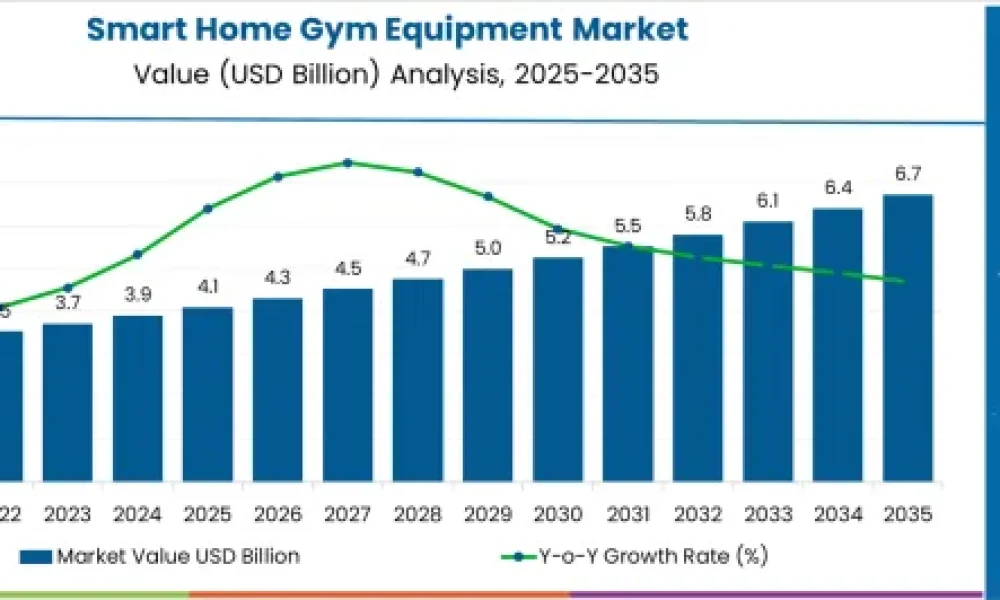
The global smart boxing machine market is forecast to grow from an estimated USD 346.0 million in 2025 to USD 474.1 million by 2035, registering a compound annual growth rate (CAGR) of 3.2% over the ten-year period. The market’s steady expansion reflects rising demand for interactive fitness equipment, data-driven performance tracking, and personalized workout experiences across gyms, training centers, and home fitness environments.
The market is expected to progress from USD 346.0 million in 2025 to USD 392.5 million by 2029, underscoring measured but reliable adoption. While growth rates remain moderate compared with other connected fitness categories, the trajectory highlights a resilient consumer base and consistent investment by commercial fitness operators seeking equipment that combines exercise with real-time analytics.
Explore comprehensive market trends, regional outlooks, and competitive intelligence – Get a Sample Copy Now
Market Overview: What Is Driving Growth and Why It Matters
Smart boxing machines represent a niche yet growing segment within the global fitness equipment industry, accounting for approximately 2–3% of the broader market. Within sports technology, the category holds a 1.5–2% share, supported by integration of motion sensors, AI-driven training programs, and performance analytics. In the home gym and connected fitness market, smart boxing machines command a 3–4% share, reflecting rising interest in app-based workouts and hybrid fitness models. The segment also overlaps with entertainment and gaming systems, contributing about 1–2% share as gamified boxing machines gain popularity among younger users.
Market growth is being driven by consumer preferences for connected fitness solutions that deliver real-time feedback, immersive training experiences, and personalized workout analytics. Manufacturers are investing in durable materials, ergonomic designs, and cloud-based software updates to extend product life cycles and enhance functionality. Strategic partnerships between equipment providers and fitness chains are further strengthening market visibility and adoption.
Key Market Statistics and Forecast
- Market Value (2025): USD 346.0 million
- Forecast Value (2035): USD 474.1 million
- Forecast CAGR (2025–2035): 3.2%
- Leading Segment (2025): Wall-mounted machines, 57.4% share
- Key Growth Regions: North America, Asia-Pacific, Europe
- Top Companies: FightCamp, Corner Boxing, Everlast Worldwide Inc., Hykso, Liteboxer, Nexersys, PIQ, Ringside, SkyTechSport Inc., StrikeTec, UBX
Segment Insights: Type, Power Source, and Price Range
Wall-Mounted Machines Lead by Type
The wall-mounted segment accounted for 57.4% of market share in 2025, driven by space efficiency and suitability for both commercial and residential use. These systems integrate easily into smaller workout areas and offer lower installation complexity and maintenance costs compared with freestanding alternatives. Demand is reinforced by features such as real-time punch analysis, adaptive resistance, and mobile app connectivity.
Electric Models Dominate Power Source Category
Electric smart boxing machines hold 71.2% of the power source segment, benefiting from superior precision, programmable settings, and integration with virtual training platforms. Reduced maintenance requirements and improved reliability have further supported adoption. Manufacturers are also introducing energy-efficient designs and battery backup features to address operational continuity.
Medium Price Range Attracts Broad Consumer Base
The medium price segment represents 48.6% of the market, appealing to consumers seeking a balance between affordability and advanced functionality. Competitive pricing strategies and bundled software packages have enhanced value perception, particularly among mid-market fitness facilities and home gym users.
Regional Outlook: Growth Patterns by Key Countries
The global market is projected to record a 3.2% CAGR from 2025 to 2035, with notable variation across regions:
- China: 4.3% CAGR, driven by a large youth population, rising demand for interactive fitness, and strong adoption in gyms, arcades, and shopping centers.
- India: 4.0% CAGR, supported by urban gym expansion, growing middle-class income, and partnerships introducing affordable models.
- Germany: 3.7% CAGR, reflecting a strong fitness culture and demand for durable, high-performance machines meeting EU quality standards.
- United Kingdom: 3.0% CAGR, with steady adoption in urban gyms and gaming centers and rising interest in gamified fitness.
- United States: 2.7% CAGR, characterized by niche adoption in high-end gyms, training centers, and entertainment venues.
Asia-Pacific markets, particularly China and India, are leading growth due to demographic trends and rising interest in connected fitness. European markets are focusing on commercial installations and data-driven training solutions, while the U.S. maintains slower but consistent demand centered on premium experiences.
Market Drivers, Trends, and Challenges
Drivers
Rising demand for connected fitness, personalized training analytics, and immersive workout experiences is accelerating adoption. Integration of advanced sensor technologies and gamification features is enhancing user engagement and driving repeat usage.
Trends
Key trends include AI-powered performance analysis, virtual coaching, augmented reality integration, and subscription-based training content. Compact, portable designs and app-based interfaces are gaining popularity, particularly among urban consumers.
Challenges
High upfront costs and limited awareness in emerging regions remain barriers to broader adoption. Premium machines integrated with AI and advanced sensors are often unaffordable for many households, while gyms in cost-sensitive markets face uncertain return on investment.
Competitive Landscape
Leading companies such as FightCamp, Liteboxer, and Nexersys are integrating interactive technology with fitness training. Established brands including Everlast Worldwide Inc. and Ringside are leveraging brand recognition to introduce smart boxing devices that combine durability with digital features. Wearable-focused players such as Hykso and StrikeTec emphasize punch tracking and performance analytics, while SkyTechSport Inc. and PIQ focus on simulation-based training and athlete-focused data insights.
Outlook
With steady growth projected through 2035, the smart boxing machine market is positioned as a resilient niche within the connected fitness ecosystem. Continued advancements in AI, gamification, and performance analytics—combined with expanding adoption in commercial and home fitness settings—are expected to sustain long-term revenue growth and drive product diversification across training environments.
Have a specific Requirements and Need Assistant on Report Pricing or Limited Budget please contact us – [email protected]
About Future Market Insights (FMI)
Future Market Insights, Inc. (FMI) is an ESOMAR-certified, ISO 9001:2015 market research and consulting organization, trusted by Fortune 500 clients and global enterprises. With operations in the U.S., UK, India, and Dubai, FMI provides data-backed insights and strategic intelligence across 30+ industries and 1200 markets worldwide
Why Choose FMI: https://www.futuremarketinsights.com/why-fmi



