
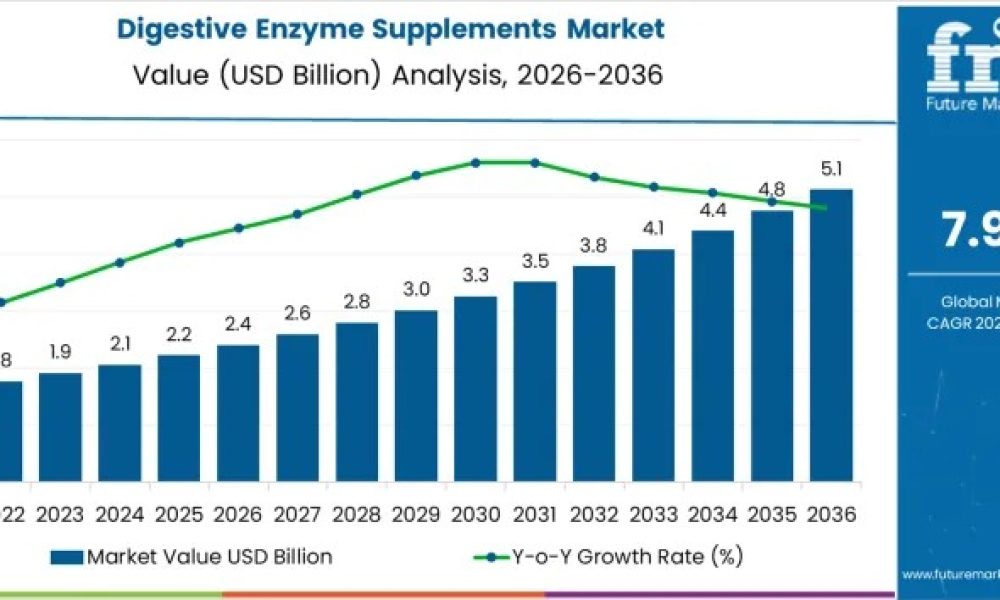
The global digestive enzyme supplements market is entering a phase of sustained expansion, driven by rising awareness of digestive wellness and preventive healthcare. Valued at USD 2.4 billion in 2026, the market is projected to reach USD 5.1 billion by 2036, growing at a strong CAGR of 7.9% over the forecast period. Increasing incidence of digestive disorders such as lactose intolerance, irritable bowel syndrome (IBS), bloating, and indigestion is pushing consumers toward enzyme-based solutions that support digestion and nutrient absorption.
Explore trends before investing – request a sample report today!
Digestive enzyme supplements are increasingly viewed as an essential part of daily wellness routines rather than occasional remedies. As modern diets become more processed and fast-paced lifestyles disrupt digestive balance, consumers are proactively seeking supplements that help break down proteins, carbohydrates, fats, and lactose more efficiently. This shift toward self-care and preventive nutrition is significantly strengthening demand across both developed and emerging economies.
A notable driver shaping the market is the rising preference for natural, plant-based, and clean-label digestive enzyme formulations. Consumers are increasingly cautious about synthetic additives and are gravitating toward products derived from fruits, fungi, and microbial fermentation. These formulations align well with broader clean-label and vegan trends, reinforcing the market’s long-term growth outlook.
Market Snapshot: Key Numbers at a Glance
- Market Value (2026): USD 2.4 Billion
- Forecast Value (2036): USD 5.1 Billion
- Forecast CAGR (2026–2036): 7.9%
- Leading Form Type: Tablets or Capsules
- High-Growth Regions: Asia Pacific, North America
Technological advancements in enzyme formulation are also reshaping competitive dynamics. Manufacturers are increasingly developing targeted enzyme blends designed to address specific digestive concerns, such as lactose intolerance, protein malabsorption, or complex carbohydrate digestion. These precision blends enhance efficacy and allow brands to differentiate their offerings in a competitive marketplace.
Product accessibility has improved considerably with the expansion of e-commerce and direct-to-consumer platforms. Online channels enable consumers to compare formulations, read reviews, and access educational content, accelerating adoption rates globally. In parallel, traditional pharmacies and health food stores continue to play a key role in consumer trust and product discovery.
Segment-Wise Market Insights
By form type, tablets and capsules dominate the digestive enzyme supplements market, accounting for approximately 35% of total demand. Their popularity stems from convenience, accurate dosing, longer shelf life, and ease of integration into daily routines. Powders, liquids, and chewables are also gaining traction, particularly among pediatric and geriatric consumers seeking alternative formats.
From an application perspective, supplements positioned for additional digestive support represent nearly 30% of market share. These products are widely adopted by individuals seeking to improve digestion, reduce post-meal discomfort, and enhance nutrient uptake. Other key applications include lactose intolerance management, sports nutrition, and weight management, reflecting the versatility of enzyme-based solutions.
Market Dynamics and Growth Drivers
The digestive enzyme supplements market is advancing steadily due to a convergence of lifestyle, demographic, and healthcare trends. Aging populations, particularly in developed markets, face reduced natural enzyme production, increasing reliance on supplementation. At the same time, younger consumers are adopting digestive enzymes as part of holistic wellness and fitness regimens.
Key drivers influencing market expansion include growing health awareness, rising disposable incomes, and increasing recommendations from healthcare professionals as complementary digestive support. The widespread availability of supplements through online platforms further strengthens market penetration across urban and semi-urban regions.
Regional and Country-Level Outlook
Asia Pacific and North America remain the most attractive growth regions. China leads global growth with a projected CAGR of 8.5%, supported by a rapidly expanding middle class, dietary shifts, and strong e-commerce penetration. The United States follows closely with an 8% CAGR, driven by high awareness of gut health, preventive healthcare adoption, and personalized nutrition trends.
Japan’s market is growing at 7.6%, underpinned by an aging population and long-standing cultural focus on digestive balance. Germany, at 7.3%, benefits from strong preventive healthcare practices and preference for high-quality natural supplements. The UK market, growing at 6.9%, reflects rising demand for plant-based and clean-label digestive solutions.
To Access The Full Market Analysis, Strategic Recommendations, And Analyst Support, Purchase The Complete Report Here.
Competitive Landscape
Competition in the digestive enzyme supplements market centers on formulation quality, enzyme potency, and ingredient transparency. Leading players such as Klaire Labs, Garden of Life, NOW Foods, Pure Encapsulations, and Source Naturals focus on differentiated blends, clinical credibility, and clean-label positioning. Emerging and niche players are strengthening competition by offering customizable and high-activity enzyme solutions tailored to specific digestive needs.
Key Players in Digestive Enzyme Supplements Market
- Klaire Labs
- Garden of Life
- NOW Foods
- Pure Encapsulations
- Source Naturals
- Enzymedica
- American Laboratories
- National Enzyme Company
About Future Market Insights (FMI)
Future Market Insights, Inc. (FMI) is an ESOMAR-certified, ISO 9001:2015 market research and consulting organization, trusted by Fortune 500 clients and global enterprises. With operations in the U.S., UK, India, and Dubai, FMI provides data-backed insights and strategic intelligence across 30+ industries and 1,200 markets worldwide.



