
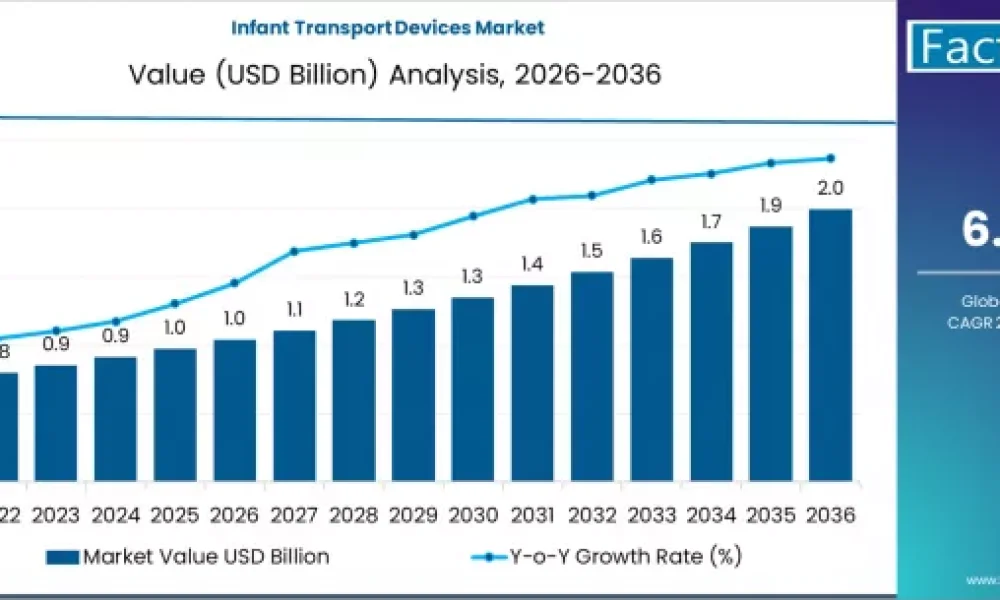
The global Infant Transport Devices Market is expected to witness robust growth through 2036 as demand for safe, efficient, and technologically advanced neonatal transport solutions rises across hospitals, neonatal intensive care units (NICUs), emergency medical services, and specialized pediatric care settings. Infant transport devices, including neonatal transport incubators, transport warmers, portable ventilators, and mobile monitoring systems, are critical in ensuring the stability and safety of newborns during inter- and intra-facility transfers. These devices provide regulated thermal environments, shock-absorbing mobility, vital support functions, and seamless integration with life-support technologies — all essential in protecting vulnerable infants during transport.
Advances in design, materials, and connectivity are further bolstering market growth as healthcare providers seek solutions that improve clinical outcomes, support healthcare professional workflows, and align with stringent neonatal care standards. Rising birth rates, increasing preterm deliveries, expanding emergency medical services, and enhanced focus on perinatal healthcare infrastructure contribute to sustained demand for infant transport devices globally.
Market Outlook (2026–2036)
Market Value in 2026: Estimated at USD 1.2 Billion
Market Value in 2036: Projected to reach USD 2.9 Billion
Forecast CAGR (2026–2036): Approximately 9.5%
Leading Product Category: Neonatal Transport Incubators
Primary End Users: Hospitals, NICUs, Emergency Medical Services
Key Growth Drivers: Rising neonatal emergencies, technological innovation, expanding healthcare access
The steady CAGR reflects increasing investments in neonatal care, heightened awareness of transport-associated infant morbidity, and rising adoption of advanced transport solutions in emerging healthcare markets.
To Access the Complete Data Tables & in-depth Insights, Request a Discount on this report: https://www.factmr.com/connectus/sample?flag=S&rep_id=13388
Market Overview
Infant transport devices encompass a range of specialized equipment designed to support the physiological needs of newborns during relocation between units or facilities. These devices create controlled environments that stabilize temperature, humidity, and oxygen levels, provide secure immobilization and positioning, and integrate monitoring systems that continuously track vital signs such as heart rate, respiratory rate, and oxygen saturation. Many transport systems are modular, allowing seamless connection to ventilators, infusion pumps, and advanced monitoring tools to ensure continuity of care.
Transport incubators are central to market demand, combining thermal regulation, shock-absorbing chassis, and ease of maneuverability. Transport warmers offer rapid heat delivery for emergencies, while portable ventilators and integrated monitoring devices enhance respiratory and physiological support during transit. Together, these solutions improve survival rates, reduce complications associated with transport stress, and support clinical decision-making through real-time data feedback.
Key Market Drivers
1. Rising Preterm Births and Neonatal Emergencies
Prevalence of preterm and low-birth-weight infants necessitates frequent transfers between delivery rooms, NICUs, surgical units, and specialized care centers. Transport devices ensure the stability of these high-risk infants during critical relocation procedures.
2. Expansion of Healthcare Infrastructure and Emergency Services
Improvements in emergency medical services, inclusive of neonatal transport teams and well-equipped ambulances, increase demand for mobile infant support systems. Investments in perinatal care infrastructure, particularly in emerging regions, support broader adoption.
3. Technological Advancements and Connectivity
Innovations such as integrated wireless monitoring, lightweight materials, enhanced thermal control algorithms, and battery-powered operation improve functionality, ease of use, and safety. Connectivity with hospital information systems enables seamless data transfer and remote monitoring during transport.
4. Focus on Clinical Outcomes and Regulatory Standards
Stringent clinical protocols for neonatal transport, supported by professional guidelines and regulatory frameworks, drive procurement of certified and high-performance transport equipment. Quality assurance and compliance with safety standards further reinforce market preferences for advanced devices.
Market Segmentation Insights
By Product Type:
Transport Incubators: Provide regulated thermal environments and shock-resistant mobility.
Transport Warmers: Deliver rapid, adjustable heat during emergency transfers.
Portable Ventilators: Support respiratory function in transit.
Mobile Monitoring Systems: Track vital signs and communicate real-time data.
Others: Specialized cots, immobilization systems, integrated support modules.
By End User:
Hospitals and Clinics
Neonatal Intensive Care Units (NICUs)
Emergency Medical Services (EMS)
Ambulatory Care Services
Pediatric and Specialty Care Centers
By Distribution Channel:
Direct Institutional Sales
Medical Equipment Distributors
E-Commerce and Online Medical Platforms
Aftermarket and Service Contracts
By Geography:
North America
Europe
Asia Pacific
Latin America
Middle East & Africa
Regional Demand Dynamics
North America is expected to maintain a leading share of the market, supported by well-established healthcare infrastructure, early adoption of advanced neonatal care technologies, and comprehensive emergency medical service networks. The United States and Canada exhibit sustained investment in neonatal transport systems, driven by high clinical standards for newborn care.
Europe represents another key regional market with strong emphasis on maternal and neonatal health, stringent regulatory frameworks, and widespread integration of telemedicine and connected devices. Countries with advanced perinatal care systems are accelerating deployment of next-generation transport solutions.
Asia Pacific is anticipated to exhibit the fastest growth, propelled by increasing birth rates, expanding healthcare access, rising investment in hospital infrastructure, and growing awareness of neonatal care quality. Rapid urbanization and policy focus on maternal health in countries such as China, India, and Southeast Asian nations create fertile conditions for market expansion.
Latin America and Middle East & Africa are emerging markets with gradual uptake of infant transport systems, supported by strengthening healthcare delivery, donor-supported programs, and enhanced emergency response capabilities.
Competitive Landscape
The infant transport devices market is moderately competitive and includes participation from global medical device manufacturers, specialty neonatal equipment producers, and technology innovators. Key players focus on product quality, reliability, ergonomic design, energy efficiency, and compliance with international safety standards. Strategic priorities include expanding product portfolios, enhancing service and maintenance networks, and forging partnerships with healthcare providers to support customized equipment deployment.
Competition is also driven by after-sales service excellence, training programs for clinical staff, modular system offerings, and extended warranty and upgrade options. Companies are increasingly emphasizing smart, connected devices that reduce caregiver workload and improve clinical visibility.
Future Outlook
The Infant Transport Devices Market is expected to sustain strong growth through 2036 as healthcare delivery systems prioritize neonatal safety, expand critical care capacity, and integrate digital health technologies. Continued innovation in materials, sensors, thermal control systems, and connectivity will enhance device performance and clinical utility. As demand for high-quality perinatal and emergency care grows worldwide, infant transport solutions will remain essential components of comprehensive newborn care strategies.
With increasing global attention on reducing neonatal mortality and improving patient outcomes, investment in advanced transport technologies signifies a critical step forward in modern healthcare provision.
Have specific requirements or need assistance on report pricing or have a limited budget? Please contact [email protected]
About Fact.MR:
Fact.MR is a global market research and consulting firm, trusted by Fortune 500 companies and emerging businesses for reliable insights and strategic intelligence. With a presence across the U.S., UK, India, and Dubai, we deliver data-driven research and tailored consulting solutions across 30+ industries and 1,000+ markets. Backed by deep expertise and advanced analytics, Fact.MR helps organizations uncover opportunities, reduce risks, and make informed decisions for sustainable growth



