
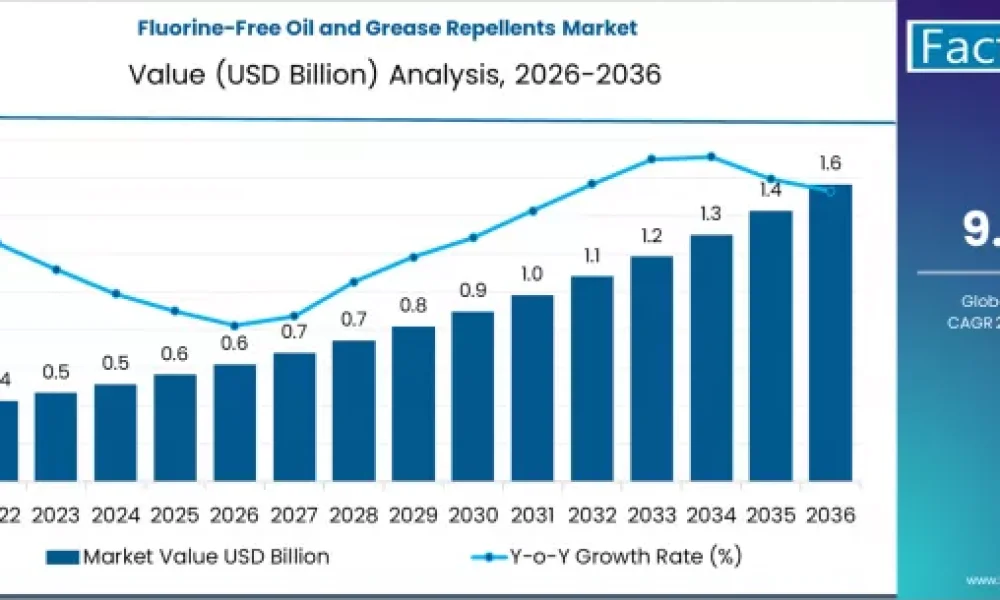
The fluorine-free oil and grease repellents market is expected to witness robust growth over the next decade as end-use industries increasingly seek safer, environmentally friendly alternatives to traditional fluorinated repellents. Fluorine-based chemistries have long dominated oil and grease repellency applications due to their high performance, but mounting regulatory pressure coupled with rising environmental and health concerns has accelerated the shift toward fluorine-free technologies. These environmentally conscious repellents offer key protective benefits while minimizing persistent chemical exposure in applications such as textile finishing, paper and packaging, leather treatments, and industrial coatings.
Driven by global sustainability initiatives, stringent chemical regulations, and consumer preference for greener products, the flourine-free oil and grease repellents market is positioned for steady expansion as manufacturers adopt innovative chemistries that balance performance, safety, and sustainability.
Market Outlook (2026–2036)
Market Value (2026): USD 580.4 million
Market Forecast Value (2036): USD 1,470.8 million
Forecast CAGR (2026–2036): Approximately 10.1%
Primary End-Use Segments: Textile and apparel, food packaging, industrial materials
Key Growth Regions: Asia Pacific, North America, Europe
To Access the Complete Data Tables & in-depth Insights, Request a Discount on this report: https://www.factmr.com/connectus/sample?flag=S&rep_id=13088
Market Overview
Fluorine-free oil and grease repellents are engineered chemical solutions applied to surfaces to impart resistance against oil- and grease-based contaminants without the use of fluorinated polymers or per- and polyfluoroalkyl substances (PFAS). These repellents are increasingly preferred where environmental safety, biodegradability, and regulatory compliance are key considerations.
Traditional oil and grease repellency coatings frequently relied on fluorinated chemistries due to their strong oleophobic and hydrophobic characteristics. However, regulatory actions targeting persistent chemicals and industry commitments to reduce environmental impact have prompted research and adoption of fluorine-free alternatives. These alternatives employ silicone, hydrocarbon, wax, polymer-based, and bio-based formulations to deliver sufficient repellency and durability tailored to specific end-use requirements.
Key Market Drivers
Regulatory Pressure and Compliance Needs
Governments and regulatory bodies in major markets are tightening controls on fluorinated chemicals due to environmental persistence and potential health concerns. Various regulations and industry standards increasingly restrict the use of fluorinated compounds in consumer and industrial products. These policy shifts have compelled manufacturers to explore and adopt fluorine-free repellents in order to achieve compliance and avoid potential liabilities.
Growing Environmental Awareness and Sustainability Goals
Consumers and brand owners across industries are placing a higher emphasis on sustainability, transparency, and responsible material usage. The rise of eco-friendly product labeling and green procurement practices is prompting greater use of fluorine-free repellents, particularly in textile finishing and packaging applications where human exposure and environmental release are significant considerations.
Expansion of Textiles and Packaging Applications
The textiles and apparel industry is a major driver of repellents due to the demand for stain-resistant, easy-care fabrics. Similarly, food packaging producers seek safe oil- and grease-resistant materials to ensure product performance without compromising safety standards. Growth in these end-use sectors supports the adoption of fluorine-free alternatives.
Technological Advancements in Repellent Chemistry
Innovations in polymer science, silicone-based technologies, and bio-based repellent systems have enhanced performance characteristics of fluorine-free repellents. These advancements enable competitive repellency properties while reducing environmental impact, expanding the range of applications where fluorine-free solutions can be deployed.
Market Segmentation Insights
By Repellent Type
Silicone-Based Repellents: Highly used for their balanced repellency and compatibility with various substrates.
Hydrocarbon and Polymer-Based Systems: Offer strong performance, particularly in packaging and coated textiles.
Wax and Bio-Based Repellents: Growing segment as brands seek bio-derived, biodegradable solutions.
Other Specialty Formulations: Customized chemistries tailored to unique performance requirements.
By Application Industry
Textile and Apparel: Largest segment driven by demand for stain-resistant, durable fabrics in fashion, sportswear, and home textiles.
Food Packaging and Paperboard: Growth supported by demand for grease-resistant packaging without fluorinated materials.
Industrial and Protective Coatings: Repellents for functional surfaces used in industrial filters, automotive interiors, and consumer goods.
Leather and Footwear: Used to enhance water, oil, and grease resistance in leather products with minimal environmental impact.
Other End Uses: Includes medical textiles, wipes, and specialty materials requiring repellency.
Regional Market Dynamics
Asia Pacific is anticipated to account for the largest share of the global fluorine-free oil and grease repellents market, driven by textile manufacturing hubs, packaging industry growth, and rising adoption of sustainable materials in China, India, and Southeast Asian countries.
North America demonstrates significant progress in market growth due to strong regulatory oversight, broad adoption of eco-certified materials, and increasing investments in environmentally responsible repellent technologies. Textile and packaging manufacturers in the United States and Canada are actively incorporating fluorine-free solutions to align with sustainability strategies.
Europe remains a key regional market with stringent environmental standards, advanced chemical regulations, and proactive industry initiatives to phase out fluorinated compounds. European brands across textiles and packaging are leading adoption of fluorine-free repellents.
Emerging regions in Latin America, the Middle East, and Africa are gradually increasing uptake as awareness of environmental sustainability expands and regulatory frameworks evolve.
Competitive Landscape
The fluorine-free oil and grease repellents market is moderately competitive, with participation from specialty chemical manufacturers, formulation experts, and regional suppliers. Key players are focusing on innovation, expanding product portfolios, and collaborating with material converters and end users to enhance repellent performance while meeting environmental and safety criteria.
Companies are investing in research and development to improve durability, repellency efficiency, substrate compatibility, and ease of application. Technical support services, pilot testing, and co-development efforts with textile mills, packaging producers, and industrial manufacturers are common strategies to drive adoption.
Challenges and Market Restraints
While fluorine-free repellents offer environmental benefits, challenges such as performance parity with legacy fluorinated products, cost considerations, and integration into existing manufacturing processes can influence adoption rates. Continued innovation and formulation refinement are critical to overcoming these barriers and expanding use across high-performance applications.
Future Outlook
The fluorine-free oil and grease repellents market is expected to sustain strong momentum through 2036 as sustainability priorities, regulatory pressures, and performance demands converge. Ongoing advancements in green chemistry, increasing scale of eco-friendly repellent production, and growing consumer preference for safer materials will underpin long-term market growth.
As industries continue to phasing out persistent fluorinated chemistries and embrace greener alternatives, fluorine-free oil and grease repellents will become essential components in textiles, packaging, industrial coatings, and other sectors seeking effective, safe, and environmentally responsible protective solutions.
Have specific requirements or need assistance on report pricing or have a limited budget? Please contact [email protected]
About Fact.MR:
Fact.MR is a global market research and consulting firm, trusted by Fortune 500 companies and emerging businesses for reliable insights and strategic intelligence. With a presence across the U.S., UK, India, and Dubai, we deliver data-driven research and tailored consulting solutions across 30+ industries and 1,000+ markets. Backed by deep expertise and advanced analytics, Fact.MR helps organizations uncover opportunities, reduce risks, and make informed decisions for sustainable growth



