
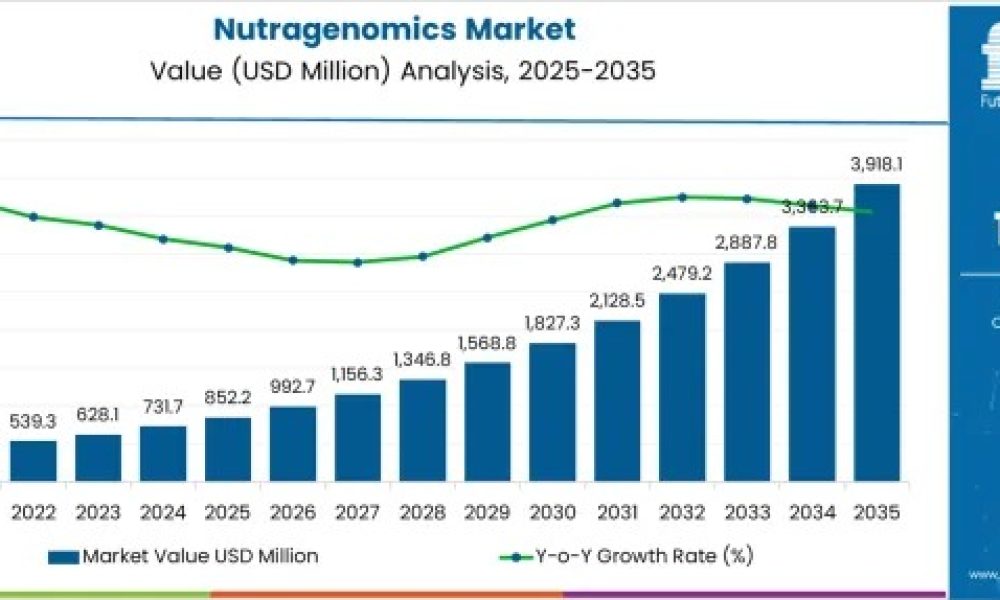
The global nutragenomics market is on a robust growth trajectory, projected to expand from an estimated USD 852.2 million in 2025 to USD 3,918.1 million by 2035, reflecting a strong compound annual growth rate (CAGR) of 16.5% during the forecast period. This surge is driven by the rising consumer focus on personalized nutrition, preventive healthcare, and advancements in genetic testing technologies.
Nutragenomics, the science of understanding how genes influence individual responses to nutrients, is rapidly reshaping the landscape of dietary planning and health optimization. By enabling tailored nutrition strategies, nutragenomics empowers healthcare providers, nutritionists, and consumers alike to make informed decisions for improved wellness outcomes.
Explore trends before investing – request a sample report today!
The market’s expansion is fueled by several key factors: growing awareness of the genetic basis of metabolism and disease risk, technological advancements in bioinformatics, and the increasing availability of direct-to-consumer genetic testing. Segmental leadership in the market is expected from Reagents & Kits in product offerings, Blood as the preferred technique, and Diabetics Pharmaceuticals as a primary application area.
Segmental Insights
- By Product – Reagents & Kits: Reagents & Kits are forecasted to dominate with a 61.7% share of the market in 2025. Their critical role in genetic sample processing, biomarker detection, and genotyping makes them indispensable for laboratories and research institutions. The rise of consumer-friendly, scalable kits is further driving adoption across both clinical and direct-to-consumer markets. Innovations enhancing the sensitivity and specificity of reagents will continue to propel this segment.
- By Technique – Blood: Blood-based testing is projected to account for 48.9% of market revenue in 2025, making it the leading technique. Blood samples offer reliable DNA material, easy collection, and compatibility with advanced sequencing technologies. These attributes make blood the preferred choice for clinical practitioners and nutragenomic assessments in personalized nutrition.
- By Application – Diabetics Pharmaceuticals: The Diabetics Pharmaceuticals segment is estimated to represent 34.2% of market revenue in 2025. Rising diabetes prevalence and the growing demand for personalized dietary and medication plans are driving this growth. Nutrigenomic insights allow for tailored interventions that optimize patient outcomes, reinforcing the importance of precision medicine in chronic disease management.
Market Dynamics and Growth Drivers
Nutragenomics is gaining momentum as gene-related and chronic diseases rise globally. Consumers increasingly undergo nutragenomic tests to evaluate preexisting conditions or potential adverse reactions to specific foods. Manufacturers are leveraging these insights to develop safer, targeted products and to optimize nutrient intake strategies.
Emerging trends include:
- Affordable, scalable testing kits enabling broader market penetration.
- Integration of biological datasets with nutragenomic approaches to map interactions between genes, nutrients, and health outcomes.
- Expansion in regions with stringent regulatory standards such as Europe, Japan, and the USA, enhancing market credibility.
Regional Analysis
North America leads the nutragenomics market due to the widespread adoption of personal genomics, increased service providers, and rising lifestyle-related disease prevalence. Europe is expected to grow steadily, supported by research initiatives, strategic collaborations, and governmental backing. Asia-Pacific is forecasted to witness notable growth, driven by a high prevalence of lifestyle diseases, increasing demand for functional foods, and start-ups offering cost-effective nutragenomic solutions.
According to a survey spanning nine countries with 9,000 participants, nutragenomics enjoys wide acceptance, especially when consumers are assured of privacy and ethical handling of genetic data. This acceptance is set to accelerate market growth across Asia-Pacific.
Subscribe for Year-Round Insights → Stay ahead with quarterly and annual data updates
Competitive Landscape
The global nutragenomics market features several leading players, including Koninklijke DSM N.V., BASF SE, Danone SA, Genova Diagnostics, Inc., Nutrigenomix Inc., The Unilever Group, XCode Life Sciences Pvt Ltd, WellGen, Inc., Integrative Medicine Communications, Inc., and Receptor Logic, Inc.
Key strategies among these companies include collaborations, acquisitions, and development of advanced genetic tests. Regulatory approvals and innovation in testing kits remain pivotal in driving market expansion. Notable collaborations, such as the partnership between 23&Me and GlaxoSmithKline, focus on leveraging genetic insights for medicine development and disease prevention, further stimulating market growth.
As consumers increasingly seek personalized nutrition, the nutragenomics market is poised to transform preventive healthcare and chronic disease management. With innovation, regional growth, and strategic collaborations continuing to shape the landscape, stakeholders across the food, pharmaceutical, and healthcare industries stand to benefit significantly.
About Future Market Insights (FMI)
Future Market Insights, Inc. (FMI) is an ESOMAR-certified, ISO 9001:2015 market research and consulting organization, trusted by Fortune 500 clients and global enterprises. With operations in the U.S., UK, India, and Dubai, FMI provides data-backed insights and strategic intelligence across 30+ industries and 1,200 markets worldwide.



