
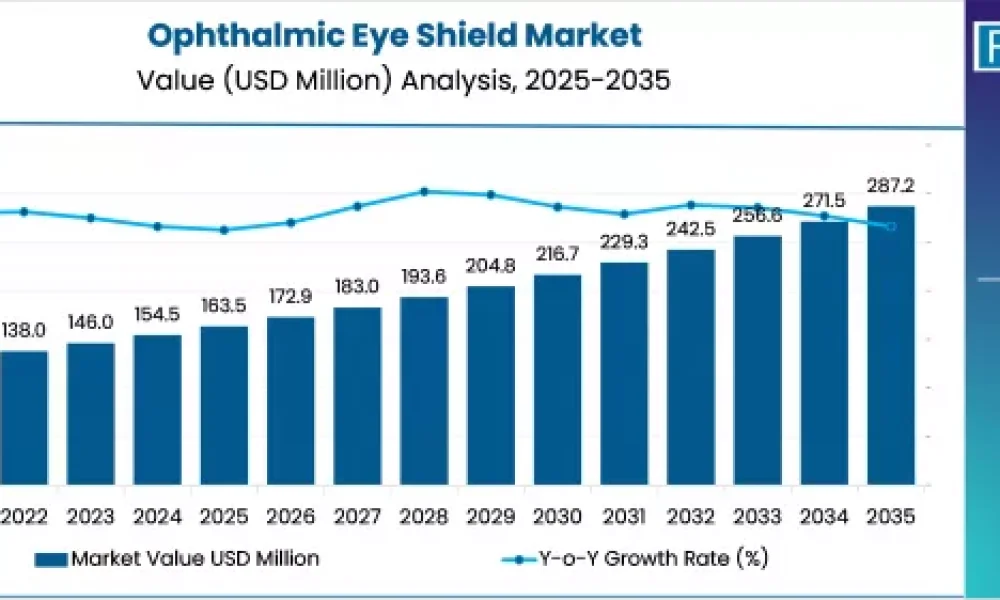
The ophthalmic eye shield market is expected to witness significant growth over the next decade as awareness of eye safety, preventive care for ocular injuries, and demand for high-quality protective devices increases across clinical and consumer applications. In 2025, the ophthalmic eye shield market is valued at USD 2.3 billion, and it is forecast to reach USD 5.7 billion by 2035, representing an absolute increase of USD 3.4 billion over the forecast period. This growth reflects a compound annual growth rate (CAGR) of approximately 9.5% between 2025 and 2035, supported by rising numbers of ophthalmic surgeries, growing sports and occupational safety awareness, and expanding use of eye protection in medical and industrial environments.
Ophthalmic eye shields are protective devices designed to safeguard the eyes from injury, illness, or postoperative complications. These shields are used in a variety of contexts, including surgical procedures, trauma care, sports and recreational activities, and workplace safety applications, where they help prevent ocular damage from impact, chemical exposure, and foreign bodies.
Quick Market Snapshot (2025–2035)
Market Value (2025): USD 2.3 billion
Market Forecast Value (2035): USD 5.7 billion
Market Forecast CAGR: 9.5%
Primary Product Types: Rigid Eye Shields, Soft Eye Shields, Custom/Fit-to-Need Shields
Key End Users: Healthcare Facilities, Sports & Recreation, Industrial & Occupational Safety, Consumer Protection
Key Regions: North America, Europe, Asia Pacific
Primary Drivers: Increase in surgical procedures, heightened safety awareness, regulatory safety mandates
To Access the Complete Data Tables & in-depth Insights, Request a Discount on this report: https://www.factmr.com/connectus/sample?flag=S&rep_id=1768
Market Overview
Ophthalmic eye shields are essential tools in both clinical and non-clinical settings to protect the eyes from injury and to promote healing after surgery or trauma. In medical environments, shields are applied following ocular surgeries — such as cataract removal, corneal transplants, retinal procedures, and trauma repair — to ensure that the eye remains shielded from inadvertent contact or environmental exposure that could compromise healing.
In non-medical settings, eye shields are widely used in sports, recreational activities, and industrial operations to protect against mechanical impacts, flying debris, bright light exposure, and chemical splashes. Growth in consumer safety education, stricter workplace safety regulations, and stronger emphasis on protective equipment in contact and high-impact sports are important growth catalysts. Schools, professional sports leagues, and occupational safety organisations are increasingly adopting and recommending eye protection solutions.
Key Demand Drivers
Surge in Ophthalmic and Eye-Related Surgical Procedures
The growing prevalence of vision-impairing conditions — including cataracts, glaucoma, and refractive errors — has increased the volume of ophthalmic surgeries performed globally. As surgical numbers rise, so does the use of protective eye shields during postoperative care to prevent infection, physical contact, or accidental impact while tissues heal. This trend drives sustained demand for clinical-grade eye protection products.
Rising Awareness of Eye Safety
Public awareness of eye safety and preventive care has been bolstered by educational campaigns, workplace safety standards, and sports safety initiatives. Consumers are more informed about the long-term consequences of eye injuries and the importance of protective gear. This has translated into higher adoption of eye shields in sports, home improvement, gardening, and recreational activities.
Occupational Safety Regulations
Industrial sectors such as construction, manufacturing, mining, and chemical processing are subject to stringent eye protection regulations. Employers are increasingly required to provide compliant protective gear — including certified ophthalmic shields — to reduce the risk of workplace eye injuries. Regulatory enforcement and safety compliance standards continue to be strong drivers of market growth.
Innovation and Material Advancements
Advancements in materials science have improved the comfort, durability, and performance of eye shields. Modern products are made from high-impact plastics, polycarbonate materials, and anti-fog, anti-scratch coatings that enhance usability and optical clarity. Customisable and adjustable designs further increase adoption across different use cases, from medical to industrial to consumer applications.
Market Segmentation Insights
By Product Type
Rigid Eye Shields: Provide maximum protection and are frequently used in surgical and high-risk industrial settings.
Soft Eye Shields: Offer enhanced comfort and are often used in postoperative care and activities requiring lightweight protection.
Custom & Fit-to-Need Shields: Tailored solutions for specific clinical requirements or specialised sports protection.
By End User
Healthcare Facilities: Including hospitals, surgical centres, and ophthalmic clinics where postoperative protection is critical.
Sports & Recreation: Used by athletes in activities such as racquet sports, cycling, skiing, and contact sports to prevent eye injuries.
Industrial & Occupational Safety: Deployed in workplaces with exposure to mechanical, chemical, or particulate hazards.
Consumer Protection: Home safety and recreational use where general eye protection is desired.
Regional Demand Dynamics
North America
North America is a leading market for ophthalmic eye shields, supported by high healthcare expenditure, widespread adoption of advanced surgical procedures, and strong emphasis on occupational safety compliance. Awareness campaigns and regulatory mandates requiring eye protection in workplace and sports environments contribute to continued regional growth.
Europe
Europe shows strong market growth underpinned by comprehensive occupational health and safety regulations, robust healthcare infrastructure, and high public awareness of protective eye care. Countries in Western and Northern Europe, in particular, demonstrate significant demand for both clinical and non-clinical eye shield solutions.
Asia Pacific
Asia Pacific is anticipated to witness rapid growth through 2035 as surgical volume increases, industrialisation accelerates, and safety awareness expands in both emerging and developed economies. Growing investments in healthcare infrastructure, expanding middle-class income levels, and rising participation in organised sports are key factors driving market growth in this region.
Competitive Landscape
The ophthalmic eye shield market features a competitive landscape with global manufacturers, specialty medical device producers, protective equipment suppliers, and regional distributors. Key strategies include product innovation, expansion of distribution networks, compliance with international safety standards, and collaborations with healthcare providers and sports organisations to drive adoption.
Product enhancements — such as improved ergonomic designs, advanced optical materials, and adjustable fit systems — help companies differentiate offerings. Partnerships with safety regulatory authorities and integration into broader protective gear portfolios support expanded market reach.
Future Outlook
The ophthalmic eye shield market is expected to maintain strong growth through 2035 as demand for eye protection increases across medical, industrial, sports, and consumer segments. Continued awareness of eye safety, expanding surgical procedures, stringent workplace safety mandates, and material innovations will sustain long-term adoption rates.
As consumers and healthcare providers prioritise preventive care and injury prevention, the role of ophthalmic shields — both in clinical healing and everyday protection — is set to become more integral to comprehensive eye health solutions worldwide.
Have specific requirements or need assistance on report pricing or have a limited budget? Please contact [email protected]
About Fact.MR:
Fact.MR is a global market research and consulting firm, trusted by Fortune 500 companies and emerging businesses for reliable insights and strategic intelligence. With a presence across the U.S., UK, India, and Dubai, we deliver data-driven research and tailored consulting solutions across 30+ industries and 1,000+ markets. Backed by deep expertise and advanced analytics, Fact.MR helps organizations uncover opportunities, reduce risks, and make informed decisions for sustainable growth



