
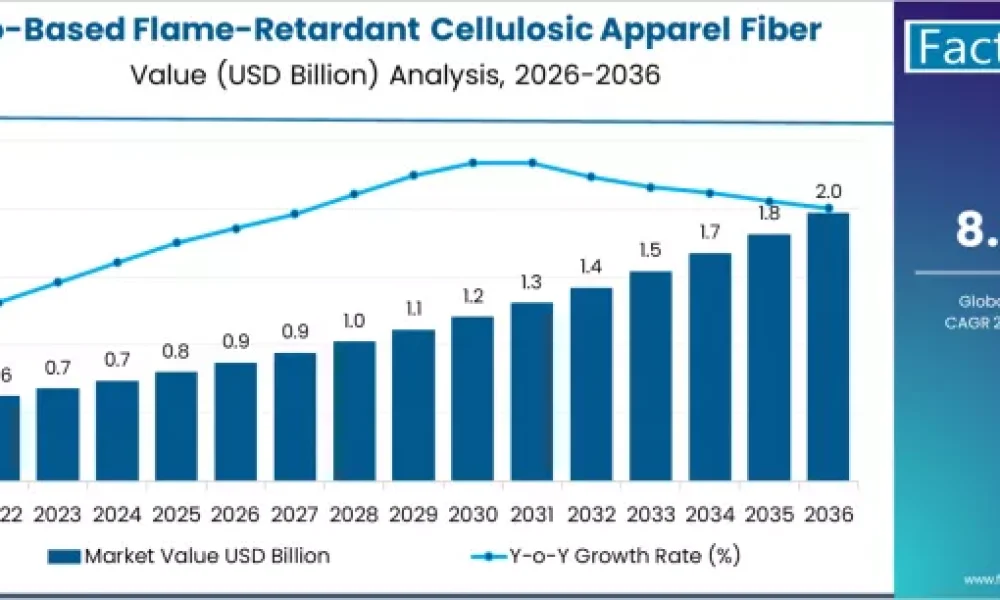
The global bio-based flame-retardant cellulosic apparel fiber market is expected to register robust growth over the next decade as fashion brands, protective clothing manufacturers, and textile converters increasingly adopt eco-friendly and high-performance fibers that combine flame resistance with sustainability credentials. In 2026, the market is valued at USD 0.56 billion, and it is projected to reach USD 1.42 billion by 2036, reflecting an absolute increase of USD 0.86 billion over the forecast period. This growth represents a compound annual growth rate (CAGR) of 10.7% between 2026 and 2036, driven by heightened regulatory focus on worker safety, rising demand for sustainable apparel, and innovation in bio-based fiber technologies.
Bio-based flame-retardant cellulosic apparel fibers are derived from renewable cellulose sources — such as wood pulp and agricultural residues — and are engineered to provide inherent flame-resistant properties without the need for heavy chemical treatments. These fibers are increasingly used in protective workwear, children’s clothing, formalwear, and specialty textile applications requiring both performance and eco-friendly credentials.
Quick Market Snapshot (2026–2036)
Market Value (2026): USD 0.56 billion
Market Forecast Value (2036): USD 1.42 billion
Market Forecast CAGR: 10.7%
Leading Product Type: Lyocell-Based Flame-Retardant Fibers
Leading Application: Protective Apparel and Workwear
Key Growth Regions: Asia Pacific, North America, Europe
Key Players: Lenzing AG, Sateri Holdings Limited, Tangshan Sanyou Group, Grasim Industries Limited, Birla Cellulose, Aditya Birla Group, Kelheim Fibres GmbH, Inovafil LLC, Nanollose Pty Ltd., Teijin Limited
To Access the Complete Data Tables & in-depth Insights, Request a Discount on this report: https://www.factmr.com/connectus/sample?flag=S&rep_id=12816
Market Overview
Bio-based flame-retardant cellulosic apparel fibers combine natural cellulosic structures with advanced flame-resistant performance, making them attractive alternatives to conventional synthetic fibers or chemically treated textiles. These fibers provide desirable properties such as comfort, breathability, and biodegradability, while also satisfying safety and regulatory standards for flame resistance. With increasing consumer awareness of sustainability and textile chemicals, bio-based flame-retardant fibers are steadily gaining traction across apparel categories that demand both protective performance and environmental responsibility.
Among product types, lyocell-based flame-retardant fibers are leading the market due to their balanced combination of strength, comfort, moisture management, and environmental profile. Lyocell fibers are commonly used in protective workwear, outdoor apparel, and specialty garments where flame resistance and wearer comfort are equally important.
Key Demand Drivers
1. Regulatory Focus on Safety and Worker Protection
Governments and industry regulators are enforcing stringent safety standards for protective clothing, particularly in sectors such as oil & gas, construction, electrical utilities, and manufacturing. Bio-based flame-retardant apparel fibers help manufacturers meet compliance requirements while minimizing environmental impact.
2. Growth of Sustainable Fashion
Consumers and brands are increasingly prioritizing eco-friendly materials that reduce the use of hazardous chemicals and petroleum-based synthetics. Bio-based cellulosic fibers with flame-retardant properties align closely with sustainable fashion initiatives and corporate social responsibility goals.
3. Technological Advancements in Fiber Engineering
Continuous innovations in chemical processing, fiber modification, and bio-based polymer technologies are enhancing the performance of flame-retardant cellulosic fibers. These advances are improving durability, wash-fastness, and comfort without compromising flame resistance.
4. Expansion Across Apparel and Protective Segments
Protective workwear remains the largest application due to mandatory safety standards in industrial sectors. However, emerging demand is observed in children’s sleepwear, formalwear, and outdoor lifestyle apparel where flame resistance is critical.
Market Segmentation Analysis
By Product Type
Lyocell-Based Flame-Retardant Fibers: Lead the market due to balanced performance attributes and biodegradability.
Modal-Based Flame-Retardant Fibers: Provide enhanced softness and moisture management.
Viscose-Based Flame-Retardant Fibers: Offer cost-effective flame resistance with broad applicability.
Other Cellulosic Options: Include hybrid fibers and specialty blends tailored for niche protective applications.
By Application
Protective Apparel & Workwear: Largest segment driven by stringent safety standards and industrial adoption.
Children’s and Youth Apparel: Growing segment due to safety regulations and consumer preference.
Outdoor & Sportswear: Adoption in garments that demand both protection and comfort.
Home Textiles & Specialty Textiles: Includes flame-resistant bedding, curtains, and furnishings.
Regional Demand Dynamics
Asia Pacific
Asia Pacific is expected to be the fastest-growing regional market due to rapid industrialization, expanding textile manufacturing base, and increasing adoption of safety apparel across emerging economies. Growing consumer awareness and sustainability initiatives are also elevating demand for bio-based flame-retardant fibers in this region.
North America
North America holds a significant share of the market, supported by stringent occupational safety standards, well-established protective apparel industries, and strong demand for eco-friendly textile solutions.
Europe
Europe’s market growth is driven by strict regulatory requirements for protective clothing, high consumer demand for sustainable fashion, and advanced technical textile innovation capabilities.
Competitive Landscape Overview
The bio-based flame-retardant cellulosic apparel fiber market is moderately competitive, with major fiber producers and specialty textile manufacturers focusing on product innovation, performance enhancement, and strategic partnerships with garment brands and protective apparel suppliers. Companies are expanding production capacities, enhancing R&D efforts, and developing blended fiber solutions to deliver superior flame resistance, comfort, and sustainability.
Key players compete on factors such as fiber performance characteristics, flame resistance certification, eco-credentials, cost efficiency, and supply chain reliability.
Future Outlook
The bio-based flame-retardant cellulosic apparel fiber market is expected to maintain strong growth through 2036, driven by rising safety standards, sustainability imperatives, and technological advancements in fiber engineering. As textile manufacturers and apparel brands continue to seek high-performance, eco-friendly materials, bio-based flame-retardant fibers will increasingly be integrated into protective gear, fashion apparel, and specialty textile products worldwide.
Have specific requirements or need assistance on report pricing or have a limited budget? Please contact [email protected]
About Fact.MR:
Fact.MR is a global market research and consulting firm, trusted by Fortune 500 companies and emerging businesses for reliable insights and strategic intelligence. With a presence across the U.S., UK, India, and Dubai, we deliver data-driven research and tailored consulting solutions across 30+ industries and 1,000+ markets. Backed by deep expertise and advanced analytics, Fact.MR helps organizations uncover opportunities, reduce risks, and make informed decisions for sustainable growth



