
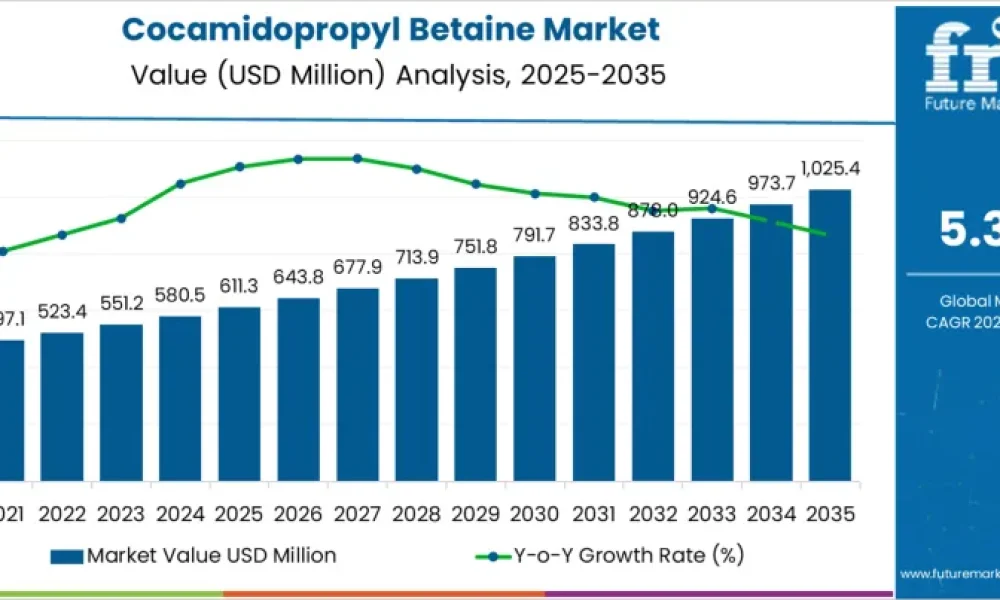
The global cocamidopropyl betaine (CAPB) market is entering a decisive growth phase, driven by the accelerating shift toward mild, plant-derived surfactants in personal care and home care formulations. In 2024, the market is valued at approximately USD 520 million, supported by strong demand from shampoos, facial cleansers, liquid soaps, and eco-friendly detergents. With sustainability, skin sensitivity, and regulatory compliance shaping formulation strategies, the market is projected to expand at a compound annual growth rate of around 6% through 2035, adding substantial value across the specialty chemicals and consumer goods ecosystem.
Key Market Insights at a Glance
Cocamidopropyl betaine has evolved from a functional foam booster into a strategic ingredient aligned with clean-label and sulfate-free product positioning. More than 65% of global demand originates from personal care applications, reflecting rising consumption of mild surfactants in mass and premium beauty products. The ingredient’s compatibility with anionic, cationic, and non-ionic surfactants further strengthens its adoption across multifunctional formulations. Increasing urbanization, higher hygiene awareness, and the expansion of global beauty brands into emerging economies continue to reinforce demand stability.
Segment Overview
By application, personal care remains the dominant segment, led by hair care products that require gentle cleansing without compromising foam performance. Skin care and baby care formulations are registering faster growth, supported by increasing consumer sensitivity to harsh chemicals. In terms of grade, cosmetic-grade cocamidopropyl betaine accounts for the majority share, as manufacturers prioritize low-irritation profiles and regulatory compliance. Industrial and household cleaning applications are also gaining momentum, particularly in green cleaning solutions where biodegradability is a key differentiator.
Regional Overview
Asia Pacific leads the global market, accounting for over 40% of total consumption, fueled by large-scale personal care manufacturing hubs, rising disposable incomes, and strong domestic demand in countries such as China and India. North America follows, driven by clean beauty trends, premium product launches, and stringent safety standards that favor mild surfactants. Europe maintains steady growth, supported by regulatory alignment with sustainable ingredients and increasing penetration of eco-labeled products. Latin America and the Middle East & Africa are emerging as high-potential regions, benefiting from expanding urban populations and improving retail access.
Competitive Landscape
The market is moderately consolidated, with global specialty chemical companies focusing on capacity optimization, cost efficiency, and sustainability credentials. Competitive differentiation increasingly depends on traceability of raw materials, reduced impurities, and compliance with international cosmetic standards. Strategic partnerships with personal care brands and contract manufacturers are becoming critical to securing long-term supply agreements and market share.
To access the complete data tables and in-depth insights, request a sample report here
Key Players of Sustainable Label Industry
Leading companies operating in the cocamidopropyl betaine space include BASF SE, Evonik Industries, Solvay S.A., Clariant AG, Croda International, Kao Chemicals, Galaxy Surfactants, Stepan Company, Lubrizol Corporation, and Innospec Inc. These players are actively investing in greener production processes, responsibly sourced coconut oil derivatives, and enhanced quality control to meet evolving consumer and regulatory expectations.
Recent Strategic Developments
Recent years have seen increased investments in bio-based surfactant manufacturing, capacity expansions in Asia, and the launch of ultra-mild CAPB variants designed for sensitive skin and baby care products. Several manufacturers have also announced sustainability roadmaps focused on reducing carbon emissions and improving supply chain transparency. Mergers, technology licensing, and long-term sourcing agreements are reshaping competitive dynamics and strengthening global distribution networks.
Market Outlook: Powering the Next Decade
Looking ahead, the cocamidopropyl betaine market is well positioned to benefit from the convergence of sustainability, performance, and consumer trust. As clean-label personal care moves from niche to mainstream, CAPB will remain a cornerstone ingredient enabling brands to balance efficacy with gentleness. Innovation in formulation science, coupled with expanding demand in emerging markets, is expected to propel the industry into its next decade of resilient, value-driven growth.
Have a specific Requirements and Need Assistant on Report Pricing or Limited Budget please contact us – [email protected]
About Future Market Insights (FMI)
Future Market Insights, Inc. (FMI) is an ESOMAR-certified, ISO 9001:2015 market research and consulting organization, trusted by Fortune 500 clients and global enterprises. With operations in the U.S., UK, India, and Dubai, FMI provides data-backed insights and strategic intelligence across 30+ industries and 1200 markets worldwide.
Why Choose FMI: https://www.futuremarketinsights.com/why-fmi



