
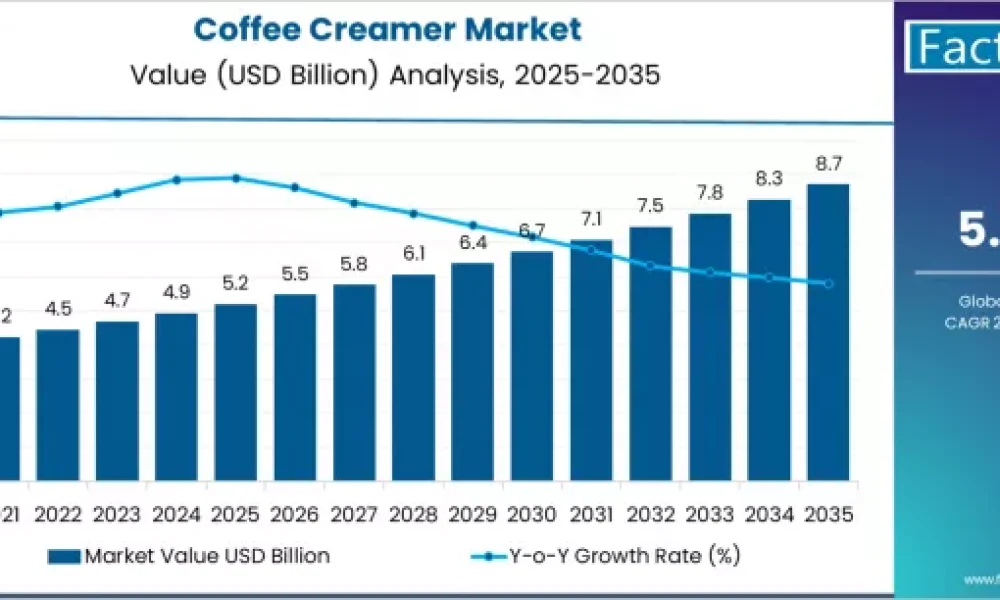
The European coffee creamer market is poised for robust growth over the next decade, driven by evolving consumer preferences, increasing coffee consumption, and the rising popularity of specialty beverages. Coffee creamers—including non-dairy and dairy-based products, high-fat and low-fat variants, and flavored and unflavored options—play a pivotal role in enhancing beverage taste, texture, and consumer experience. This report highlights market size, growth drivers, European regional dynamics, product trends, and strategic implications for stakeholders.
Market Size and Growth
The European coffee creamer market is projected to expand from approximately USD 1.6 billion in 2026 to around USD 2.7 billion by 2036, reflecting a compound annual growth rate (CAGR) of about 5.2%. This growth trajectory is supported by increasing adoption of non-dairy creamers, flavor innovations, and a growing café culture across major European countries. The moderate yet steady expansion underscores the potential of both traditional and emerging coffee consumer segments in the region.
To access the complete data tables and in-depth insights, request a Discount On The Report here: https://www.factmr.com/connectus/sample?flag=S&rep_id=12393
Key Growth Drivers
Rising coffee consumption and café culture: Europe has witnessed a surge in specialty coffee shops and café chains, stimulating demand for coffee creamers that enhance taste, texture, and overall beverage quality.
Non-dairy alternatives and health trends: Consumer preference for plant-based and lactose-free alternatives is driving non-dairy creamer adoption, which already accounts for over half of the market share. Almond, coconut, and oat-based formulations are particularly popular.
Product innovation and premiumization: Expanding flavor profiles, functional ingredients, and barista-grade formulations are encouraging consumers to explore high-end coffee experiences at home and in commercial establishments.
Convenience and ready-to-use solutions: Busy lifestyles and the growth of ready-to-drink coffee products are boosting demand for creamers that offer instant dissolution, extended shelf life, and consistent flavor delivery.
European Market Insights
Western Europe, led by Germany, the UK, and France, dominates the coffee creamer market due to mature coffee consumption patterns and well-established retail and café networks. Meanwhile, Eastern European countries are emerging as growth hubs, driven by increasing café culture and urbanization. Non-dairy creamers are the fastest-growing segment, whereas dairy-based products continue to serve traditional consumers. Powdered creamers are preferred in foodservice channels for their ease of use and storage, while liquid creamers dominate retail shelves for immediate consumption.
Technology Trends and Competition
The European market is competitive, comprising multinational brands and regional players. Key trends include:
- Plant-based innovationsenhancing nutritional profiles and taste.
- Functional and flavored formulationscatering to premium and health-conscious consumers.
- Sustainable and clean-label productsto meet regulatory requirements and consumer preferences.
- Strategic partnershipsbetween creamer manufacturers and coffee brands to expand market reach and brand loyalty.
Challenges
Despite positive growth, the market faces constraints:
- Price sensitivity in certain countries may limit adoption of premium or non-dairy alternatives.
- Supply chain complexities for specialty ingredients can impact product availability and cost.
- Regulatory compliance for labeling, allergens, and clean-label standards may restrict product innovation among smaller manufacturers.
Strategic Implications
For manufacturers and distributors: Focus on product diversification, including plant-based, functional, and flavored variants, and expand partnerships with café chains, retail outlets, and ready-to-drink coffee producers. Emphasize sustainability, clean-label certifications, and innovative packaging to attract environmentally conscious consumers.
For retailers and foodservice operators: Introduce diverse creamer options to enhance consumer satisfaction, meet dietary preferences, and drive repeat purchases. Leverage premiumization trends to boost margins and differentiate offerings.
For investors: The market presents steady growth opportunities, particularly in non-dairy and specialty segments, supported by expanding European coffee consumption and consumer willingness to pay for high-quality, convenient, and innovative products.
Outlook Summary
From 2026 to 2036, the European coffee creamer market is set for sustained growth, fueled by increasing coffee consumption, specialty beverage trends, non-dairy adoption, and premium product innovations. While price sensitivity and regulatory considerations pose challenges, the market offers significant opportunities for manufacturers, retailers, and investors aiming to capitalize on evolving consumer preferences and the expanding coffee culture in Europe.
Have a specific Requirements and Need Assistant on Report Pricing or Limited Budget please contact us – [email protected]
About Fact.MR
Fact.MR is a global market research and consulting firm, trusted by Fortune 500 companies and emerging businesses for reliable insights and strategic intelligence. With a presence across the U.S., UK, India, and Dubai, we deliver data-driven research and tailored consulting solutions across 30+ industries and 1,000+ markets. Backed by deep expertise and advanced analytics, Fact.MR helps organizations uncover opportunities, reduce risks, and make informed decisions for sustainable growth.



