
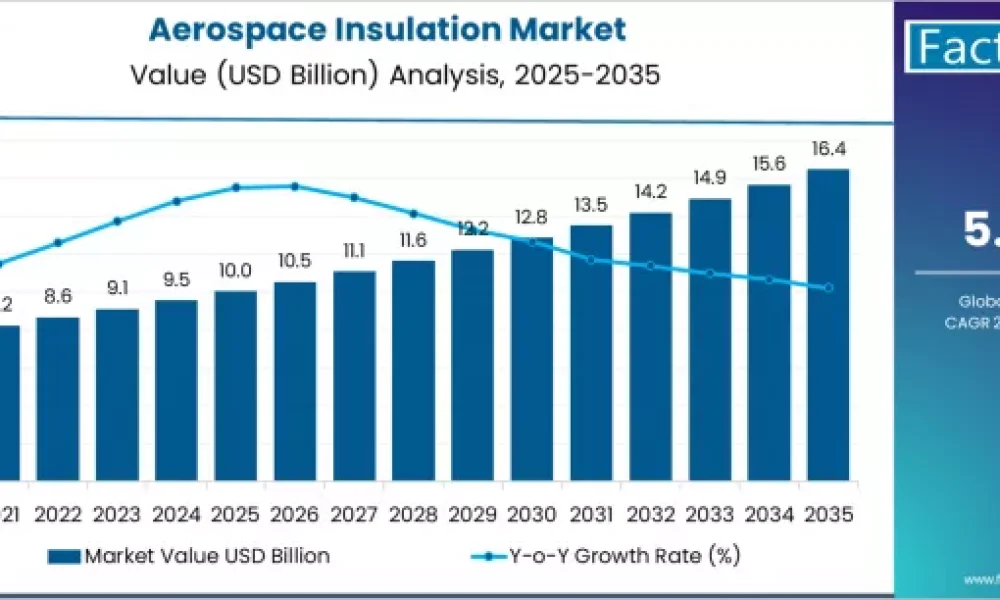
The U.S. aerospace insulation market is poised for substantial growth between 2025 and 2035, driven by increasing aircraft production, stringent safety regulations, and rising demand for fuel-efficient and lightweight insulation materials. Aerospace insulation—comprising thermal, acoustic, and electrical insulation—plays a critical role in maintaining aircraft performance, passenger comfort, and component protection. Materials such as ceramic fibers, fiberglass, mineral wool, and foamed plastics are widely used to ensure high-temperature resistance, fire retardancy, and reduced weight, meeting the rigorous standards of both commercial and defense aviation.
Market Size and Growth
The U.S. aerospace insulation market is projected to grow from approximately USD 10.03 billion in 2025 to USD 16.44 billion by 2035, registering a CAGR of 5.1%. This steady growth is driven by increasing commercial aircraft deliveries, expansion of military aviation programs, and heightened focus on urban air mobility and next-generation aircraft platforms. The market’s expansion is further fueled by the need for sustainable, lightweight, and multifunctional insulation solutions that integrate thermal management, acoustic dampening, and structural reinforcement.
To access the complete data tables and in-depth insights, request a Discount On The Report here: https://www.factmr.com/connectus/sample?flag=S&rep_id=12270
Key Growth Drivers
Rising global air passenger traffic has led to an expansion of commercial aircraft fleets, increasing the demand for advanced insulation solutions. Additionally, fuel efficiency requirements and strict aviation safety standards are encouraging manufacturers to adopt innovative materials such as ceramic composites and aerogels. Growing maintenance, repair, and overhaul (MRO) activities for aging fleets also create opportunities for insulation upgrades. Furthermore, the U.S. defense sector continues to invest in specialized insulation for high-performance aircraft, including stealth and next-generation fighter jets.
Material and Product Insights
Ceramic materials dominate the market, accounting for 50.9% of total share in 2025, owing to their exceptional high-temperature resistance and fire protection capabilities. Thermal insulation represents the leading product category with a 67.1% share, crucial for managing temperature in engine compartments, cabins, cargo holds, and critical components. Fiberglass and mineral wool provide cost-effective solutions for non-critical aircraft areas, including cabin interiors and cargo compartments, while foamed plastics contribute to lightweight insulation for structural and electrical applications.
Application and End-Use Trends
The engine segment is the primary application, driven by the need for extreme temperature management and fire resistance in turbines and exhaust systems. Aerostructure and other components also require specialized insulation for thermal and acoustic performance. Commercial aviation leads end-use demand, followed by military, business, and general aviation sectors. The adoption of advanced insulation materials in electric aircraft and urban air mobility platforms is expected to rise, supporting sustainable aviation goals and regulatory compliance.
Regional and Competitive Landscape
The U.S. market benefits from a strong aerospace manufacturing base, including both commercial and defense sectors. Leading players such as Duracote Corporation, Rogers Corporation, DuPont, BASF SE, and 3M dominate through technological expertise, product portfolios, and strategic collaborations with aircraft manufacturers. Innovation in bio-based, recyclable, and multifunctional insulation materials is expected to drive competitive differentiation.
Challenges
Despite growth opportunities, high material costs, complex certification requirements, and integration challenges for next-generation aircraft may slow adoption. Manufacturers must balance performance, compliance, and cost-effectiveness to maximize market penetration.
Outlook Summary
Between 2025 and 2035, the U.S. aerospace insulation market is expected to grow steadily, driven by increasing aircraft production, regulatory compliance needs, and advancements in lightweight, high-performance insulation technologies. Market participants focusing on innovation, sustainability, and multifunctional solutions are likely to gain a competitive edge while addressing both commercial and defense aviation demands.
Have a specific Requirements and Need Assistant on Report Pricing or Limited Budget please contact us – [email protected]
About Fact.MR
Fact.MR is a global market research and consulting firm, trusted by Fortune 500 companies and emerging businesses for reliable insights and strategic intelligence. With a presence across the U.S., UK, India, and Dubai, we deliver data-driven research and tailored consulting solutions across 30+ industries and 1,000+ markets. Backed by deep expertise and advanced analytics, Fact.MR helps organizations uncover opportunities, reduce risks, and make informed decisions for sustainable growth.



